Recurring negative thoughts linked to Alzheimer’s protein buildup
The observational study followed 94 cognitively healthy adults aged 21–89 over three years; the link remained after accounting for anxiety and depression.

Our read
Populations- Studied:
- Preprint: cohort study of 94 cognitively healthy adults, 3-year period
- What changed:
- Higher repetitive negative thinking was linked to faster amyloid buildup in the brain’s outer layer
- The catch:
- Negative thinking could be an early sign of Alzheimer’s pathology rather than its cause
- Why it’s aging research:
- It bears on staying healthy in midlife and later life.
Editor of record: Boris Djordjevic · AgingResearch.News
The observational study followed 94 cognitively healthy adults aged 21–89, 55% of whom were female. They completed assessments of repetitive negative thinking, anxiety and depression, and had up to three brain scans over three years.
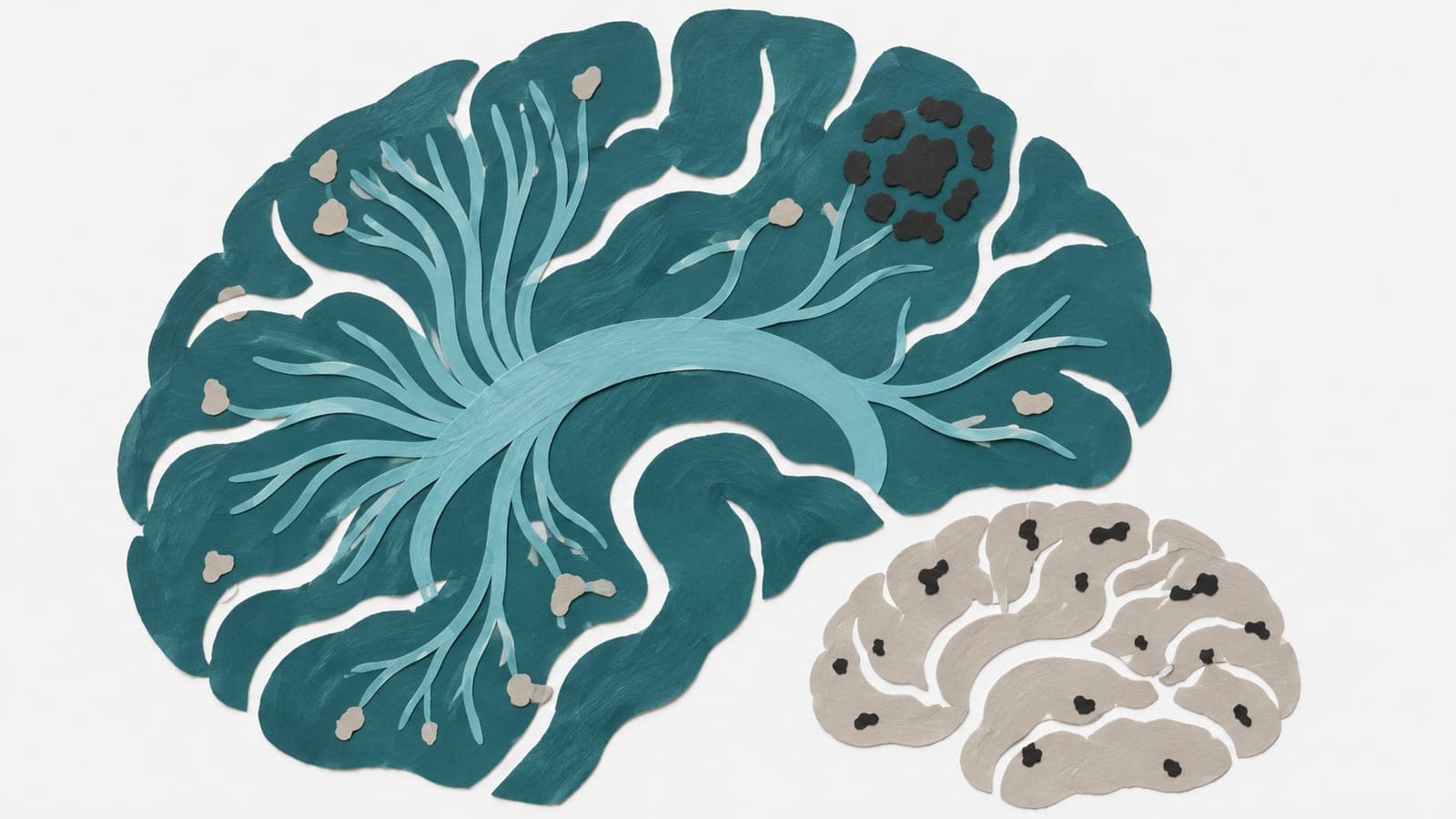
Higher repetitive negative thinking was associated with faster buildup of amyloid, a protein linked to Alzheimer’s disease, in the brain’s outer layer. The association held after accounting for anxiety and depression symptoms and in analyses restricted to people aged 50 or older or 60 or older. Repetitive negative thinking was not associated with changes in the brain’s sugar use or brain shrinkage. Neither anxiety nor depression symptoms were linked to changes in any brain measure.
Why it matters
Because repetitive negative thinking can respond to treatment, the authors called for research to test whether changing it reduces Alzheimer’s disease risk.
Caveats
This observational study cannot establish cause and effect or show that reducing negative thinking lowers Alzheimer’s risk. The preprint has not been peer-reviewed.
The paper
University College London; Inserm
medRxiv, Oct 31, 2026, Open access, CC BY-NC-ND, Preprint, not yet peer-reviewed


Comments
Be the first to comment.