Main artery calcium linked to risk despite normal heart scans
Higher calcium in the main artery was linked to cardiovascular death, heart attack or heart failure admission in 3,580 patients followed for a median 52 months.
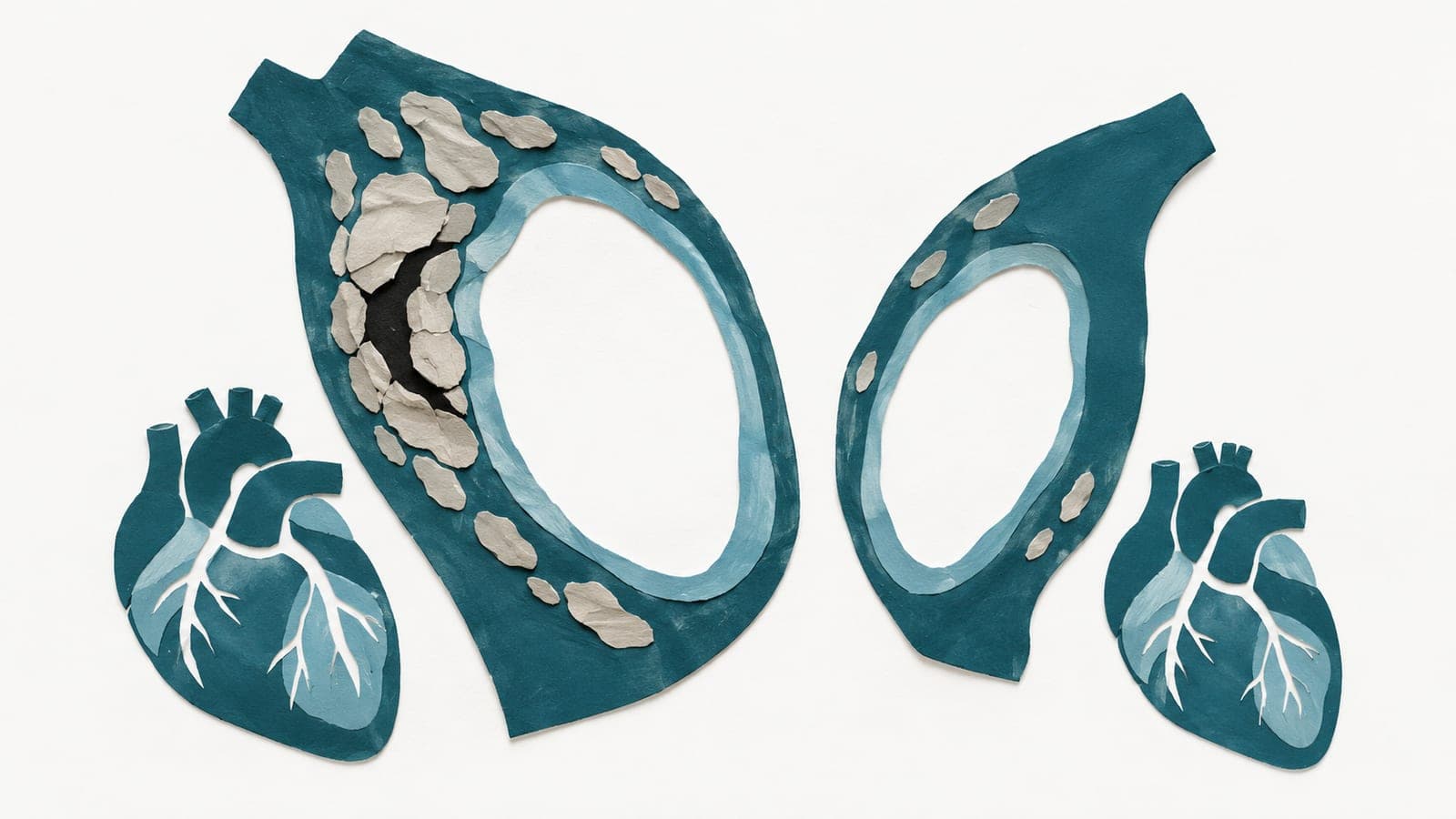
Multicentre
Researchers studied 3,580 patients in an observational cohort study across 13 sites. Their heart scans showed normal blood supply, normal capacity to increase blood flow and no calcium in the arteries supplying the heart. Automated analysis of computed tomography scans measured calcium in the ascending aorta, the first section of the body's main artery.
During a median 52 months, 194 cardiovascular deaths, heart attacks or heart failure admissions occurred. Higher aortic calcium was associated with this combined outcome after adjustment for clinical risk factors. The hazard ratio, which compares event rates over time, was 1.24 for each increase equal to one standard deviation, a measure of variation across patients. The association was strongest for heart failure admission. Adding aortic calcium modestly improved models' ability to distinguish patients who did and did not experience events.
Why it matters
Heart failure is a concern as people age. This work examines whether routinely collected scans contain additional clues to future cardiovascular risk.
Caveats
This observational study cannot show that aortic calcium caused the events. The report is a medRxiv preprint and has not been peer-reviewed.
- Heart failure
- Ascending aortic calcification
- Myocardial infarction
- Coronary artery calcium
- Myocardial flow reserve
- Humans
The paper
Cedars-Sinai Medical Center
medRxiv, 12 Oct 2026, CC BY-NC, Preprint, not peer-reviewed