Reliance on children's money linked to cognitive decline in China
People receiving more than 75% of income from children scored 0.248 points lower on cognitive tests than those receiving 0–25%.
Our read
Populations- Studied:
- Cohort study of 8,898 older adults in China, against older adults with low financial dependence (Dose-response)
- What changed:
- Thinking skills were poorer among older adults most financially dependent on children than among those least dependent
- The catch:
- Household decision-making and changes in children’s work could affect both financial dependence and cognition
Editor of record: Boris Djordjevic · AgingResearch.News
Adults in China contributed 36,187 observations across four survey waves in a longitudinal study with 8,898 baseline participants. The sample’s mean age was 57.92 years; 51.2% were men and 48.8% were women. Financial dependence meant the share of total income received from children, including money and in-kind support. Tests assessed memory, knowledge of the date, arithmetic and figure drawing.
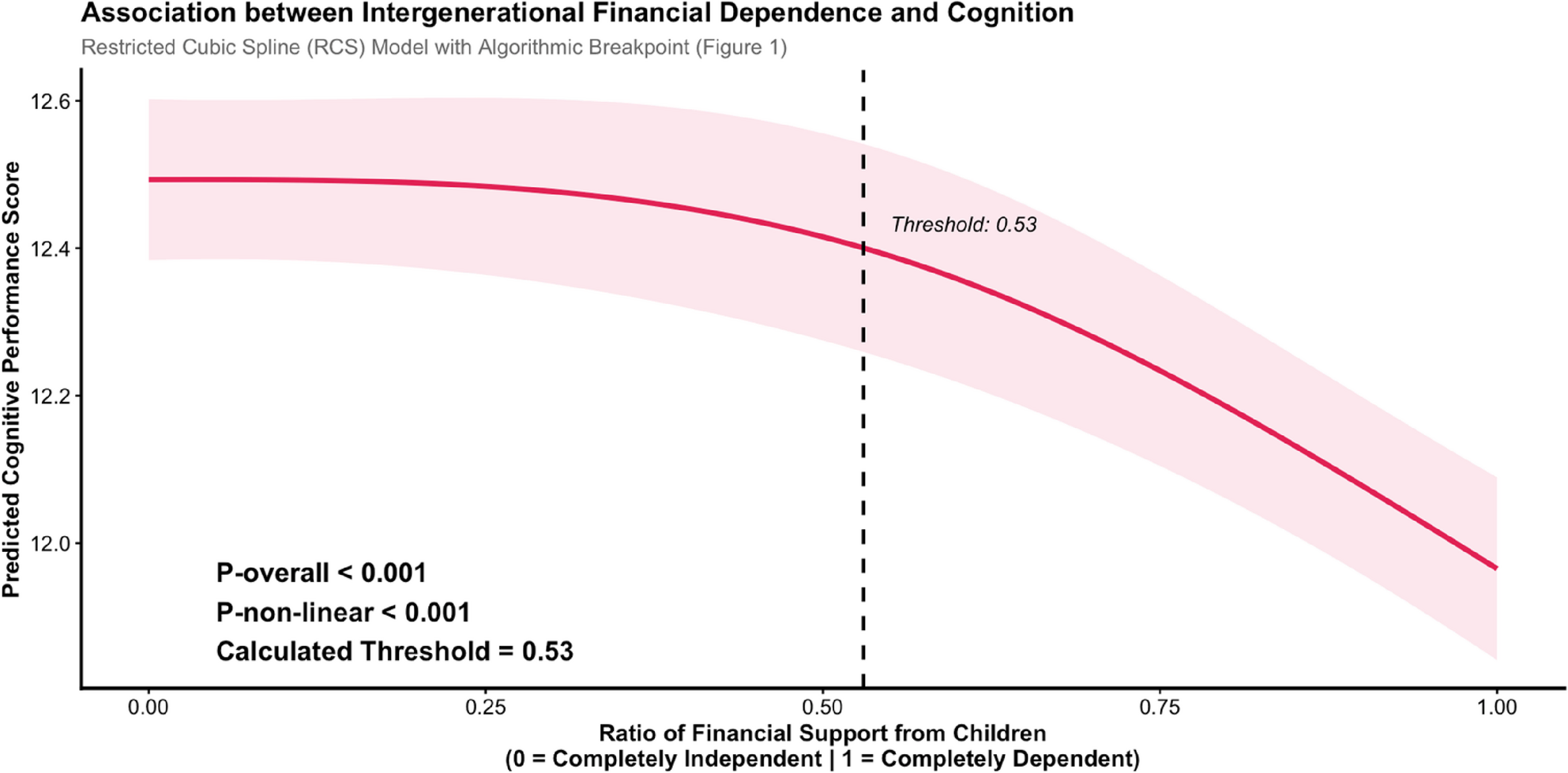
After accounting for age, education, health and other factors, greater dependence was associated with lower cognitive scores. The association steepened once children supplied roughly 50% of income. Earlier dependence was linked to later lower cognitive scores, while earlier lower scores were linked to later greater dependence. The authors’ analysis suggested that social isolation, measured through a lack of social activities, accounted for 4.74% of the association.
Why it matters
The authors propose strengthening economic autonomy and reducing social isolation as potential ways to protect cognitive health in aging societies.
Caveats
Poorer cognition could itself increase reliance on children, and unmeasured circumstances could influence both dependence and cognitive scores. The participants lived in China, limiting how far the findings extend to other settings.
From the paper
- Participants
The analytic dataset included 36,187 observations, of which 8,898 participants were enrolled at baseline (Wave 1).
Results, Sample selection and characteristics of the study population
- Result
Compared with the low-dependence group (Q1), cognitive scores were significantly lower in Q3 and Q4, with the greatest decline observed in Q4 (> 75% dependence; β = − 0.248, 95% CI: − 0.314 to − 0.181, P < 0.001).
Quoted word for word from the full text on link.springer.com.
The paper
Sichuan University
BMC Public Health, Aug 21, 2026, Open access


Comments
Be the first to comment.