Survivors of other cancers had higher lung cancer risk
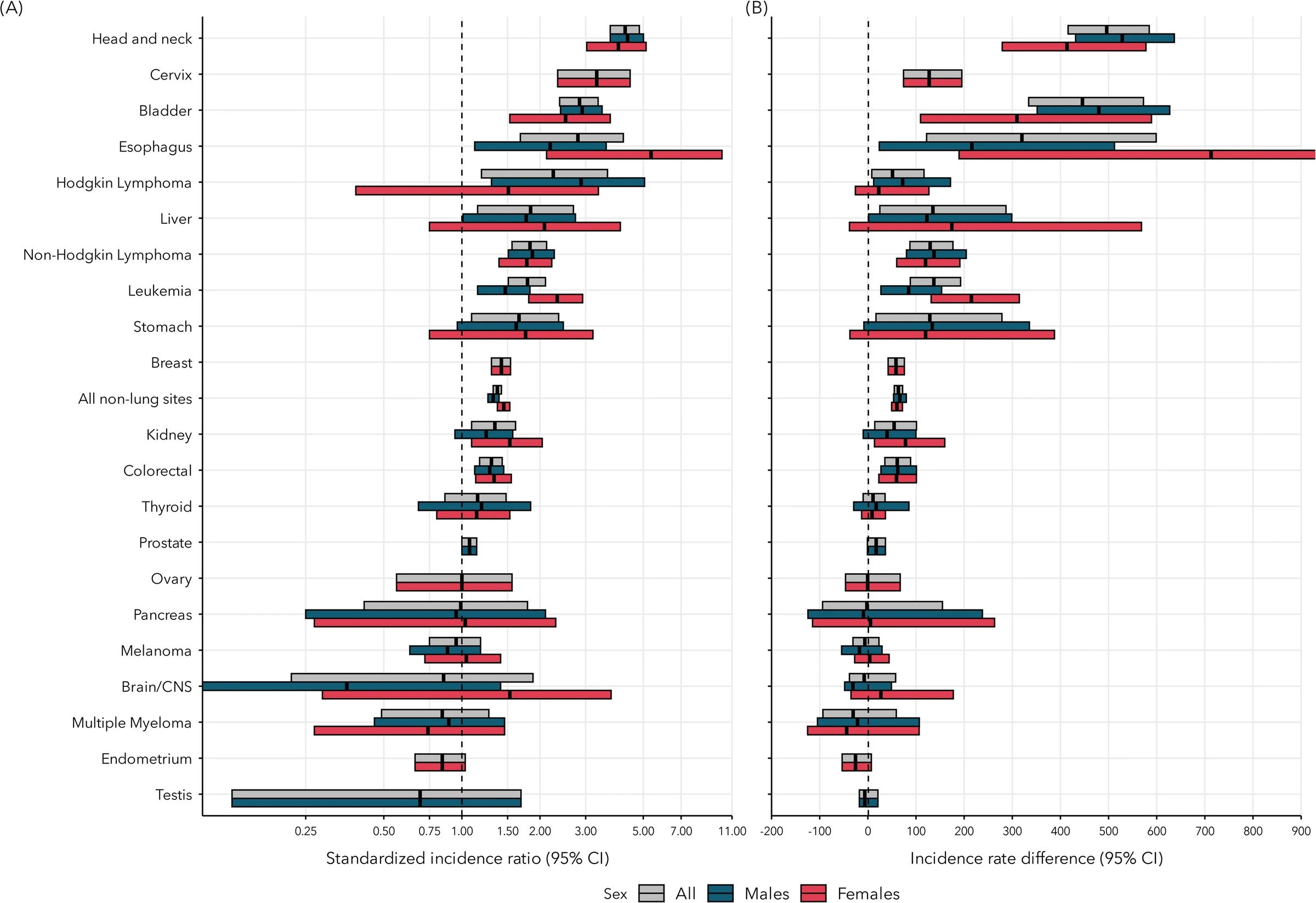
Lung cancer incidence among 180,325 survivors was 1.37 times the expected rate based on the cancer-free population.
Our read
Populations- Studied:
- Cohort study of 180,325 adult survivors of non-lung cancers, against the cancer-free population
- What changed:
- Lung cancer incidence among survivors of other cancers was 1.37 times the expected rate in the cancer-free population
- The catch:
- Smoking could partly explain survivors’ higher lung cancer incidence
- In the record:
- The 51st paper on bladder cancer with results in people; 212 on record in all.
Editor of record: Boris Djordjevic · AgingResearch.News
The 180,325 adults in this observational study had been diagnosed with a non-lung cancer in Alberta between 2000 and 2021 and survived at least six months. Researchers compared their incidence of a subsequent primary lung cancer—a new lung cancer, not spread from the earlier cancer—with that in people without a personal cancer history.
Survivors had higher lung cancer incidence overall and at advanced stages. The increase in advanced-stage risk was highest more than five years after the first cancer diagnosis. Smoking-related first cancers carried the highest risks. Over six years, the absolute risk of a new primary lung cancer was 2.7% for head and neck cancer survivors and 2.6% for bladder cancer survivors. Both exceeded thresholds commonly used to determine eligibility for lung cancer screening.
Why it matters
For adults living beyond a cancer diagnosis, the results raise questions about who may need long-term lung cancer surveillance or screening as they age.
Caveats
The comparison leaves open how much shared risk factors, such as smoking, contributed to survivors’ higher lung cancer incidence. The population included only adults who survived at least six months after diagnosis.
The paper
University of Calgary
Clinical Lung Cancer, Oct 13, 2026, Open access

Comments
Be the first to comment.