Electrical body measure linked to death risk in older patients
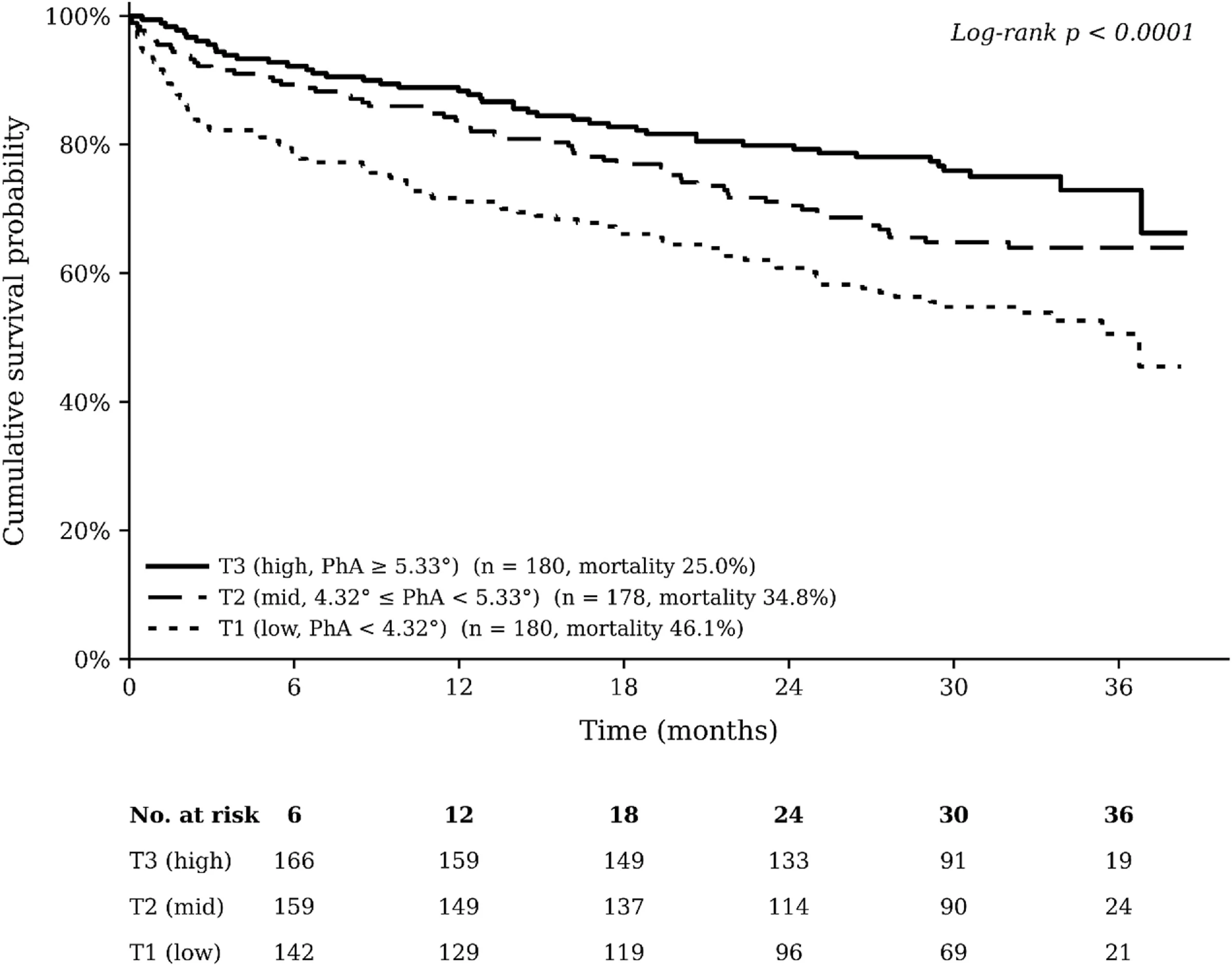
Over 36 months, 46.1% of older hospital patients in the lowest phase-angle group died, compared with 25.1% in the highest group.
Our read
Biomarkers- Studied:
- Cohort study of 538 hospitalized older adults, against patients with the highest phase angle (Dose-response, multicenter)
- What changed:
- Death over 36 months was higher in the lowest phase-angle group: 46.1% against 25.1% in the highest
- The catch:
- Patients’ health at admission could explain both lower phase angle and later death
- In the record:
- One of 4 papers on bioelectrical phase angle on record: 3 with results in people.
Editor of record: Boris Djordjevic · AgingResearch.News
The 538 hospitalized older adults in this prospective multicenter study averaged 81.2 years of age; 48.0% were men. They came from 12 Italian acute care wards. At admission, researchers measured bioelectrical phase angle, an electrical marker of cell condition and nutritional status.
Over 36 months, mortality was lower in groups with higher phase angle. After adjustment for other factors, each step up among the three phase-angle groups was associated with a 22% relative reduction in mortality risk. Phase angle also added information beyond sarcopenia, a condition involving low muscle strength and mass. In a secondary analysis using a 4.80-degree cutoff, mortality was 35.4% among patients with low phase angle but no sarcopenia, compared with 39.5% among those with sarcopenia but higher phase angle.
Why it matters
Age-related muscle loss may not capture every aspect of older patients’ vulnerability. The authors suggest that routinely reporting phase angle could improve estimates of their risk of dying.
Caveats
Differences in patients’ health at admission could have contributed to both lower phase angle and later death. The findings may not apply to younger adults or people outside hospital.
The paper
AULSS 2 Marca Trevigiana; Università Cattolica del Sacro Cuore
Clinical Nutrition, Oct 28, 2026
Comments
Be the first to comment.