Lower lung function linked to an irregular heart rhythm
Two lung-test patterns were linked to odds of an irregular heart rhythm 2.12 and 2.38 times as high as in people without each pattern.
Our read
Populations- Studied:
- Cohort study of 2,219 people (Multicenter)
Editor of record: Boris Djordjevic · AgingResearch.News
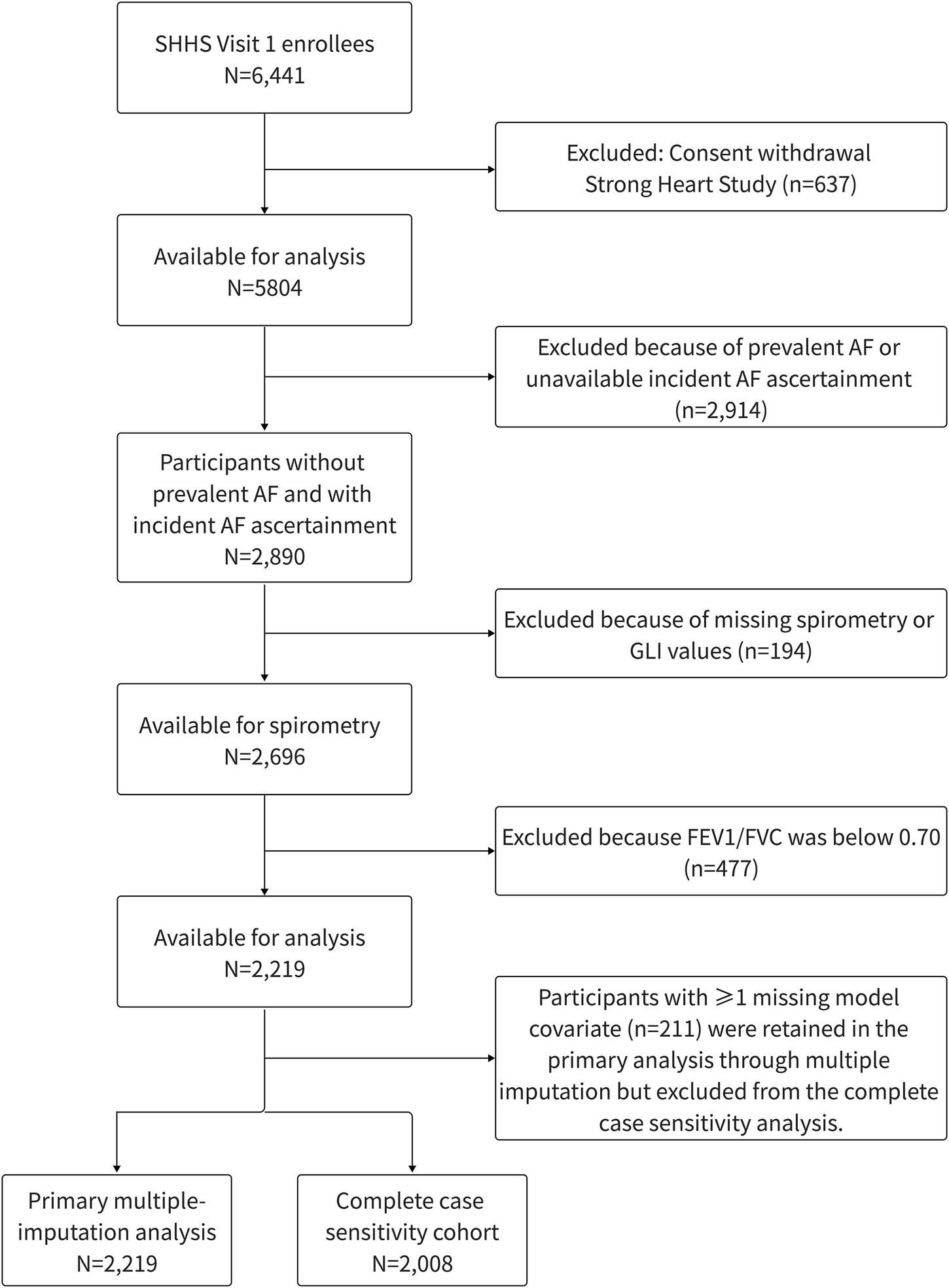
The 2,219 adults in this cohort study averaged 62.4 years of age; 43.6% were male. None had atrial fibrillation, an irregular heart rhythm, or airflow limitation at baseline. Researchers analyzed breathing tests and tracked new atrial fibrillation through June 2006.
They examined two overlapping patterns: reduced air expelled in the first second of a forceful breath out, and reduced total air expelled, both with a preserved ratio between those measurements. The odds of atrial fibrillation were 2.12 times as high for the first pattern and 2.38 times as high for the second, after accounting for age, smoking and other health factors. Overall, 247 participants (11.1%) developed the condition. An exploratory analysis separating people into four nonoverlapping groups found the clearest association in those with both reductions. Neither pattern alone had a clear association after adjustment.
Why it matters
Breathing tests may offer a way to study connections between lung health and heart-rhythm problems in later life.
Caveats
The authors note that uncertain timing left open whether developing heart problems had already affected lung function. The predominantly White, older cohort excluded people with airflow limitation, limiting application to other populations.
From the paper
- Participants
The primary analytic cohort included 2219 participants (mean age, 62.4 years; 43.6% male), of whom 247 (11.1%) developed incident AF.
- Result
In the unadjusted model (Model 1), PRISm was associated with higher odds of incident AF (OR = 2.89, 95% CI 1.98–4.23, P < 0.001).
Results, Association between spirometry patterns and incident atrial fibrillation
- Limitation
First, the SHHS dataset does not provide exact dates of AF onset, precluding time-to-event analyses such as Cox proportional hazards regression or sensitivity analyses that exclude early incident cases.
Quoted word for word from the full text on nature.com.
- Atrial fibrillation
- Preserved ratio impaired spirometry
- Restrictive spirometric pattern
- Incident atrial fibrillation
- FEV1/FVC ratio
- Humans
The paper
Renmin Hospital of Wuhan University
NPJ Primary Care Respiratory Medicine, Oct 14, 2026, Open access


Comments
Be the first to comment.