Kidney dysfunction promotes wasting and frailty signs in animals
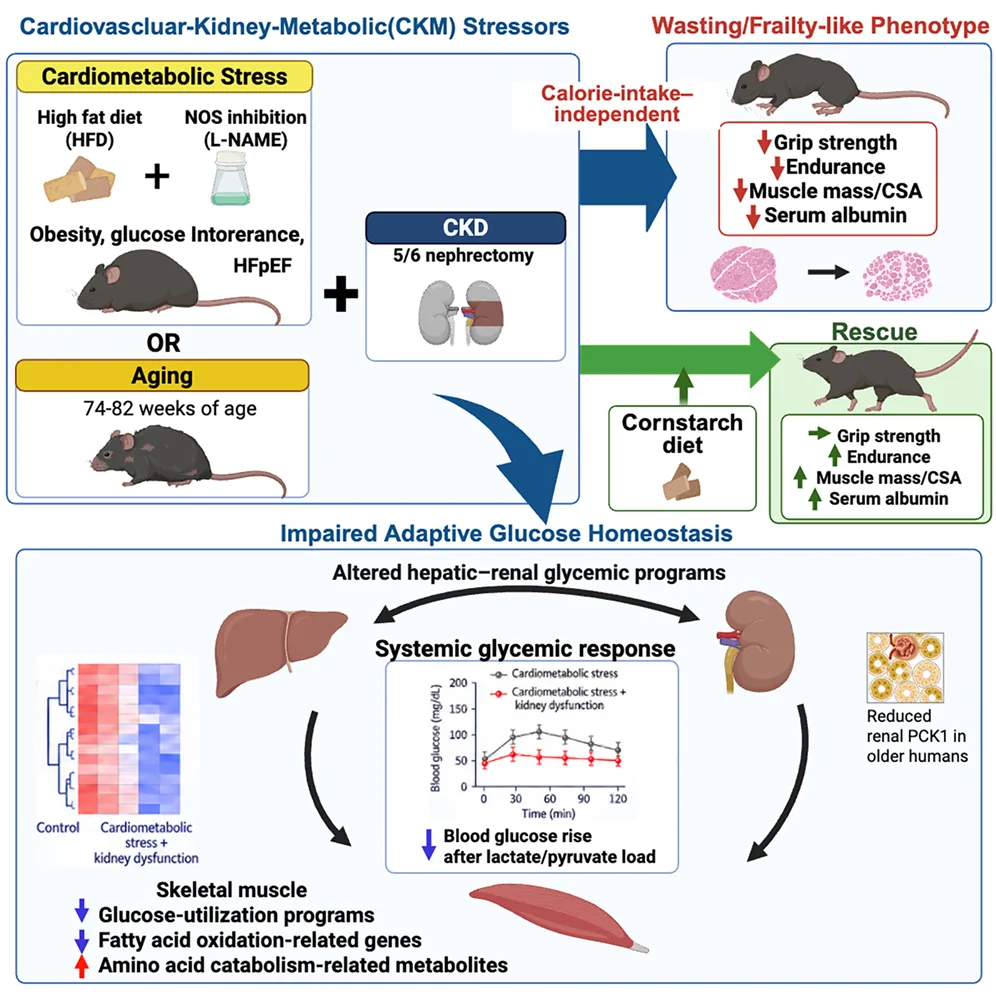
Loss of kidney filtering units under metabolic and cardiovascular stress led to wasting independent of calorie intake, with muscle loss and frailty-like features.
Our read
Mechanisms- Studied:
- Experiments in animals and older human CKD kidneys
- What changed:
- Animals under metabolic and cardiovascular stress developed wasting, muscle loss, and frailty-like features after losing kidney filtering units
- The catch:
- Animal group sizes are missing, limiting assessment of the wasting results
- Why it’s aging research:
- It studies organisms or tissues that aged naturally.
Editor of record: Boris Djordjevic · AgingResearch.News
Animals under metabolic and cardiovascular stress shifted from obesity and difficulty handling blood sugar toward wasting after losing kidney filtering units in laboratory experiments. The wasting did not depend on calorie intake and included muscle loss and features of physical frailty.
Muscle analyses found suppressed programs for using glucose, a sugar that supplies energy, and signs of breakdown of amino acids, the building blocks of proteins. Similar features occurred with aging combined with loss of kidney filtering units. A cornstarch-based nutritional approach improved exercise capacity, muscle mass and blood levels of albumin, a protein. The authors proposed that kidney dysfunction promoted wasting by limiting the body's metabolic reserve and muscles' flexibility in using fuels.
Why it matters
Age-related muscle loss and frailty are linked to disrupted energy balance. The proposed model offers a framework for investigating how limits on fuel use contribute to wasting in chronic kidney disease.
Caveats
The nutritional results came from animal experiments, not a trial in people with chronic kidney disease. The abstract does not identify the animal species, group sizes, or the cornstarch dose and duration.
The paper
Nagoya University
iScience, Oct 30, 2026, Open access
Comments
Be the first to comment.