Stem cells improve muscle function in mice missing an enzyme
In an animal experiment, human umbilical cord stem cells improved coordination and grip endurance in mice lacking an antioxidant enzyme.
Our read
Interventions- Studied:
- Experiments in mice lacking copper/zinc superoxide dismutase
- What changed:
- Stem cell treatment improved motor coordination and grip endurance in enzyme-deficient mice
- The catch:
- The abstract does not report sample size, cell dose or treatment duration
- In the record:
- One of 16 papers on human umbilical cord-derived mesenchymal stem cells on record: 2 with results in people, 11 in animals.
- Why it’s aging research:
- It measures an outcome that worsens with age.
Editor of record: Boris Djordjevic · AgingResearch.News
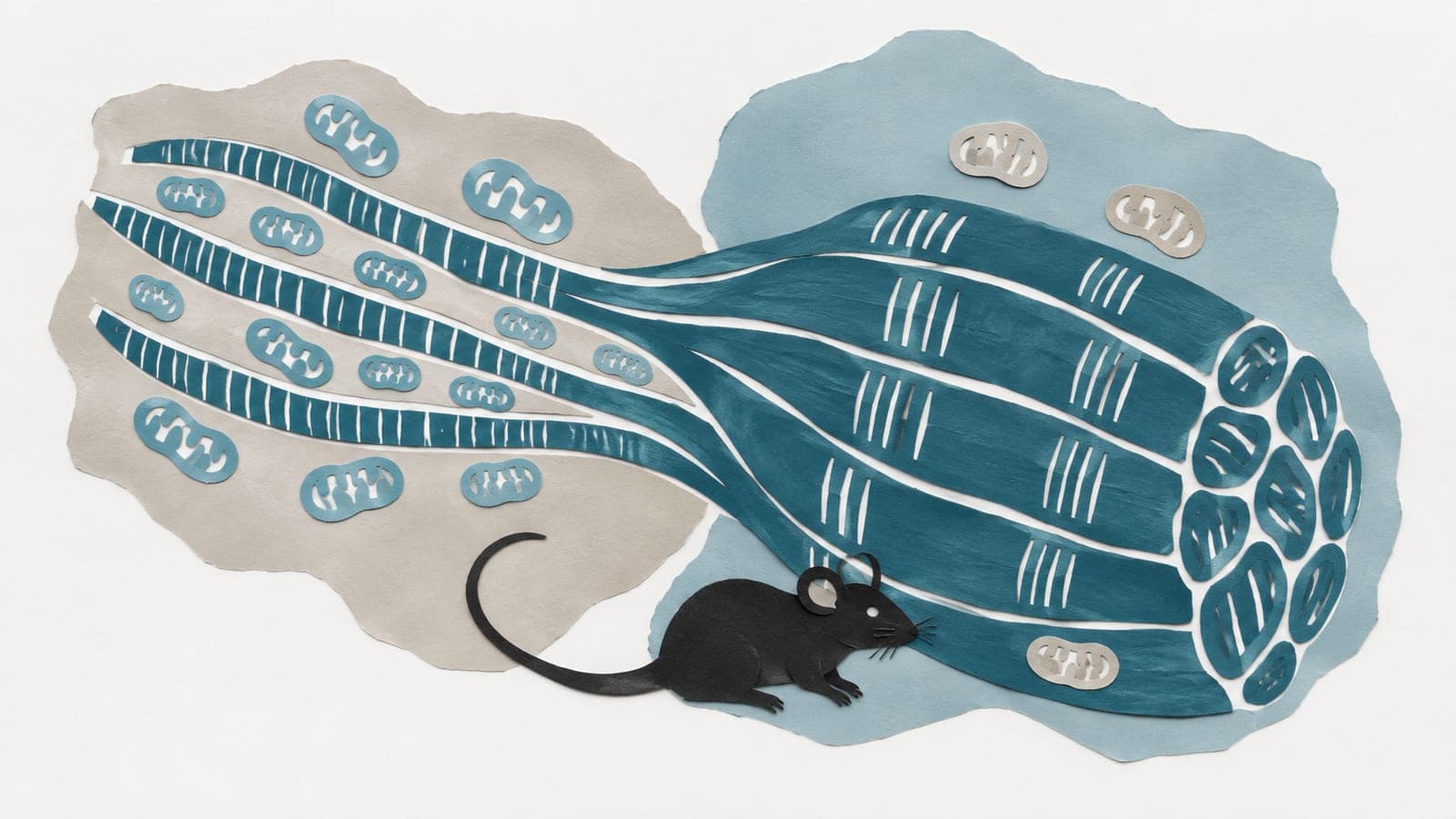
Mice lacking copper/zinc superoxide dismutase, an antioxidant enzyme, received stem cells from human umbilical cords in an animal experiment. These mice model muscle degeneration caused by oxidative stress, a chemical imbalance that can damage cells. Researchers also tested the cells in mice without the enzyme deficiency.
In enzyme-deficient mice, the cells improved coordination and grip endurance and restored muscle fiber numbers in a calf muscle. They reduced production of reactive oxygen molecules by mitochondria, the structures that supply cells with energy. They also restored blood levels of insulin-like growth factor-1, a protein involved in growth, and selected omega-3 fats in muscle. The authors interpreted fat and sugar changes in mice without the deficiency as a shift toward carbohydrate use for energy.
Why it matters
Age-related muscle decline involves oxidative stress and disturbed metabolism. The work suggests that metabolic context matters when investigating cell-based approaches to sarcopenia, the progressive muscle disorder associated with aging.
Caveats
The muscle-function benefits came from a genetically altered mouse model, not people with age-related muscle loss. The abstract does not report sample size, cell dose or treatment duration.
- Human umbilical cord-derived mesenchymal stem cells
- SOD1
- Amino acid metabolism
- Grip endurance
- Sarcopenia
- Mice
The paper
Taipei Medical University Hospital
Experimental Gerontology, Jul 14, 2026, Open access
Comments
Be the first to comment.