Intermittent fasting shrank established artery plaques in mice
A controlled mouse experiment found smaller plaques than with unrestricted feeding or at baseline, without additional blood-fat lowering at the study’s end.
Our read
Interventions- Studied:
- Experiments in animals
- Why it’s aging research:
- It studies an intervention with evidence of extending healthy life.
Editor of record: Boris Djordjevic · AgingResearch.News
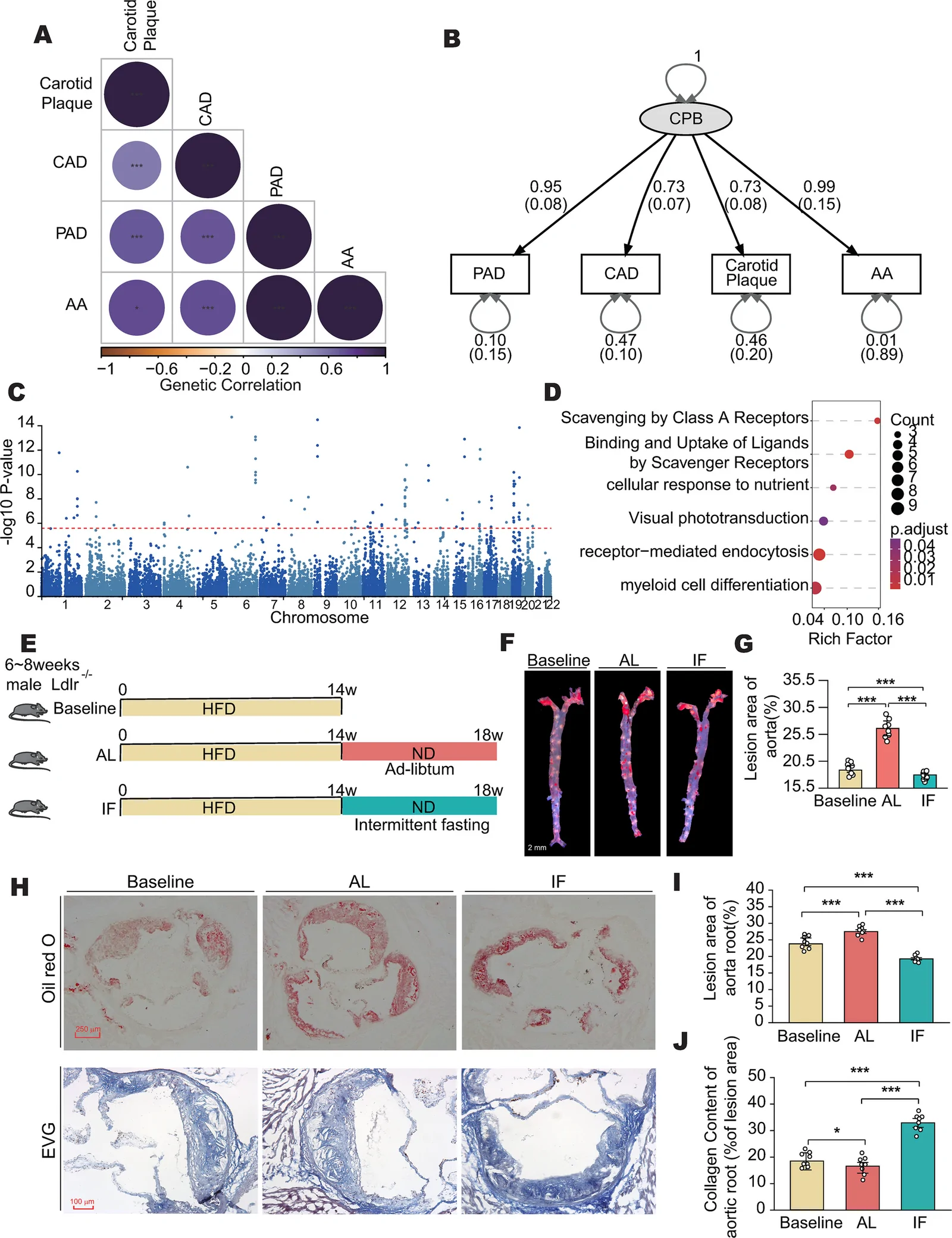
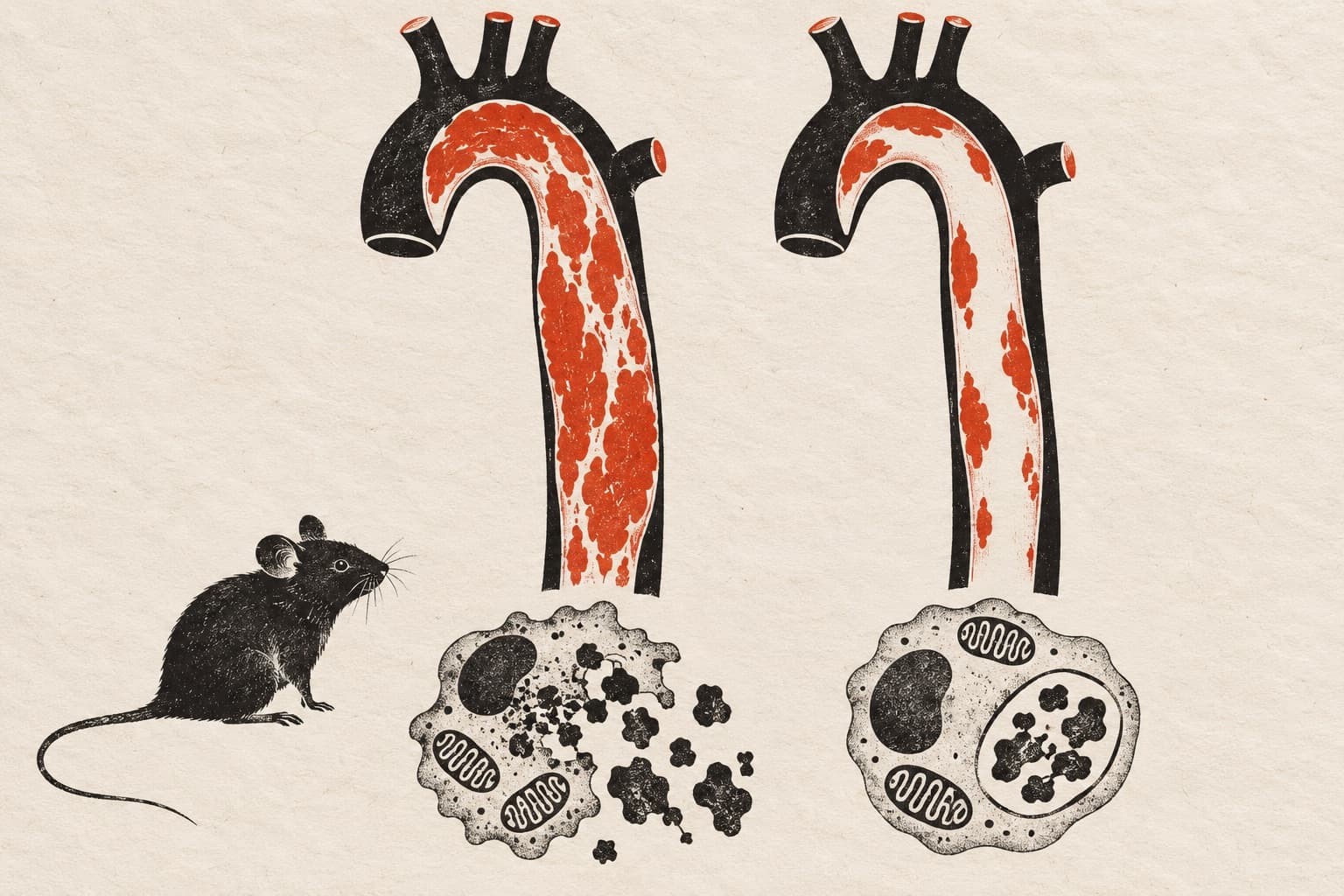
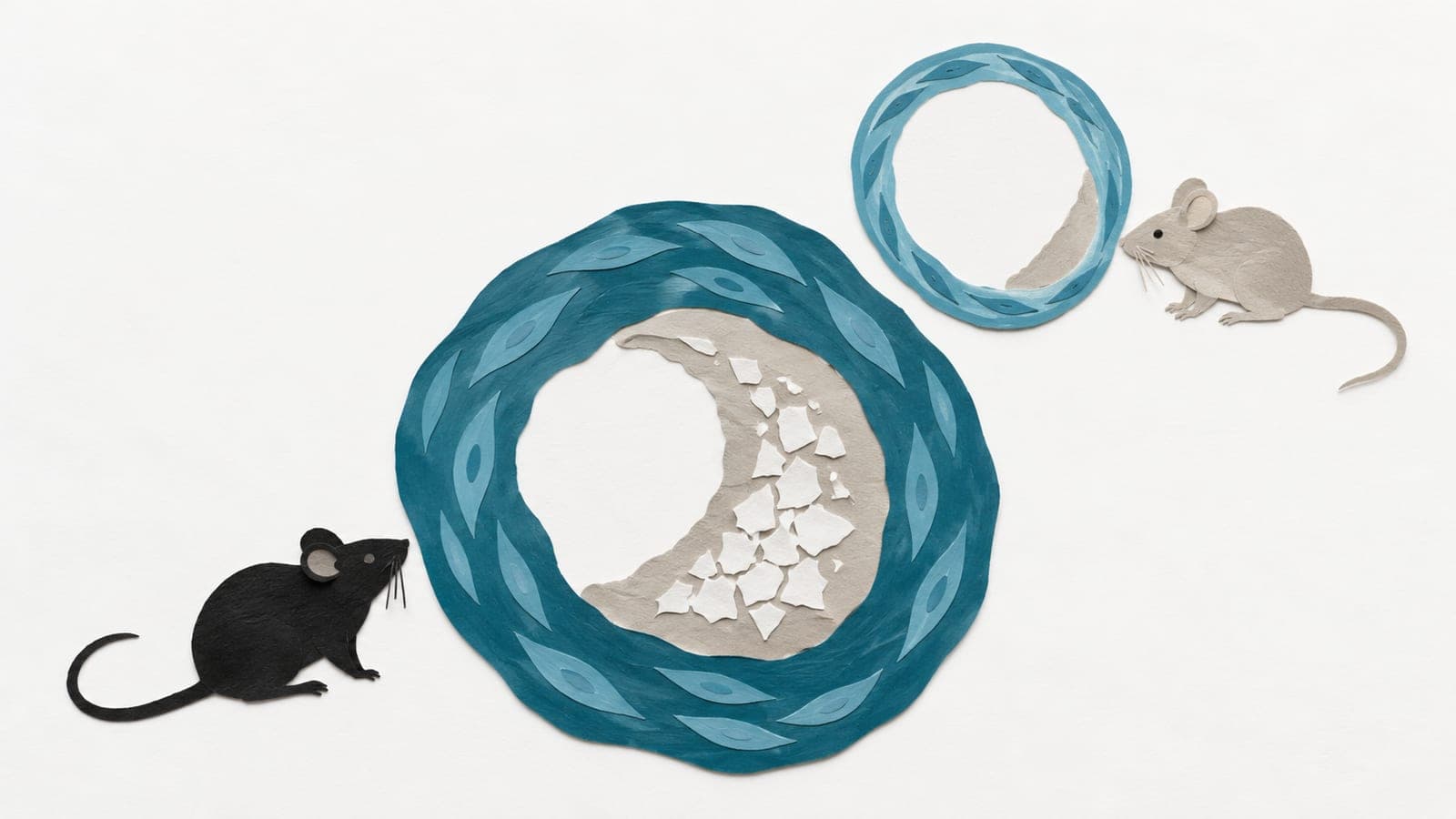
Mice with an inactivated Ldlr gene and established artery plaques underwent a baseline-controlled feeding experiment. The researchers compared intermittent fasting with unrestricted feeding and a week-14 baseline group. Fasting reduced plaque size relative to both groups and improved structural features of plaque stability. These changes occurred without additional blood-fat lowering at the study’s end.
Tests in macrophages, immune cells that clear dead cells, examined two proteins: BMAL1, which helps regulate daily biological rhythms, and MERTK, which supports dead-cell clearance. BMAL1 activated a control region of the gene encoding MERTK. Restoring MERTK corrected the dead-cell clearance defect caused by reducing BMAL1. Inhibiting MERTK reversed the benefit of increasing BMAL1.
Why it matters
Artery plaque buildup is relevant to cardiovascular disease associated with aging. The authors identified this fasting-linked pathway as a candidate for future investigation alongside established lipid-lowering therapy.
Caveats
The plaque findings came from a genetically modified mouse model, not people. The abstract does not give group sizes, limiting assessment of how robust the results were.
The paper
Intermittent fasting promotes plaque regression and activates the BMAL1-MERTK efferocytosis axis
University of Science and Technology of China
Cell Communication and Signaling, Aug 11, 2026, Open access
Comments
Be the first to comment.