Sickle cell trait showed no clear link to stroke in adults
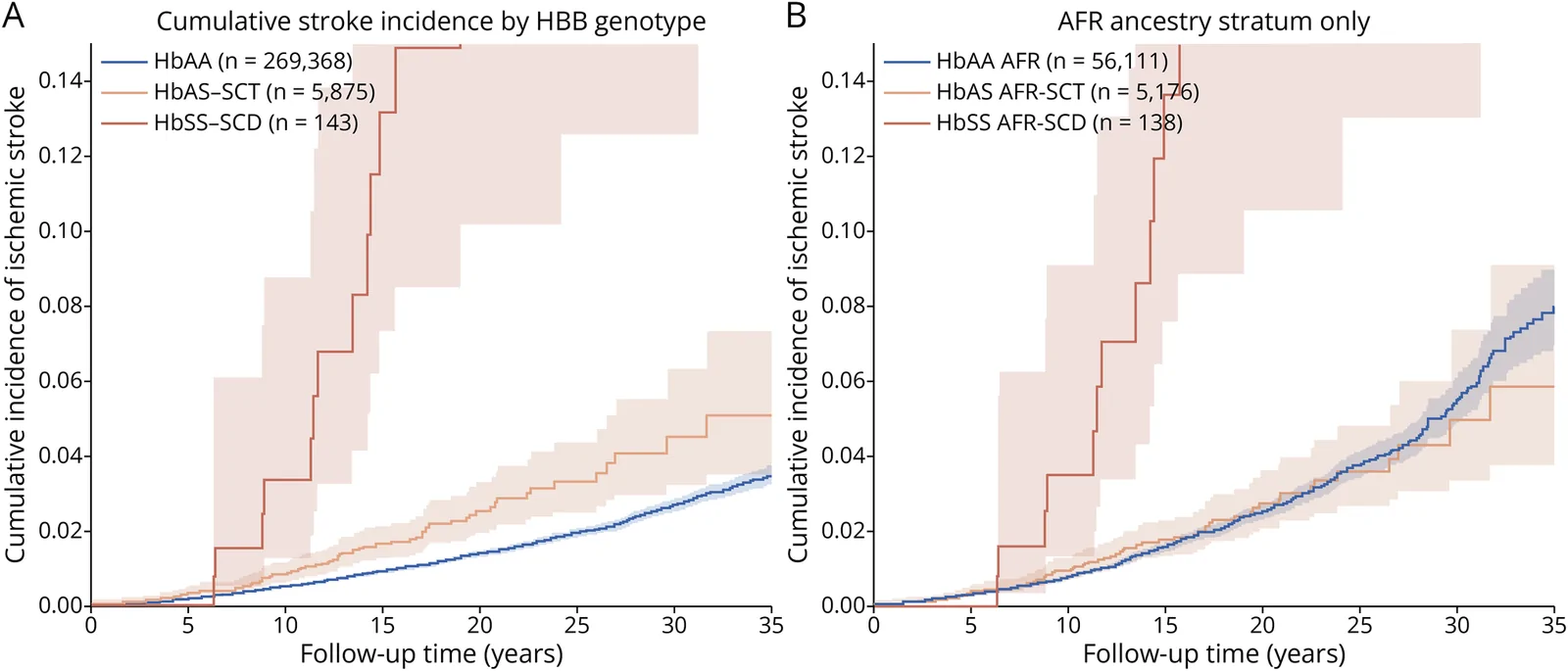
After adjustment, adults with the trait had a relative hazard of 1.06 for strokes from blocked blood flow compared with adults without the variant.
Our read
Populations- Studied:
- Cohort study of 275,530 adults without previous stroke or transient ischemic attack, mean 12.25 years
- What changed:
- Stroke risk did not clearly differ with versus without sickle cell trait after adjustment (hazard ratio 1.06)
- The catch:
- Estimates depended on how strokes and risk factors were recorded in electronic health records
- In the record:
- The 13th paper on sickle cell disease with results in people; 38 on record in all.
- Why it’s aging research:
- It bears on staying healthy in midlife and later life.
Editor of record: Boris Djordjevic · AgingResearch.News
Adults aged 18–75 with no previous stroke or transient ischemic attack, a brief interruption of blood flow to the brain, made up a retrospective cohort of 275,530 people. Researchers used whole-genome sequencing to identify sickle cell trait: one copy of a variant affecting hemoglobin, the protein that carries oxygen in blood.
Over an average 12.25 years, strokes caused by blocked blood flow occurred at unadjusted rates of 1.15 per 1,000 person-years in people with the trait and 0.67 in those without the variant. After accounting for genetic ancestry and other stroke risk factors, the hazard ratio was 1.06; the range of likely values included no difference. The authors suggested that earlier links may partly reflect ancestry-related differences between populations rather than a strong independent effect of the trait.
Why it matters
For stroke prevention as adults age, the study addresses whether sickle cell trait adds useful risk information beyond genetic ancestry and established stroke risk factors.
Caveats
The estimates depended on how strokes and risk factors were recorded in electronic health records. The trait finding does not apply to sickle cell disease or people with a previous stroke or transient ischemic attack.
- Sickle cell trait
- Transient ischemic attack
- Sickle cell disease
- Hemorrhagic stroke
- Incident ischemic stroke
- Humans
The paper
Cleveland Clinic
Neurology Genetics, Nov 4, 2026, Open access

Comments
Be the first to comment.