Dolphins regrew complex skin ridges with minimal scarring
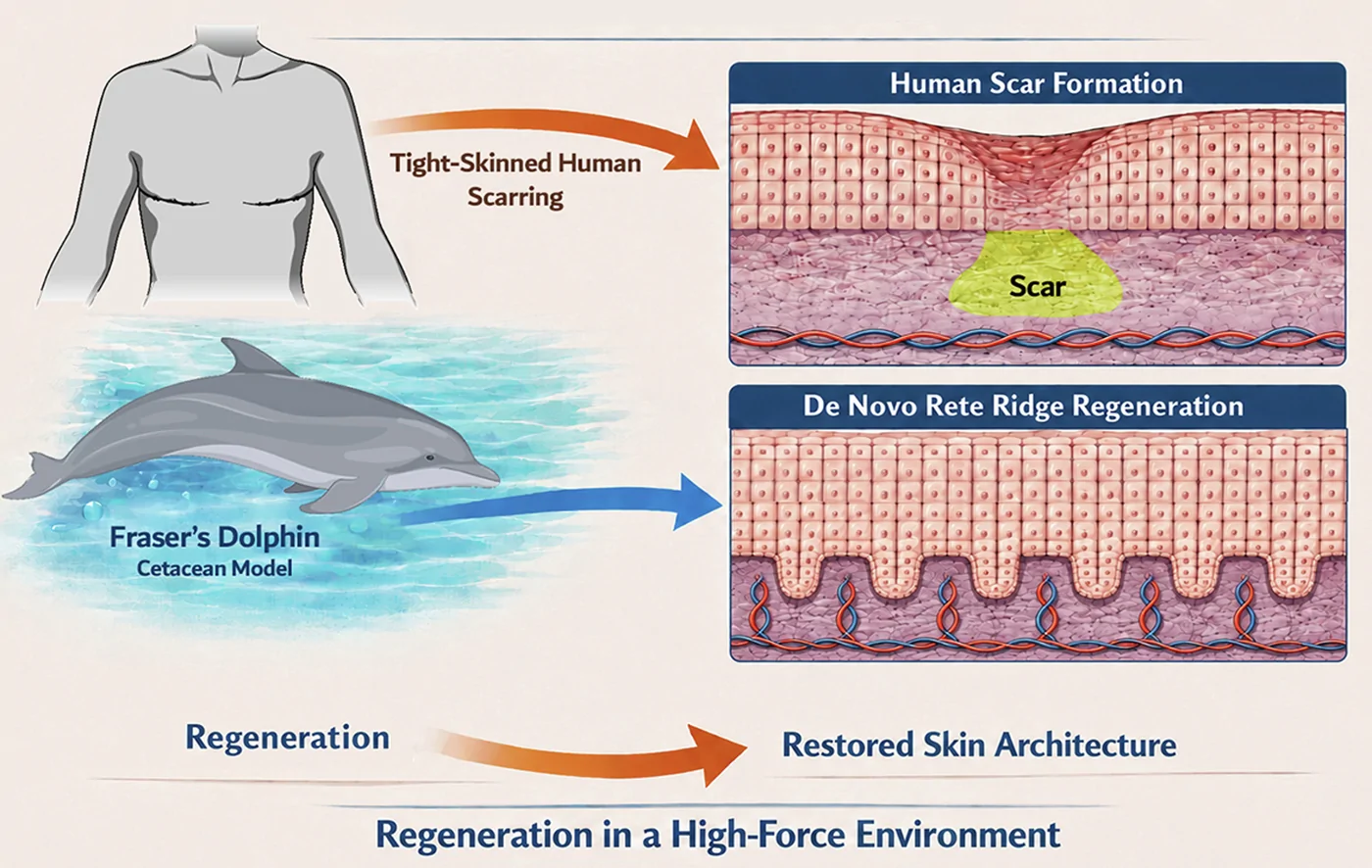
An observational study of shark-bite wounds in Fraser’s dolphins traced the rebuilding of skin folds and associated blood vessels after full-thickness injuries.
Our read
Mechanisms- Studied:
- Study of Fraser's dolphins with shark-bite wounds
- What changed:
- Fraser's dolphins regrew complex skin ridges with associated blood vessels and minimal scarring after full-thickness wounds
- The catch:
- The study did not isolate the factors responsible for regeneration
- Why it’s aging research:
- It studies how the body can be repaired or renewed.
Editor of record: Boris Djordjevic · AgingResearch.News
Fraser’s dolphins rebuilt complex skin structures with minimal scarring in an observational study of large wounds caused by cookie-cutter sharks. Researchers examined wounds extending through the full thickness of the skin. They found newly formed rete ridges—folds where the skin’s outer layer meets the layer beneath—with associated blood vessels.
Small protrusions at the advancing edge of the skin’s outer layer developed into mature ridges. The rebuilding followed a sequence: ridges formed first, followed by blood vessels and then branching. The branches were closely associated with blood vessels. Regeneration occurred despite the dolphins’ tightly attached skin and an environment with high tension and strong shearing forces.
Why it matters
Tissue repair bears on the broader question of maintaining function with age. These dolphins offer a model for investigating the balance between scarring and regeneration in tightly attached skin.
Caveats
The findings came from naturally occurring dolphin wounds, not a controlled experiment testing what caused regeneration. They do not establish whether human skin can rebuild the same structures.

Comments
Be the first to comment.