Heat linked to higher respiratory death risk in Brazilian migrants
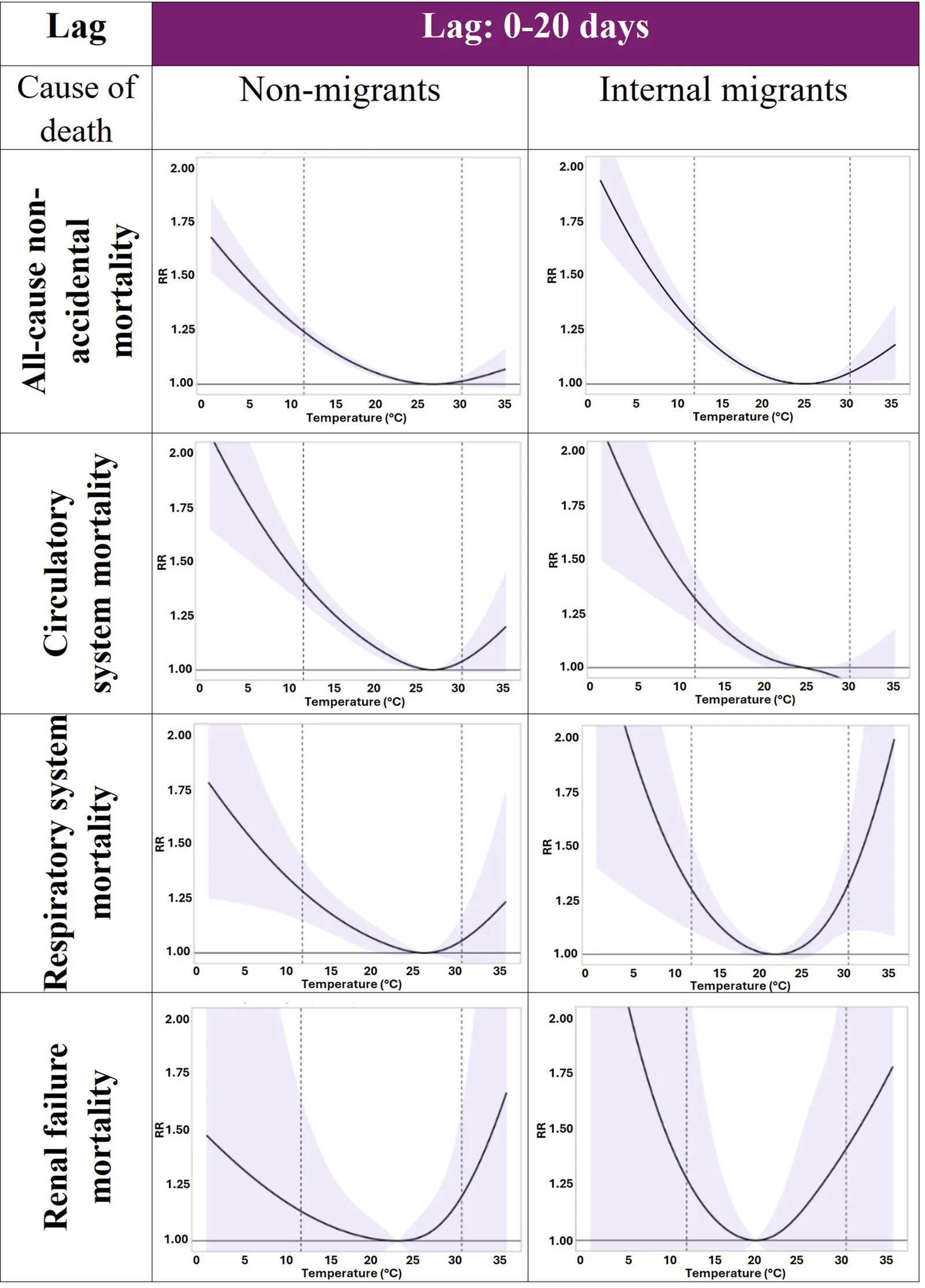
Against the temperature linked to lowest mortality, extreme heat was associated with respiratory death relative risks of 1.32 among internal migrants and 1.06 among non-migrants.
Our read
Populations- Studied:
- Case-control study in people
- Why it’s aging research:
- It measures an outcome that worsens with age.
Editor of record: Boris Djordjevic · AgingResearch.News
Internal migrants and non-migrants in the 100 Million Brazilian Cohort were compared in an observational case-crossover study covering 2000–2020. The analysis included 1,199,636 migrant deaths and 3,716,900 non-migrant deaths. Average ages at death were 62.67 and 57.18 years, respectively; 56% and 57% were male. Internal migrants lived outside their birth state at registration or death.
The analysis compared temperatures around deaths with those during comparison periods. It assessed associations over 0–20 days, comparing extreme temperatures with the temperature linked to lowest mortality. Extreme heat was linked to higher respiratory death risk among migrants, particularly those unable to read or write. For non-migrants, the range of likely values included no difference. A relative risk of 1 means no difference from the comparison temperature. Overall non-accidental death risks following extreme heat and cold were also higher among migrants.
Why it matters
Respiratory mortality bears on health in later life. The authors called for climate-adaptation policies that consider migrants and reduce social inequalities where they settle.
Caveats
Ambient temperature is an indirect measure of the heat a person experiences. The authors reported greater overlap in uncertainty ranges for other subgroup comparisons.
Where the evidence stands
Extreme heat
- 10 independent labs in 6 countries
- 2 findings against
- Funders: Bundesamt für Energie and others
Internal migration
- 2 independent labs in 3 countries
- Funders: European Commission and others
The paper
London School of Hygiene & Tropical Medicine
Lancet Regional Health Americas, Oct 27, 2026, Open access



Comments
Be the first to comment.