Lactate-linked protein change limits death in cultured ovarian cells
A lactate-based protein modification supported transport channels and reduced cell death in experiments with lab-grown granulosa cells, which support developing eggs.
Our read
Interventions- Studied:
- Experiments in cultured KGN cells, against cells expressing wild-type GRP78
- What changed:
- Ovarian cells with mutant GRP78 had higher cell-death markers than cells with normal GRP78
- The catch:
- Apoptosis-related markers stood in for direct cell-death counts
- Why it’s aging research:
- It studies an intervention with evidence of extending healthy life.
Editor of record: Boris Djordjevic · AgingResearch.News
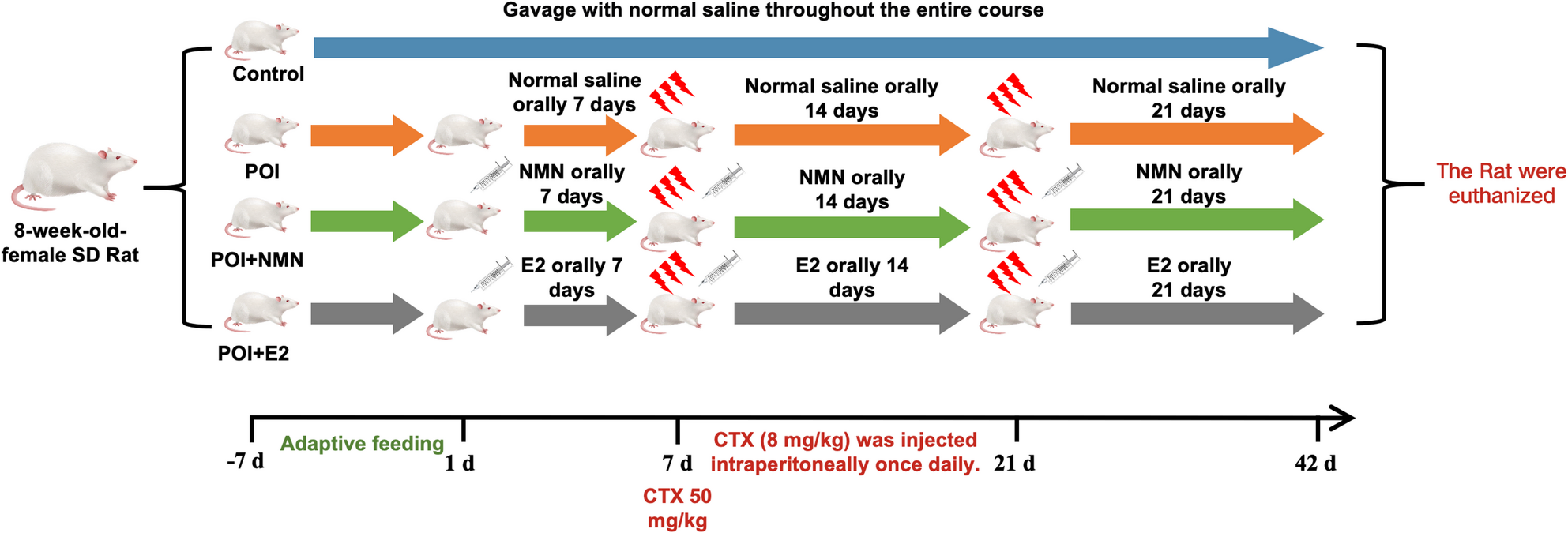
Forty female Sprague-Dawley rats, aged eight weeks, were randomly assigned to four groups in an experiment modeling premature ovarian insufficiency, a disorder involving accelerated breakdown of egg-containing follicles. Rats received oral nicotinamide mononucleotide at 500 milligrams per kilogram daily for 42 days, starting one week before cyclophosphamide, the drug used to induce ovarian damage. Supplementation restored reproductive cycles and reduced death of granulosa cells, which support developing eggs.
In granulosa cells grown in the lab, the researchers examined lactylation, a lactate-based chemical modification. Modification of the protein GRP78 maintained the activity of channels that transport lactate. Altering the modification site reduced channel activity and increased cell death. The authors concluded that this protein modification suppresses follicle breakdown.
Why it matters
Premature loss of ovarian function makes the control of follicle breakdown relevant to reproductive aging. The authors identified lactylation of the GRP78 protein as a potential therapeutic target for premature ovarian insufficiency.
Caveats
Supplementation began before chemically induced ovarian damage in young rats, rather than after established disease. Channel activity was measured in lab-grown cells; the findings do not show that supplementation treats ovarian insufficiency or age-related ovarian decline in people.
The paper
First Affiliated Hospital of University of South China
Journal of Translational Medicine, Aug 5, 2026, Open access


Comments
Be the first to comment.