Fatty liver score linked to diabetes and cardiovascular events
High versus lower fatty liver scores had hazard ratios—relative measures of risk over time—of 1.67 for diabetes and 1.21 for cardiovascular events.
Our read
Populations- Studied:
- Cohort study of 142,518 older adults without diabetes, against adults with FLI < 60
- What changed:
- Cardiovascular event risk was higher with high versus low fatty liver scores (hazard ratio 1.21)
- The catch:
- The fatty liver score can miss lean fatty liver disease or cases without elevated GGT
- In the record:
- The 35th paper on hepatic steatosis with results in people; 569 on record in all.
- Why it’s aging research:
- It bears on staying healthy in midlife and later life.
Editor of record: Boris Djordjevic · AgingResearch.News
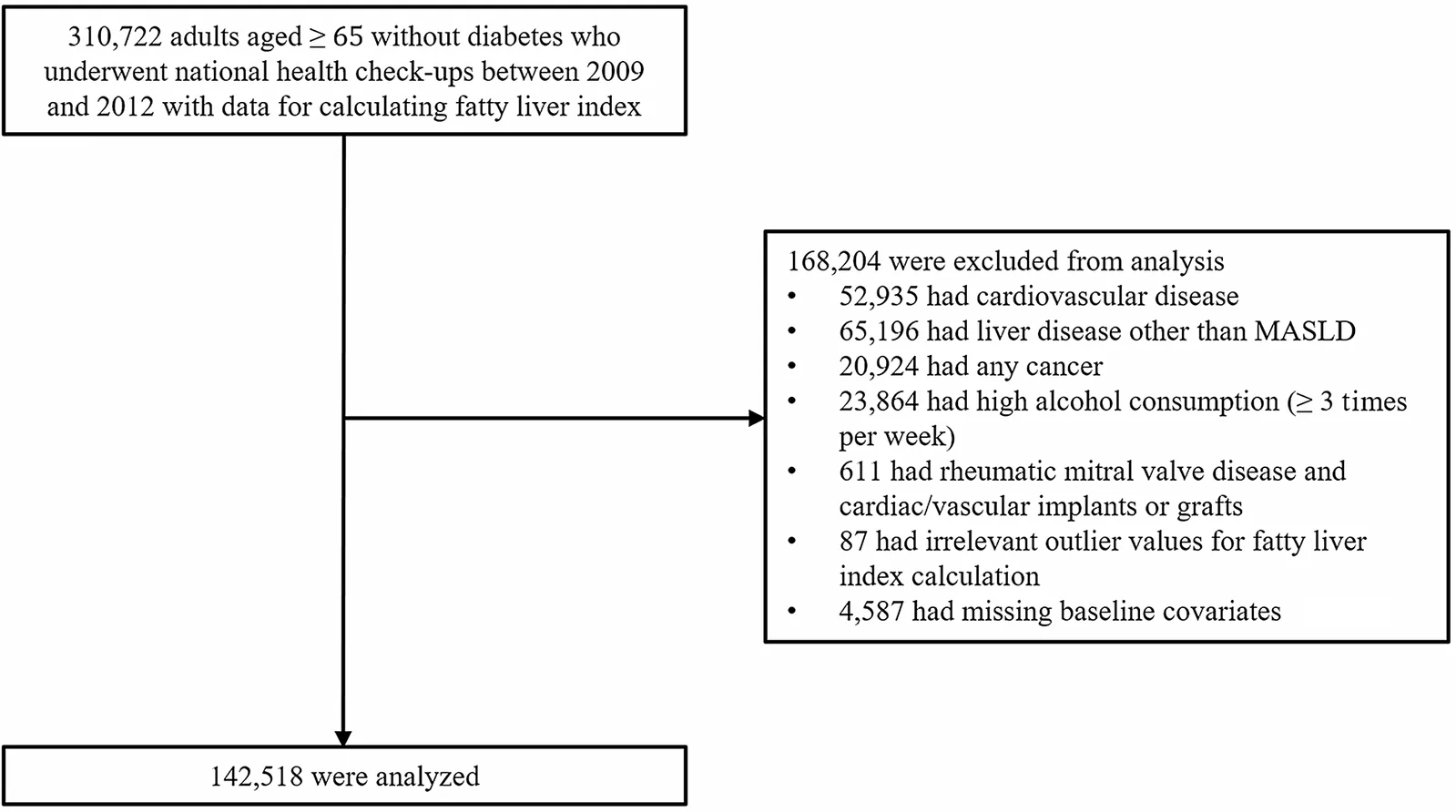
In South Korea, 142,518 adults aged 65 or older without diabetes or cardiovascular disease were followed in a nationwide observational cohort study. Median follow-up was 11.64 years. A fatty liver index based on body measurements and blood tests identified likely fatty liver at scores of at least 60. Impaired fasting glucose meant blood sugar of 100–125 mg/dL after fasting.
After adjustment for other risk factors, index-defined fatty liver was associated with new diabetes and a combined outcome of heart attack, stroke, heart failure or cardiovascular death. The cardiovascular association held in people with normal or impaired fasting glucose. Impaired fasting glucose was associated with diabetes, with a relative hazard estimate of 2.54, but had no independent association with the combined cardiovascular outcome.
Why it matters
Fatty liver and prediabetes are increasingly common among older adults. Understanding their different links to later illness could inform risk assessment in this age group.
Caveats
Fatty liver was inferred from an index rather than measured directly; other differences in participants’ metabolic health may partly account for the links despite adjustment. The findings do not cover people younger than 65 or those with diabetes or cardiovascular disease, whom the study excluded.
From the paper
- Participants
A total of 142,518 older adults were included in this study.
Results, Baseline characteristics based on hepatic steatosis and IFG status
- Follow-up
The median follow-up duration was 11.64 years (interquartile range [IQR], 2.11), which was similar across different FLI-defined hepatic steatosis statuses: 11.64 (IQR, 2.11) and 11.66 years (IQR, 2.14) for FLI < 60 and FLI ≥ 60, respectively.
- Result
After multivariable adjustment, FLI-defined hepatic steatosis was associated with incident diabetes (SHR 1.67; 95% CI 1.59–1.76; P < 0.001) and composite MACE (SHR 1.21; 95% CI 1.15–1.29; P < 0.001).
- Limitation
First, our study solely utilized fasting glucose because there was lacking information about glycated hemoglobin (HbA1c) and 75-g oral glucose tolerance test (OGTT) within the NHIS claims database, despite the fact that many guidelines recommend using fasting glucose …
Quoted word for word from the full text on link.springer.com.
The paper
Chosun University; University of California, Irvine
Cardiovascular Diabetology, Aug 19, 2026, Open access


Comments
Be the first to comment.