Dairy added no overall exercise benefit in older adults
In a 12-week randomized trial, adding dairy protein to home exercise offered no overall advantage among 54 Japanese adults aged 65 or older.
Registered UMIN000052127
Limit: Self-reported dairy frequency logs could overestimate actual dairy intake
Edited by Boris Djordjevic · AgingResearch.News
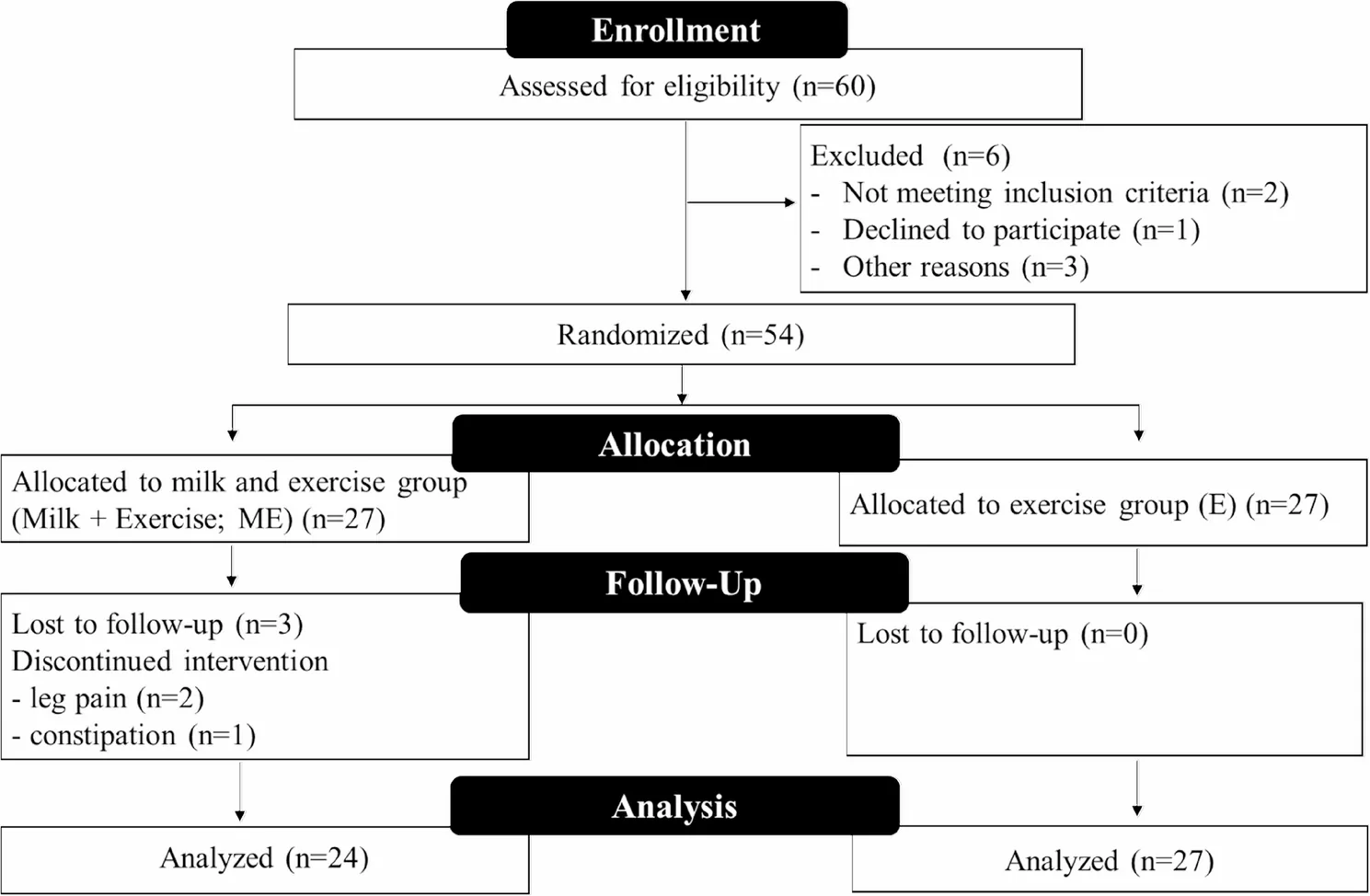
Fifty-four community-dwelling Japanese adults aged 65 or older took part in a 12-week randomized trial comparing extra dairy plus home-based muscle-strengthening exercise with exercise alone. The dairy group aimed to add approximately 10–15 grams of dairy protein daily within usual meals. Both groups were instructed to exercise at least three days a week.
Fifty-one participants completed the study; their mean age was 78.2 years. The researchers found no statistically significant differences between groups in muscle strength, physical function or body composition. Some measures of physical function improved over time in both groups. In exploratory analyses, participants with lower usual dairy intake showed gains in arm and leg strength only in the dairy-plus-exercise group.
Why it matters
The trial examined a practical approach to supporting physical function in older age, outside highly controlled research settings.
Caveats
This small trial did not conceal group assignments from participants, and its exploratory subgroup findings are not conclusive. The results concern community-dwelling Japanese older adults; the abstract does not report adverse events.
From the paper
- Participants
A total of 54 older adults (age ≥ 65 years) (men, n = 13; women, n = 41; mean age, 78.5 ± 6.7 years; BMI, 22.8 ± 3.1 kg/m) were included in this study.
Quoted word for word from the full text on link.springer.com.
The paper
Shimane University
BMC Geriatrics, Aug 4, 2026, Open access
Comments
Be the first to comment.