Orforglipron reduced weight in Japanese adults with obesity
Average weight fell 5.9%, 8.7% and 7.9% with daily doses of 6, 12 and 36 mg, respectively, versus 0.6% with placebo over 72 weeks.
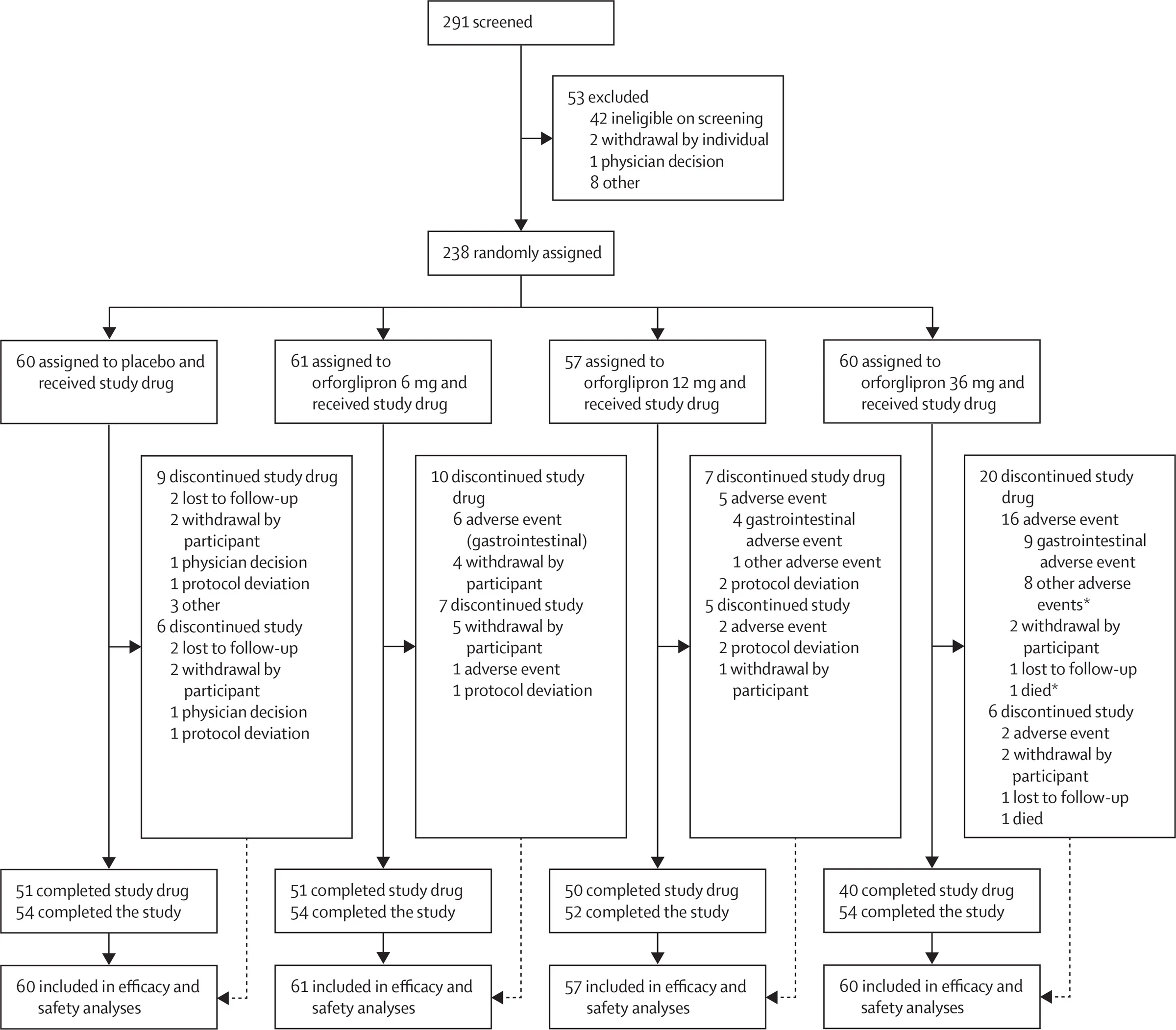
72 weeks, double-blind, placebo-controlled, registered NCT05931380
Limit: Eli Lilly and Company funded the trial
Stake: Eli Lilly and Company, which develops orforglipron, funded the study; authors work for it, hold shares in it and take fees from it.
Edited by Boris Djordjevic · AgingResearch.News
The double-blind randomized trial enrolled 238 Japanese adults aged 18 or older with obesity and related health disorders. Their mean age was 54.1; 144 were men and 94 were women. Participants received the oral drug orforglipron at 6, 12 or 36 mg, or placebo, once daily for 72 weeks.
All three doses reduced weight more than placebo. At least 5% weight loss occurred in 45.6%, 60.8% and 58.8% of the respective drug groups, versus 15.2% with placebo. Reported health problems with orforglipron were mostly mild-to-moderate digestive symptoms. Nausea led to stopping treatment in 2%, 2% and 8% of the respective drug groups. Vomiting led to stopping in no participants at 6 mg, 4% at 12 mg and 2% at 36 mg. Neither symptom caused treatment discontinuation with placebo. Eli Lilly and Company funded the trial.
Why it matters
Obesity-related disorders such as high blood pressure and type 2 diabetes affect health in later life. This trial tested an oral option for weight management in people with these conditions.
Caveats
The trial covered 72 weeks and enrolled only Japanese adults meeting specific obesity criteria. Eligibility required a body mass index, a measure of weight relative to height, of 27 to below 35 with at least two obesity-related disorders, or 35 or higher with at least one; at least one disorder had to be high blood pressure, abnormal blood fats or type 2 diabetes.
The paper
Chiba University; Toranomon Hospital
The Lancet Diabetes & Endocrinology, Oct 30, 2026


