Nurse-led program modestly improved dementia risk scores
The adjusted difference in estimated dementia risk scores was 1.598 points versus controls after 12 months, favoring the program.
403 participants, blinded, registered ACTRN12621001168842
Limit: Self-reported dementia risk scores could improve through changed reporting rather than changed behavior
Edited by Boris Djordjevic · AgingResearch.News
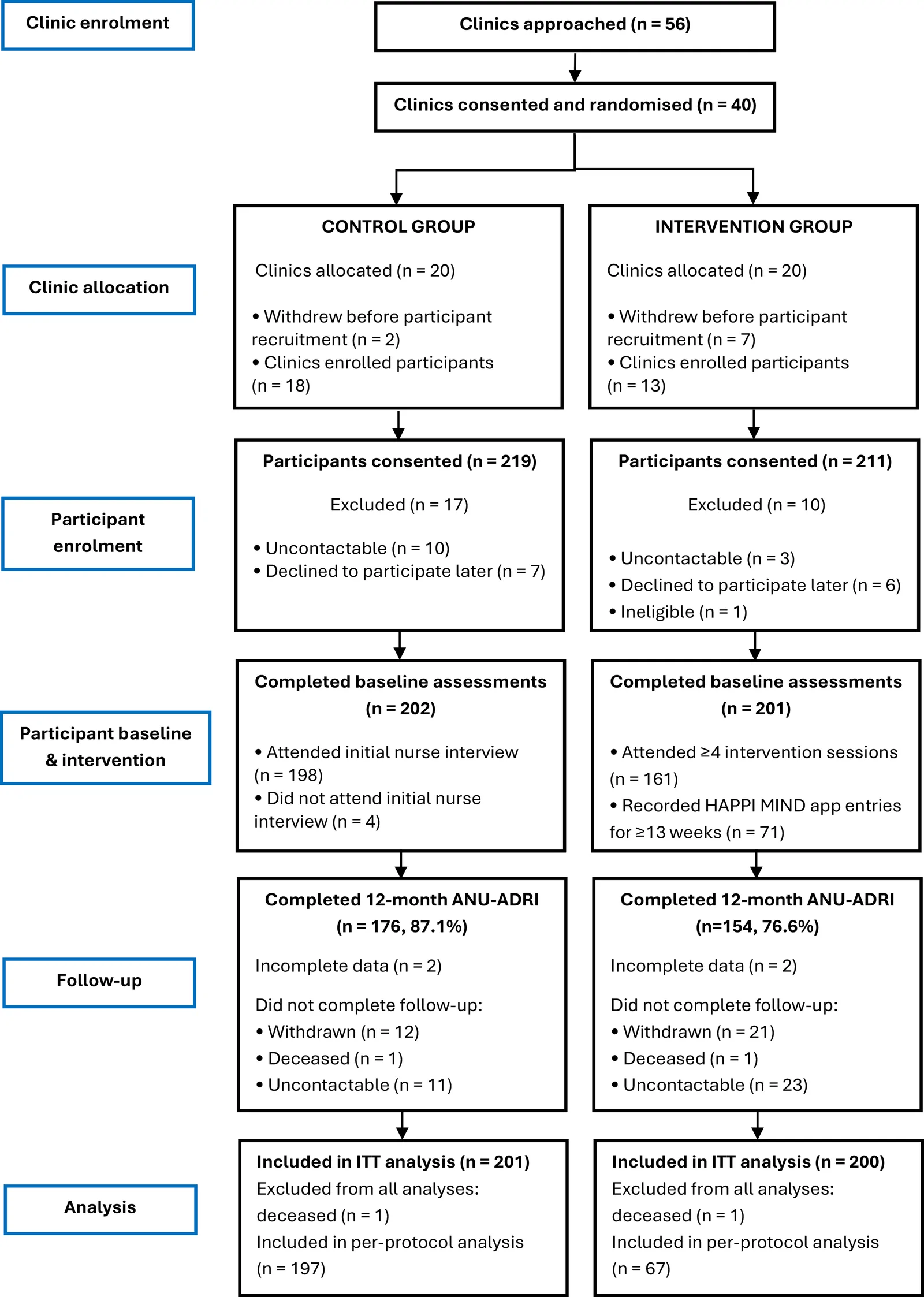
A randomized trial enrolled 403 adults aged 45–65 with at least two modifiable dementia risk factors from 31 Australian general practices. Their average age was 56.4 years, and 63% were female. Researchers randomly assigned entire practices to the program or a control group.
The program provided five nurse-led sessions to support behavior change over 12 months, a personalized action plan and a mobile app. Controls received a dementia risk report, an educational booklet and referral to their doctor when appropriate. The main outcome was change in a score assessing exposure to dementia risk and protective factors. The adjusted difference at 12 months was 1.598 points, which the authors reported favored the program. Seven adverse events occurred, including two deaths, one in each group.
Why it matters
Modifiable risks in midlife are a potential target for dementia prevention. The trial examined whether primary care could provide a scalable way to address several risks together.
Caveats
The outcome was an estimated risk score, not whether participants developed dementia. The findings concern adults aged 45–65 with multiple modifiable risk factors; the authors called for further implementation, process and economic evaluations before broader adoption.
From the paper
- Participants
The ITT analysis included 401 participants, whereas the per-protocol analysis included 264 participants (67 intervention and 197 control) who met the per-protocol criteria.
- Follow-up
No participants were reported to have received a diagnosis of dementia during the 12-month follow-up period, and changes in MoCA scores were minimal with no significant between-group differences observed.
- Result
In the adjusted ITT analysis, the between-group mean difference (MD) was 1 1.60 (95% CI 0.42–2.77; p = 0.0080), while the unadjusted MD was 1.57 (95% CI 0.44–2.70; p = 0.0060), favouring the intervention.
- Events by group
Overall, 56% of participants in the intervention group and 44% in the control group showed improvement in the primary outcome.
- Harms
Seven participants experienced adverse events during 12-month follow-up, including two deaths (one per group) and five serious adverse events (four intervention; one control).
Quoted word for word from the full text on PubMed Central.
The paper
Monash University
The Lancet Regional Health Western Pacific, Oct 20, 2026, Open access

Comments
Be the first to comment.