Vaccine eased metabolic problems and extended life in mice
Experiments across multiple aging mouse models found that a vaccine cleared targeted fat cells in senescence, a state in which cells stop dividing.
Limit: Safety checks relied on organ histology, leaving subclinical toxicities unmeasured
Edited by Boris Djordjevic · AgingResearch.News
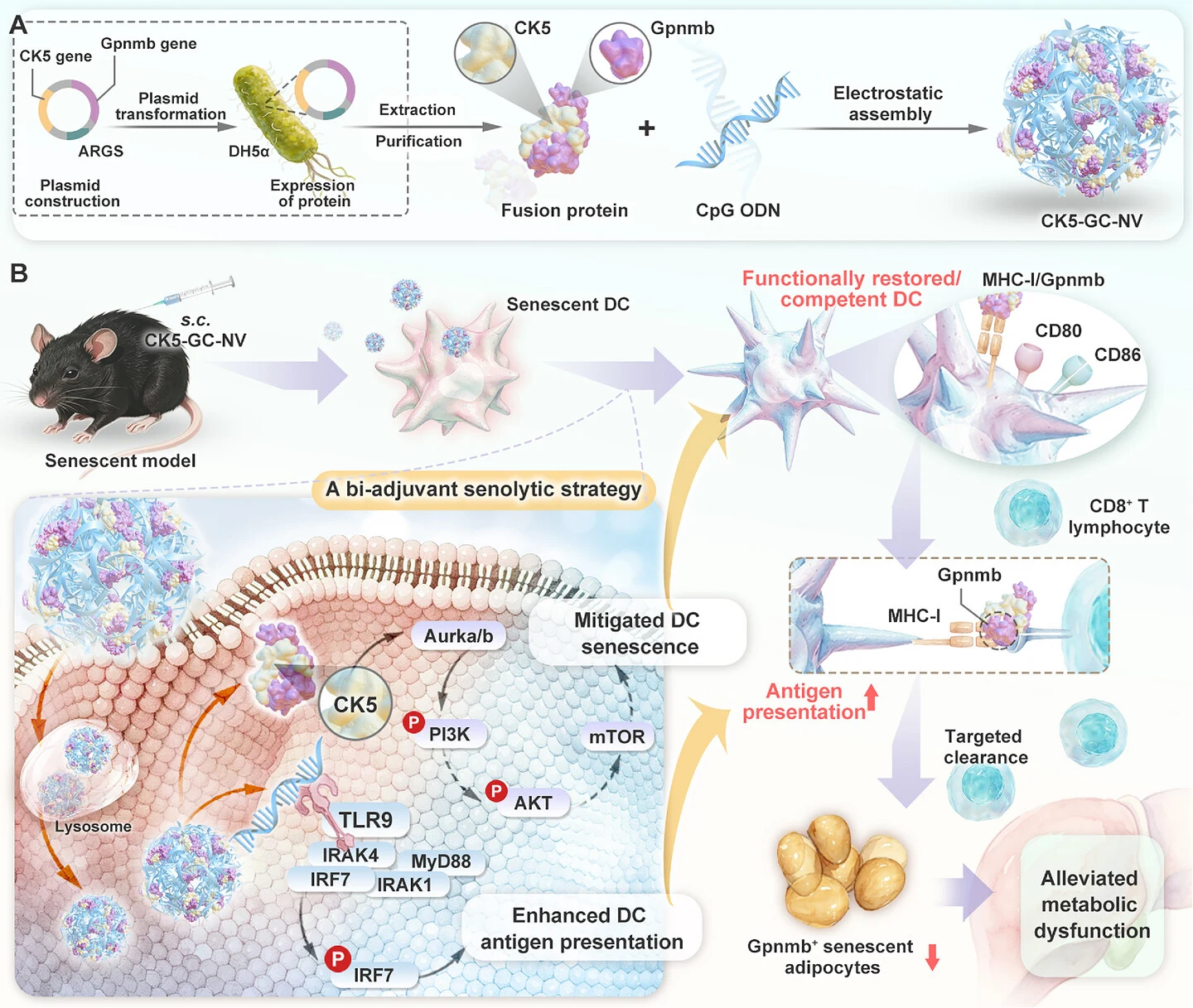
In experiments across multiple aging mouse models, a vaccine cleared targeted senescent fat cells, eased metabolic dysfunction and extended lifespan. The researchers built the vaccine by combining Gpnmb, a protein used as an immune target, with a spider silk protein variant and short DNA molecules that stimulate immune responses.
The approach also addressed age-related dysfunction in dendritic cells, immune cells that help activate other immune cells. The spider silk component reduced signs of senescence in dendritic cells. The intervention restored their ability to display targets to other immune cells and stimulated immune responses that killed senescent targets. The authors described the vaccine as a proof of concept for directing immune responses against senescent cells.
Why it matters
Age-related dysfunction in dendritic cells can limit vaccines aimed at senescent cells. The work addresses whether such vaccines can also overcome weakness in the immune cells needed to mount a response.
Caveats
These animal experiments did not test benefits in people. The abstract does not report the number of mice studied or the size of the metabolic and lifespan effects.
From the paper
- Animals
Female C57BL/6 mice were randomized into experimental cohorts using computer-generated random allocation.
Quoted word for word from the full text on advanced.onlinelibrary.wiley.com.
The paper
The First Hospital of Jilin University
Advanced Science, Oct 28, 2026

