Cancer rates vary by age in people with intellectual disability
Children with intellectual disability had a standardized cancer incidence ratio of 4.55 compared with an age- and sex-matched reference group in Denmark.
841,583 participants
Limit: Lower screening participation could leave cancers undetected among people with intellectual disability
Edited by Boris Djordjevic · AgingResearch.News
A Danish observational cohort study compared 84,007 people with intellectual disability with 841,583 age- and sex-matched people from the general population. Between 1978 and 2024, 6,701 people in the intellectual disability group and 87,955 in the reference group developed cancer.
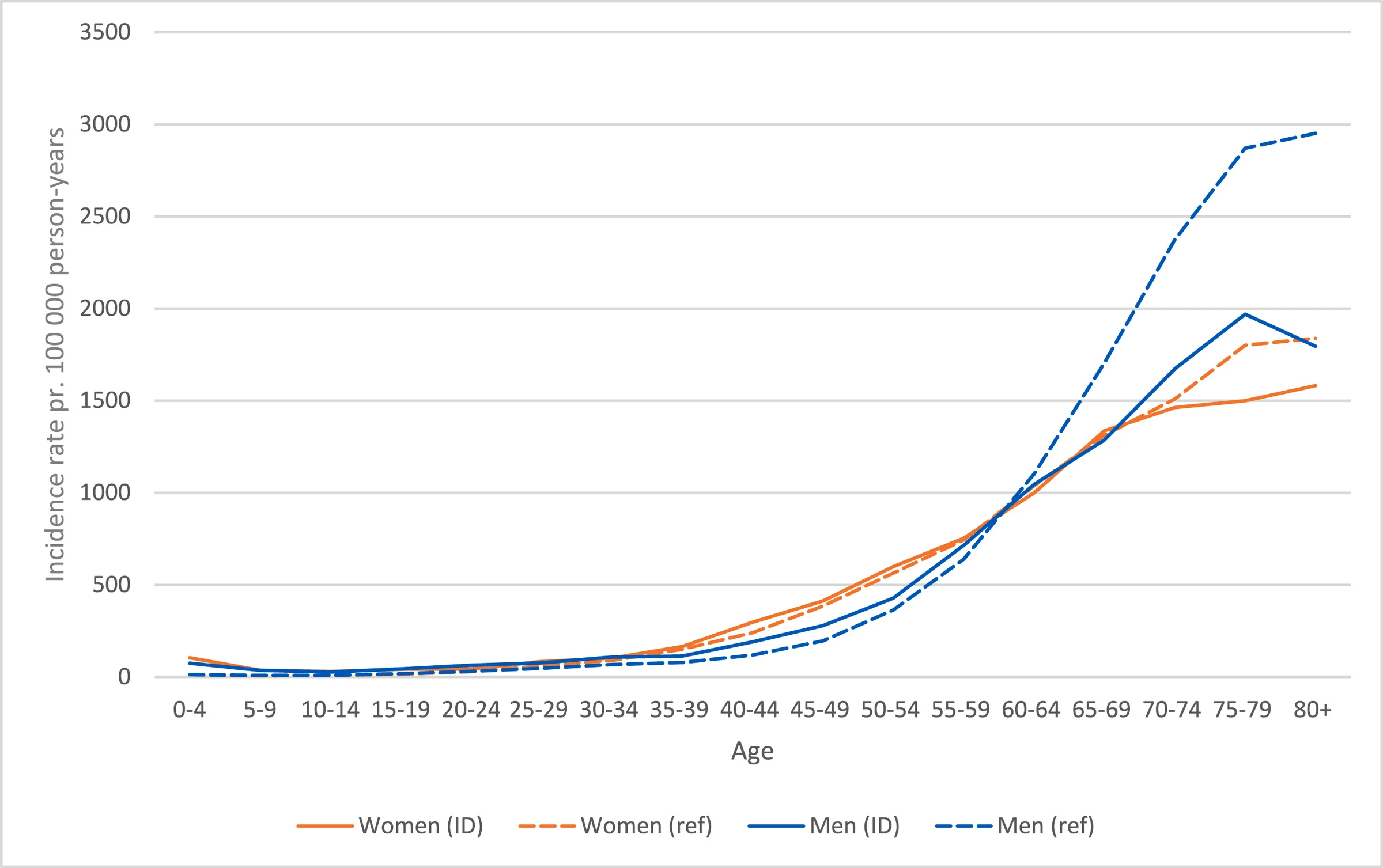
After accounting for age and sex, cancer incidence was markedly higher among children aged 0–17 with intellectual disability. The standardized incidence ratio, a measure comparing cancer rates between groups, was 4.55. Incidence was modestly higher at ages 18–59, with a ratio of 1.20, and lower at age 60 or older, at 0.87. Incidence also varied by the severity of intellectual disability and cancer site. People with intellectual disability were more likely to have an advanced or unknown cancer stage at diagnosis.
Why it matters
The study addresses how cancer prevention and early detection priorities may differ across the lifespan. The authors emphasized these needs particularly among younger people and those with mild intellectual disability.
Caveats
This observational study cannot establish why cancer incidence differed between groups. Its findings come from Danish national registers and may not apply to populations elsewhere.
The paper
University of Southern Denmark
Disability and Health Journal, Oct 24, 2026


