AI predicts heart scan measurements from electrical recordings
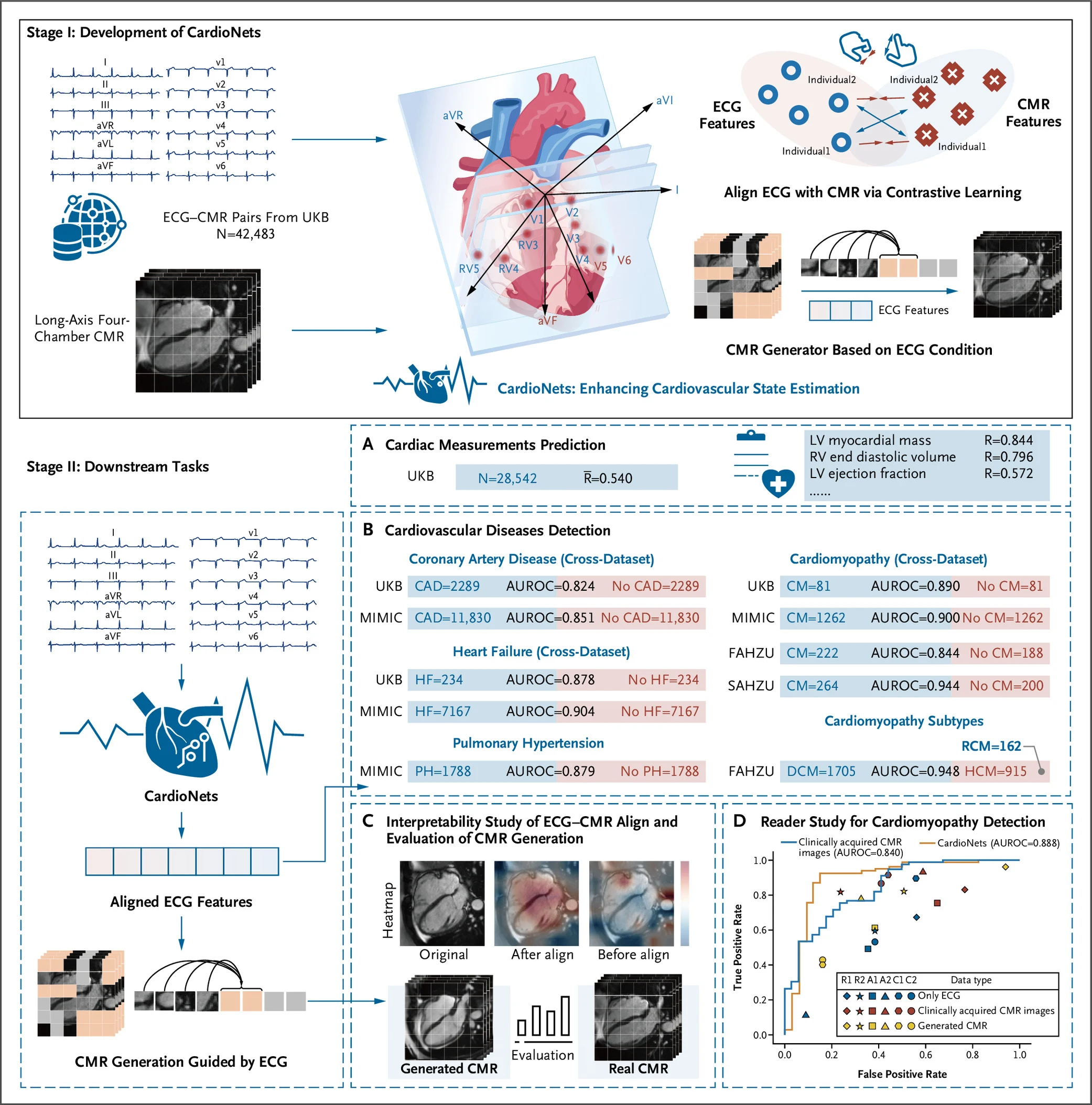
In UK Biobank data, predictions explained variation in heart measurements with a score of 0.310, versus 0.269 for the best electrical-recording-only model.
Limit: Prediction accuracy in prospective clinical care was not measured
Edited by Boris Djordjevic · AgingResearch.News
A computational study used 159,819 samples from UK Biobank, an intensive-care database of heart electrical recordings and two external clinical datasets to develop and evaluate CardioNets, an artificial intelligence model. The model used 12-lead electrocardiograms, recordings of the heart’s electrical activity, to predict heart measurements and generate synthetic magnetic resonance images.
In UK Biobank data, CardioNets predicted heart measurements better than the best comparison model using electrical recordings alone. It also performed better at detecting cardiomyopathy, a disease of the heart muscle. In the image-generation evaluation, its synthetic images scored 0.205 on a measure of structural similarity, compared with 0.122 for a leading comparison method.
Why it matters
Early, accurate assessment of cardiovascular disease is relevant to healthy aging. This work explores whether a widely available test can offer some information usually obtained from less accessible heart scans.
Caveats
This was a computational evaluation, not prospective testing in clinical care. The authors called for prospective studies to validate clinical deployment.