Endometriosis and linked ovarian cancer show opposite biological aging
Biological age was 16.92% higher than chronological age in endometriosis patients but 14.64% lower in patients with related ovarian cancer.
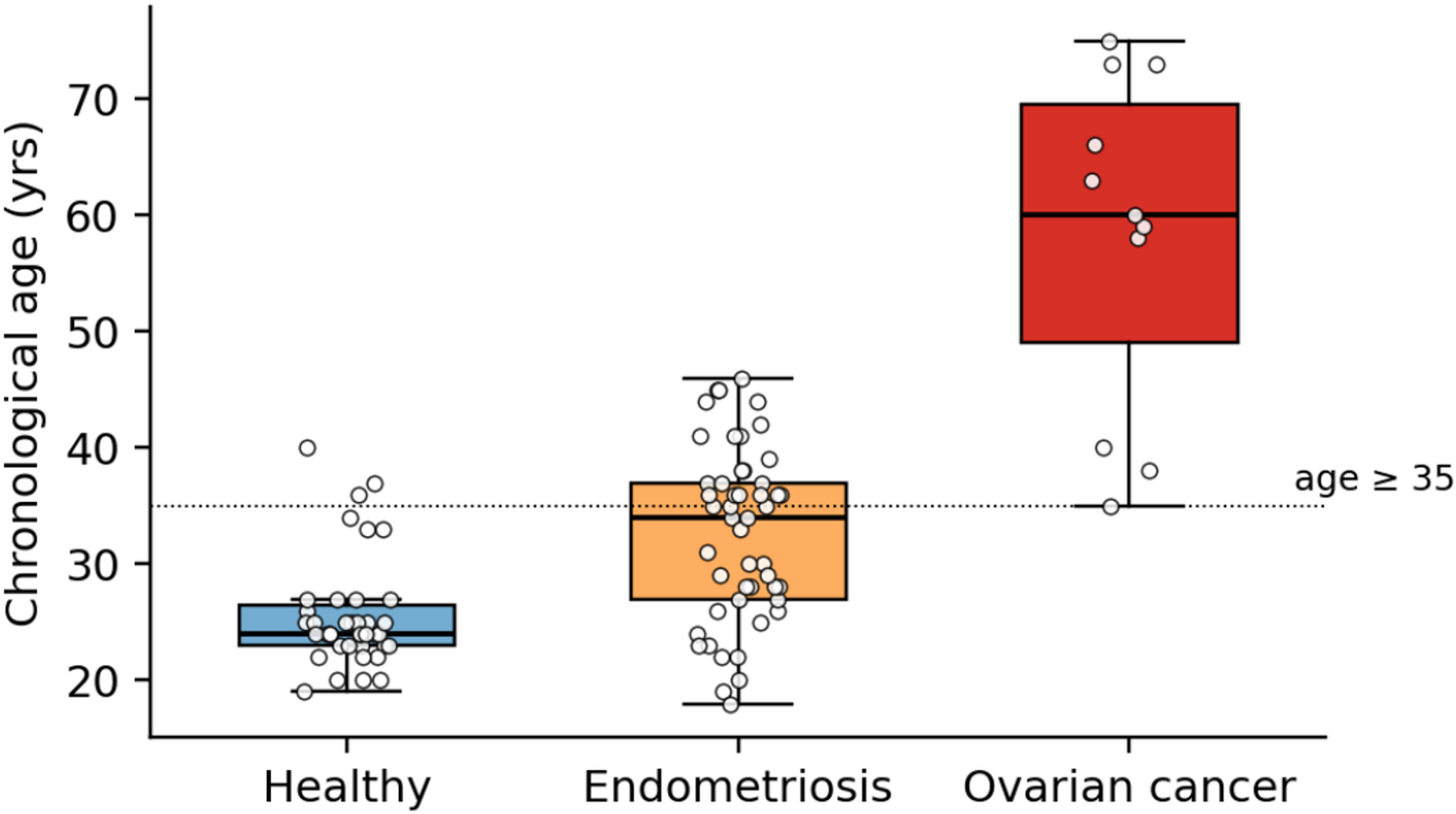
Limit: Only 11 patients with endometriosis-associated ovarian cancer were evaluated
Edited by Boris Djordjevic · AgingResearch.News
In an observational study, researchers analyzed blood biomarkers in age-matched patients with endometriosis, patients with endometriosis-associated ovarian cancer, and unaffected controls. They estimated biological age using DNA methylation, which consists of chemical tags on DNA, alongside measuring the length of telomeres, the protective caps on chromosomes.
Patients with endometriosis showed biological age acceleration of 16.92% and had longer telomeres. In contrast, patients with endometriosis-associated ovarian cancer displayed a biological profile 14.64% younger than their chronological age. Ovarian cancer patients also showed significant telomere shortening, which the authors attributed to rapid cell division and turnover. DNA methylation patterns linked to age distinguished the groups with high statistical significance.
Why it matters
The findings link the malignant transformation of tissue to marked shifts in biological aging and chromosome maintenance, providing candidate biomarkers to assess cancer risk based on biological age.
Caveats
The reported comparison between patient groups does not establish how an individual's biological age changes during progression from endometriosis to cancer. The abstract also did not report the number of patients studied or their chronological age range.
- DNA methylation
- Telomerase and telomere maintenance
- Endometriosis
- Biological age
- Endometriosis-associated ovarian cancer
- Humans
The paper
Nicolaus Copernicus University; Charité – Universitätsmedizin Berlin
BMC Medicine, Jul 27, 2026, Open access


