Dental cleanings linked to lower death risk in diabetes
Compared with no cleanings, the adjusted relative death rate at a given time was 0.32 with one yearly cleaning and 0.11 with at least two.
Limit: Healthier diet and exercise among cleaning recipients could exaggerate the apparent reduction in death risk
Edited by Boris Djordjevic · AgingResearch.News
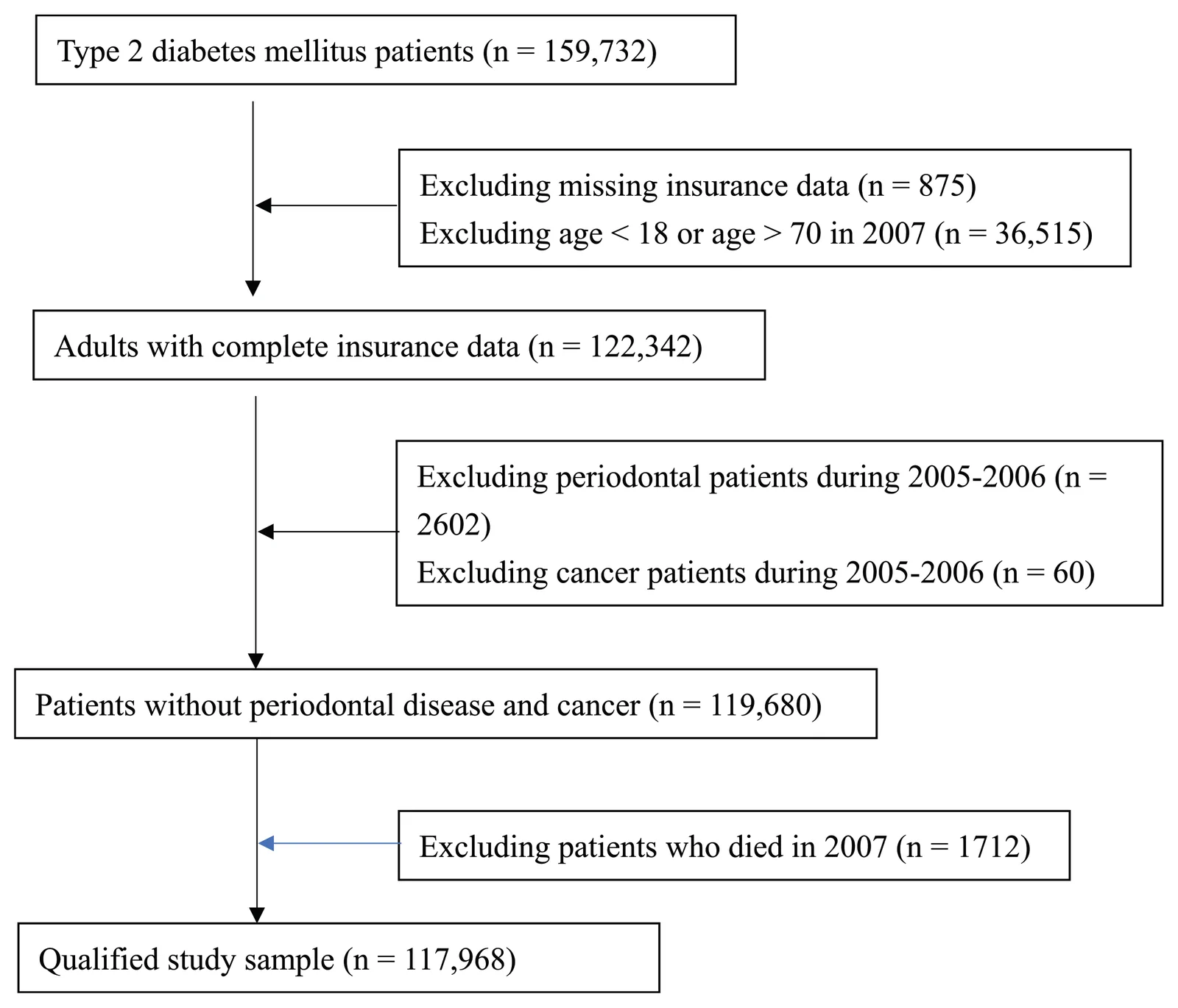
The retrospective cohort study tracked 117,968 adults in Taiwan aged 18–70 who were newly diagnosed with type 2 diabetes in 2007. More than half were men. Researchers used insurance records to follow preventive dental cleanings, deaths and diabetes complications from 2008 through 2022 or death.
More frequent cleanings were associated with lower mortality after adjustment for measured differences between groups. Unadjusted death rates were 23.089 per 1,000 person-years with no cleanings, 4.186 with one yearly cleaning and 1.117 with at least two. A person-year represents one person followed for one year. More frequent cleanings were also associated with lower scores on an index measuring the severity of diabetes complications.
Why it matters
For people aging with type 2 diabetes, limiting complications matters for later-life health. The findings raise the question of whether preventive dental care could complement standard diabetes care.
Caveats
This observational study cannot show that cleanings caused better outcomes; unmeasured differences could account for the associations. The findings do not establish effects outside ages 18–70 or in people with periodontal disease or cancer recorded during 2005–2006, whom researchers excluded.
From the paper
- Participants
After excluding patients without insurance data, those aged <18 or >70, those with periodontal disease or cancer during the washout period, and those who died in 2007, the final analytic cohort comprised 117,968 patients.
- Result
… those receiving 1 DP per year had a 68% lower risk of mortality (adjusted hazard ratio [AHR]: 0.319; 95% confidence interval [CI]: 0.305,0.335; P < 0.001), and those receiving ≥2 DP per year had an 89% lower risk (AHR: 0.108; 95% CI: 0.093,0.126; P < 0.001).
- Limitation
Diabetes outcomes are influenced by lifestyle factors (e.g., diet control and exercise), and patients who receive regular DP are likely to differ from those who do not.
Quoted word for word from the full text on PubMed Central.
The paper
The association between dental prophylaxis and diabetes outcomes: A 15-year cohort study
College of Health Sciences
Journal of Dental Sciences, Oct 1, 2026, Open access


