Semaglutide benefits partly faded in HIV-associated fat buildup
Among 108 people with HIV-associated fat buildup in a randomized trial, semaglutide recipients retained weight and waist reductions at week 56 after stopping at week 32.
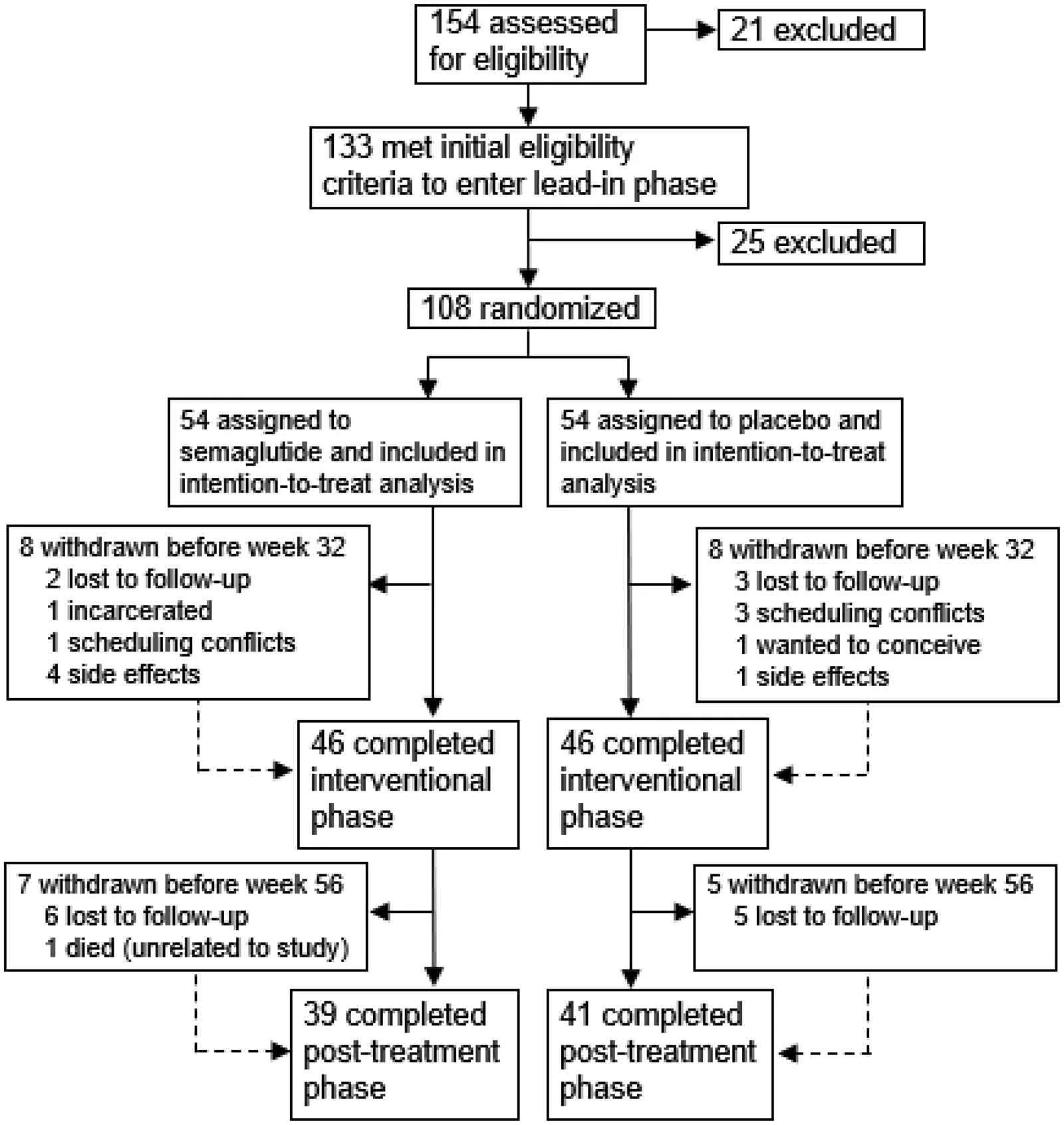
108 participants, double-blind, placebo-controlled, registered NCT04019197
Limit: Diet and physical activity were not controlled and could contribute to weight regain
Edited by Boris Djordjevic · AgingResearch.News
A randomized, double-blind trial enrolled 108 people with human immunodeficiency virus (HIV) and HIV-associated lipohypertrophy, excess fat around the abdomen and internal organs. Participants received semaglutide or placebo for 32 weeks, then stopped the study drug and were followed through week 56. Eighty completed posttreatment follow-up.
After stopping semaglutide, participants gained weight and total body fat, including fat around internal organs. Blood sugar measures and insulin resistance—the body's reduced response to the hormone insulin—worsened. Despite this rebound, body weight and waist circumference remained below their starting levels at week 56. Outcomes stayed relatively stable in the placebo group.
Why it matters
HIV-associated fat buildup is linked to increased heart and metabolic disease risk. The findings support the researchers' conclusion that sustained semaglutide use is likely needed for long-term benefit.
Caveats
Only 80 of the 108 randomized participants completed posttreatment follow-up. The findings concern people with HIV-associated lipohypertrophy and may not apply to other semaglutide users.
From the paper
- Participants
A total of 92 participants completed the 32-week intervention period.
Quoted word for word from the full text on academic.oup.com.
- Semaglutide
- Semaglutide discontinuation
- HIV infection
- HIV-associated lipohypertrophy
- Insulin resistance
- Humans
The paper
Medical University of South Carolina
Open Forum Infectious Diseases, Oct 5, 2026, Open access