Tumor necrosis factor-alpha blockers linked to lower glaucoma risk
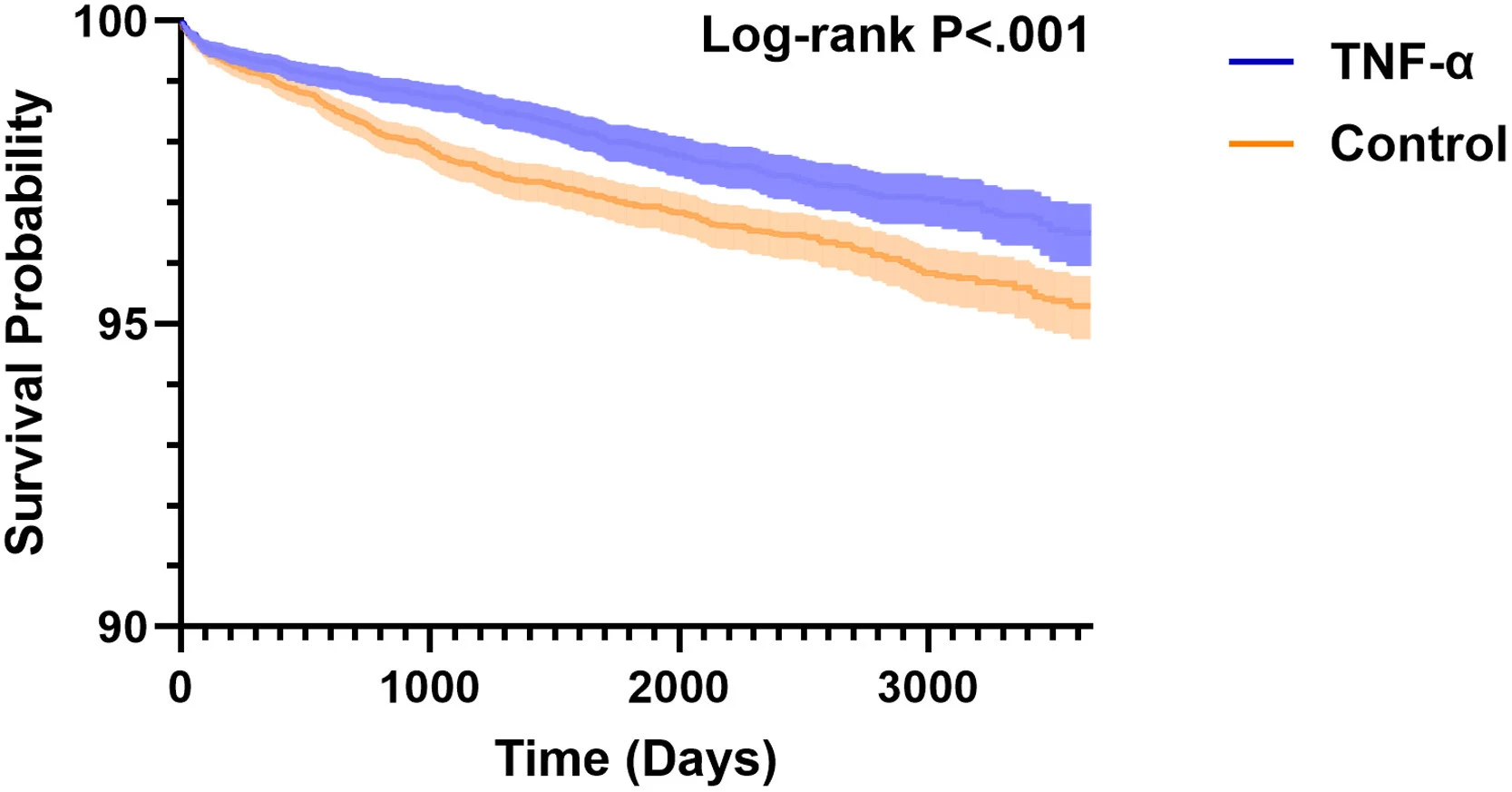
Over 10 years, primary open-angle glaucoma was diagnosed in 2.0% of users of these drugs versus 3.3% of matched nonusers.
Multicenter
Limit: Glaucoma was identified using diagnosis codes, which can miss or misclassify cases
Edited by Boris Djordjevic · AgingResearch.News
An observational cohort study compared 11,915 matched pairs of adults aged 40 or older by looking back at health records. Their average age was 59, and 68% were female. The records came from 70 US health care organizations. Researchers matched users of drugs that block tumor necrosis factor-alpha, an inflammation-related protein, with nonusers based on demographics and conditions for which these drugs are prescribed.
Researchers tracked new diagnoses of primary open-angle glaucoma, an eye disease that damages the nerve connecting the eye to the brain, for up to 10 years. Drug use was associated with a lower risk of diagnosis. Adalimumab and infliximab each showed this association against matched nonusers. Comparisons between the different drugs found no significant differences.
Why it matters
Glaucoma-related nerve damage threatens eye health as people age. The results support a possible role for inflammation involving tumor necrosis factor-alpha in that damage.
Caveats
The observational design cannot establish cause and effect. The findings do not cover adults under 40 or people with a history of uveitis, inflammation inside the eye, or its related complications.
The paper
Association Between Systemic TNF-α Inhibitor Use and Risk of Primary Open-Angle Glaucoma
American Journal of Ophthalmology, Oct 22, 2026