Glaucoma eye-drop groups differed in osteoporosis risk
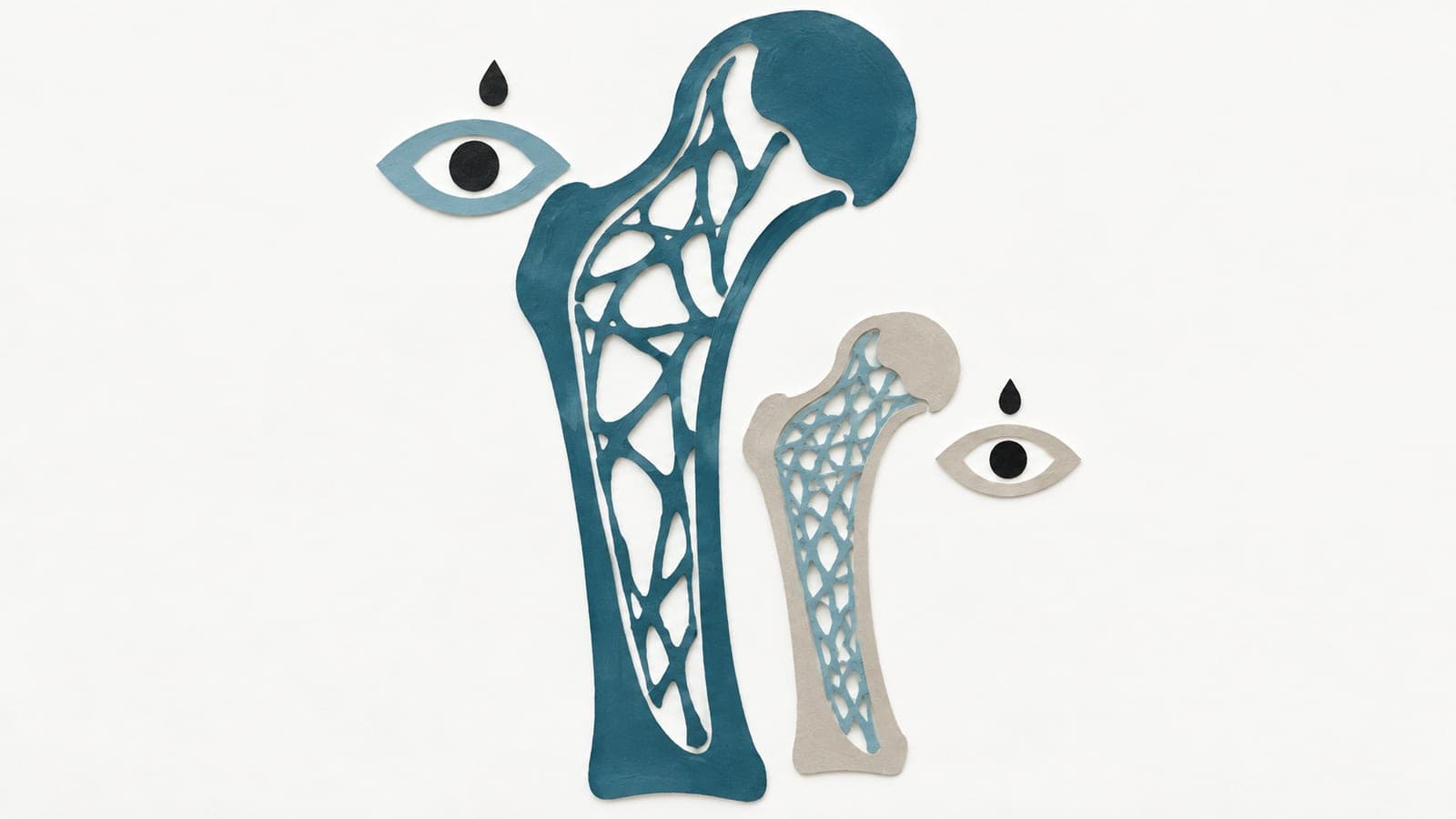
Osteoporosis was diagnosed in 13.3% of patients prescribed drops such as latanoprost, compared with 8.9% prescribed drops such as pilocarpine.
Patients with primary open-angle glaucoma, the most common form of the eye disease, were studied in a retrospective cohort analysis of electronic medical records. Researchers compared two classes of eye drops: drugs that mimic chemical signals called prostaglandins, such as latanoprost, and drugs such as pilocarpine that activate muscarinic receptors, proteins that respond to nerve signals. Patients prescribed both classes were excluded.
The researchers matched the groups for age, sex, other illnesses and other glaucoma medicines, leaving 6,743 patients in each. Osteoporosis, a condition that weakens bones, was diagnosed in 13.3% of the prostaglandin group and 8.9% of the muscarinic group. The outcome counted osteoporosis diagnoses without a current pathological fracture—a break caused by diseased bone.
Why it matters
Osteoporosis is an age-related bone disease that makes bone health relevant to glaucoma care. The paper raises questions about whether glaucoma eye drops may have effects beyond the eye.
Caveats
This observational study could not establish causation or rule out all other explanations. The abstract reported risk and odds ratios below one despite describing higher risk with prostaglandin drugs, leaving the direction of those comparisons unclear.
The paper
Stony Brook University; Stony Brook University Hospital
Journal of Orthopaedic Surgery, 11 Oct 2026