Education linked to fewer new dementia cases
An observational study using a compulsory schooling reform also found a weaker link between inherited risk and dementia.
Limit: Medical records can miss dementia cases that never receive a diagnosis
Edited by Boris Djordjevic · AgingResearch.News
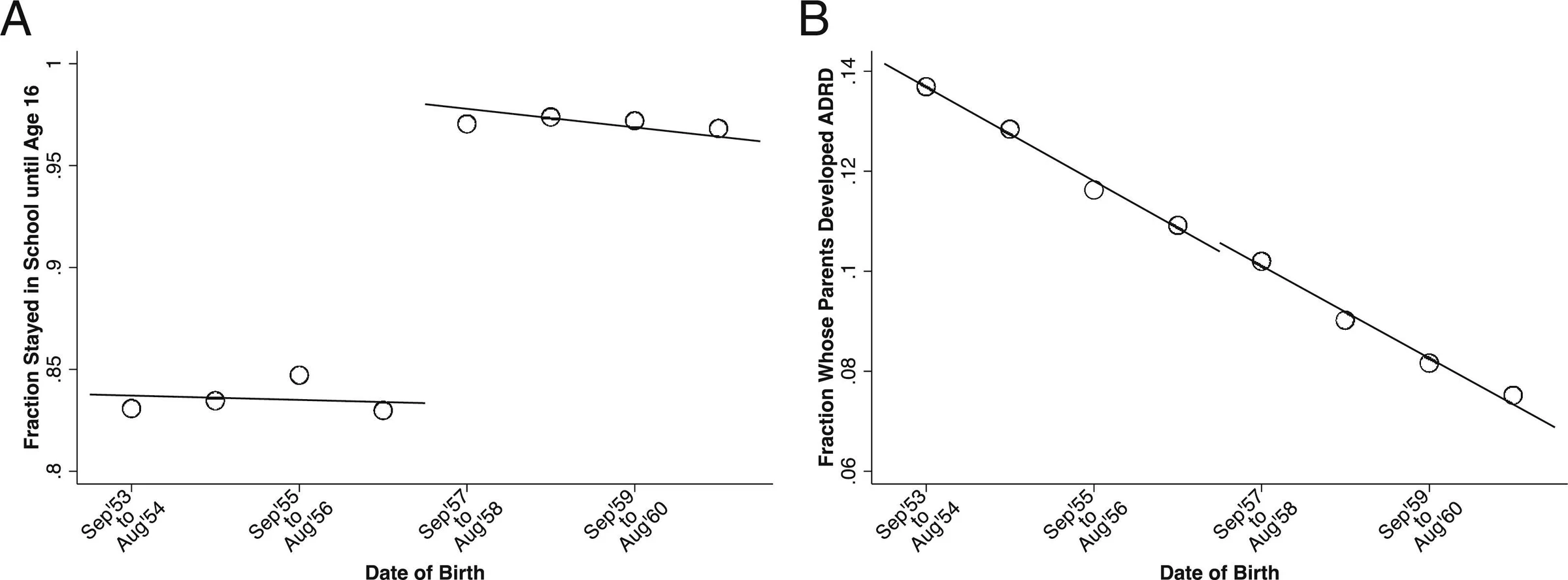
An observational study in people linked education to fewer new cases of Alzheimer’s disease and related dementias. Researchers used a cutoff created by a compulsory schooling reform to study this relationship, an approach called regression discontinuity. They identified dementia cases through medical histories, hospital records and death registries, addressing concerns about people dropping out of follow-up.
Using molecular genetic data, the researchers also found that the reform was associated with a weaker relationship between inherited risk and new dementia cases. They interpreted this as suggesting that social policy may modify genetic risk for dementia.
Why it matters
Dementia threatens health in later life. The study suggests that social policy may have a role in addressing its inherited risks.
Caveats
The study used a policy-based comparison rather than a randomized trial. The abstract did not report participants’ number, ages or location, limiting assessment of whom the findings apply to.
The paper
Education reduces dementia incidence and mitigates genetic risk
University of Wisconsin-Madison; University of Southern California
PNAS, Oct 23, 2026