Wealth inequality linked to working-age deaths in US counties
County-level data from 1970 to 2019 linked rising wealth inequality to higher death rates among women and men aged 25 to 64.
18,344 participants, cohort study
Limit: Commuting-zone wealth inequality estimates may misrepresent inequality within individual counties
Edited by Boris Djordjevic · AgingResearch.News
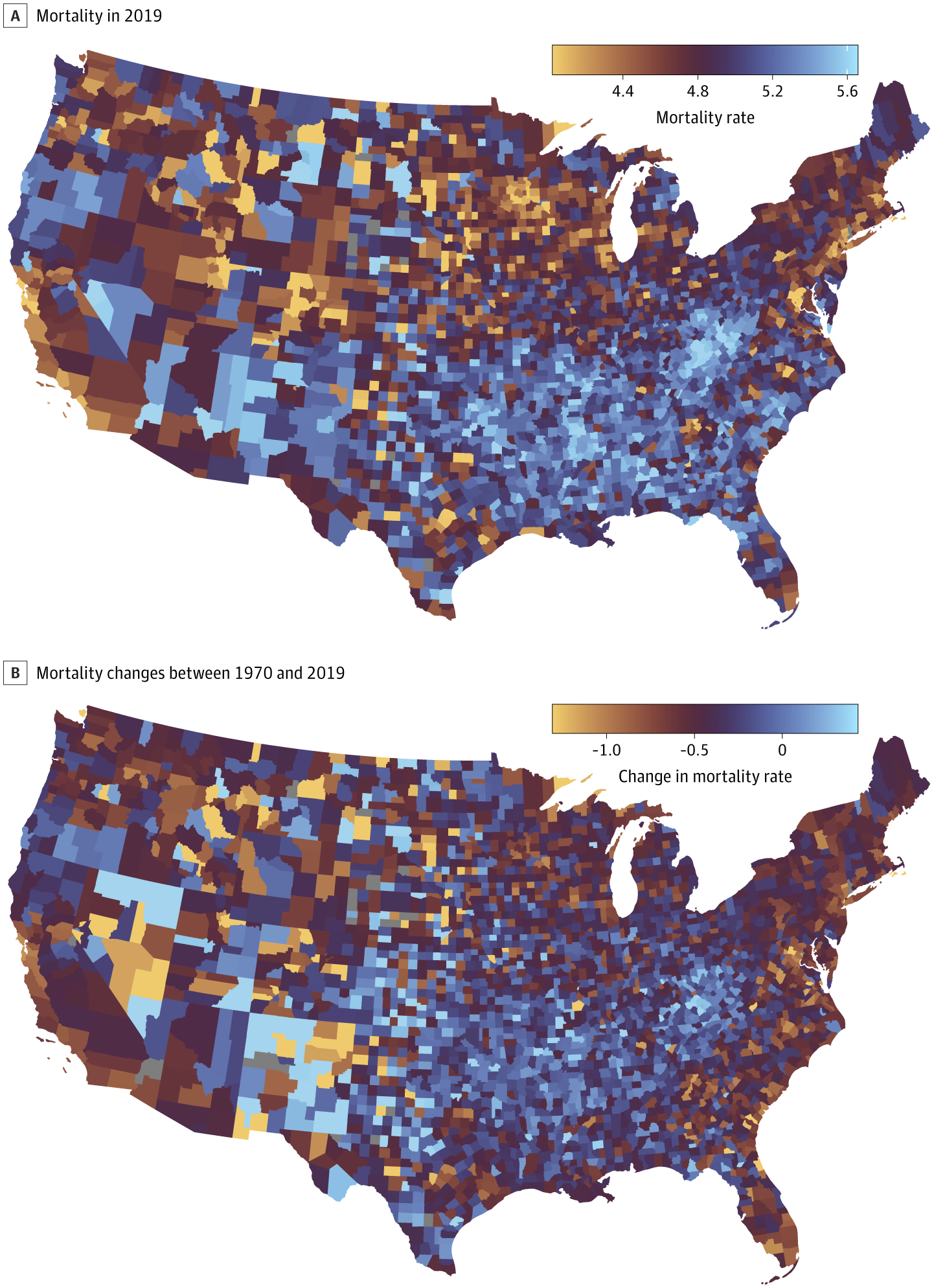
US counties with rising local wealth inequality had rising working-age death rates in a longitudinal observational study. Researchers analyzed up to 18,344 observations of counties in individual years from 1970 to 2019. They linked county death and population records with estimates of household wealth inequality for 732 areas grouped by commuting patterns.
The death rates were adjusted for age. Statistical models accounted for county differences, changes over time and state-specific yearly patterns. Higher wealth inequality was associated with higher death rates in all three age groups studied—25 to 44, 45 to 54 and 55 to 64—for both sexes. Researchers used 2019 mortality for the final period to avoid distortion from the COVID-19 pandemic.
Why it matters
Working-age deaths shape how many people reach older age. The findings suggest wealth inequality may matter for population health beyond income inequality.
Caveats
These county-level observational data cannot establish causality or show individuals’ risks. The study examined deaths at ages 25 to 64, not mortality among older adults.
The paper
Local Wealth Inequality and Working-Age Mortality in US Counties
University of North Carolina at Chapel Hill; University of Pennsylvania
JAMA Health Forum, Oct 2, 2026