Carotid stenting linked to more cognitive decline than surgery
In asymptomatic carotid stenosis, five-year rates of cognitive decline or dementia were 18.06% after carotid stenting versus 15.24% after carotid endarterectomy.
AJNR American Journal of Neuroradiology
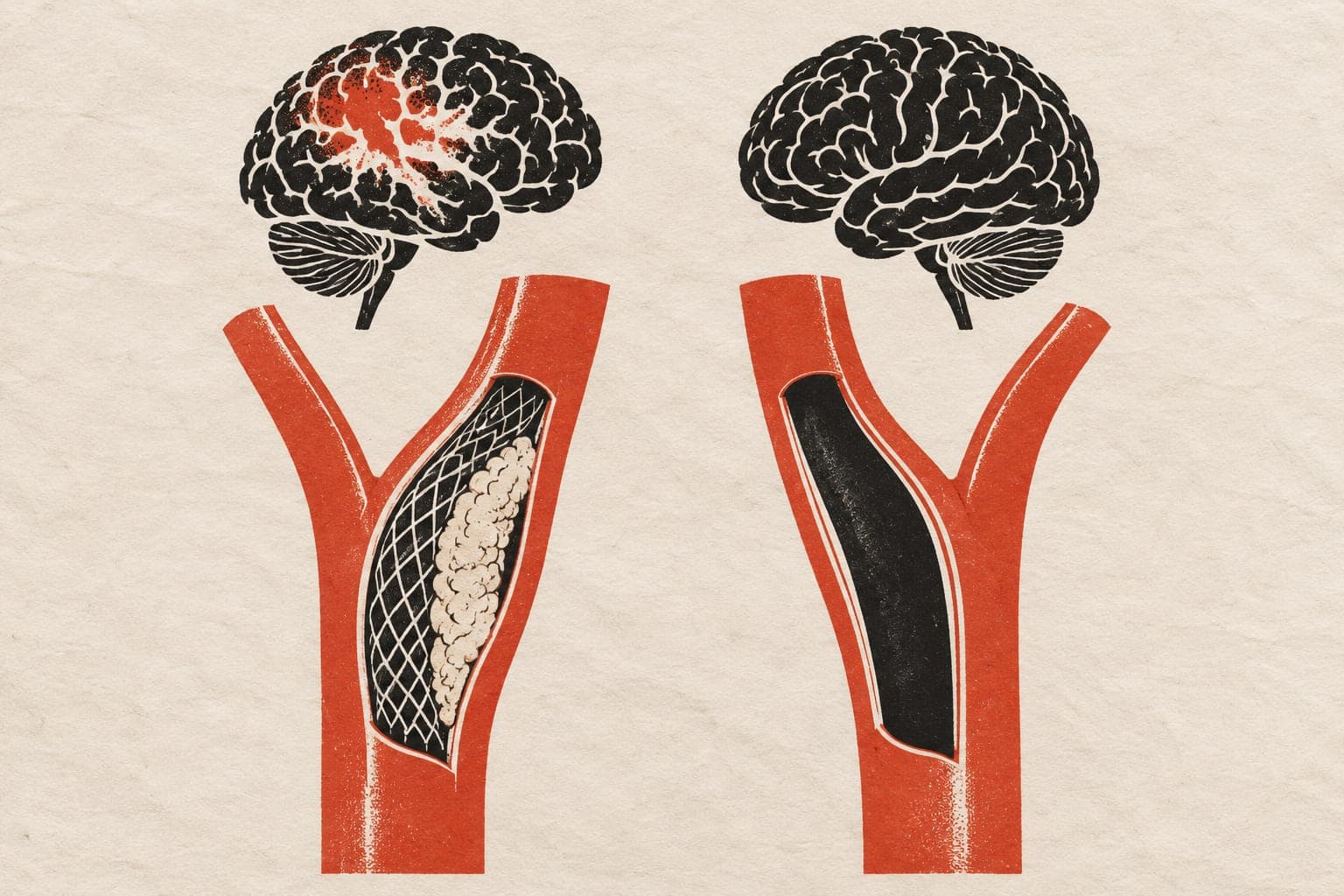
Adults with symptom-free narrowing of the carotid arteries, which supply blood to the brain, and no existing cognitive impairment or dementia underwent carotid stenting or carotid endarterectomy. This observational cohort study used US health records to match 4,822 pairs with similar demographics, vascular and neuropsychiatric conditions, and medicines. Stenting places a mesh tube inside the artery; endarterectomy is surgery to remove plaque. Researchers tracked cognitive decline and dementia using diagnosis codes over five years. Carotid stenting was associated with higher five-year rates of both outcomes than endarterectomy. A separate analysis of 3,680 matched pairs excluded anyone with a lifetime record of brain infarction, which is brain tissue death caused by interrupted blood flow. In this group, the associations with cognitive decline and the composite outcome were no longer present. Only a borderline association with dementia remained.
Why it matters
Dementia becomes more common with age. The findings raise questions about how past brain infarction may influence cognitive outcomes after procedures to treat narrowed carotid arteries.
Caveats
This observational study defined outcomes using diagnosis codes rather than clinical cognitive testing, and it cannot show that stenting caused cognitive decline. Statistical matching also cannot rule out unmeasured differences between patient groups.
The paper
Show 9 more authors
Ankit Arora, Huanwen Chen, Matthew K McIntyre, Muhammed Amir Essibayi, Tobias D Faizy, Vivek S Yedavalli, Marco Colasurdo, Ajay Malhotra, Dheeraj Gandhi,West Virginia University
AJNR American Journal of Neuroradiology · 5 Oct 2026