Bone screening lagged behind risk after kidney transplants
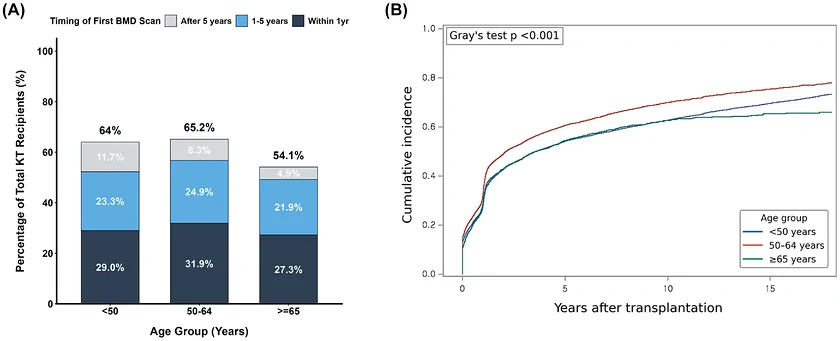
Among 34,758 adults, 29.9% received bone density testing within a year of transplantation, compared with 63.8% over a median 8.4-year follow-up.
Edited by Boris Djordjevic · AgingResearch.News
The observational cohort study tracked 34,758 adults aged 18 or older with chronic kidney disease who received kidney transplants in Korea from 2003 to 2020. Researchers used national insurance records to assess bone density testing, medication use and fractures.
Over a median 8.4 years, 63.8% received a bone density test, which measures bones’ mineral content. Only 29.9% were tested within the first year after transplantation. Fracture rates were 3.9 per 100 person-years in recipients aged 65 or older, versus 0.7 in those under 50; person-years combine participants’ follow-up time. A fracture in the year before transplantation was associated with a 5.2- to 7.6-fold higher fracture risk afterward. Yet recipients under 65 with prior fractures did not consistently receive more screening than those without.
Why it matters
Fractures are an important concern for older kidney transplant recipients. The authors called for risk-based strategies to improve early screening and sustained therapy.
Caveats
The retrospective insurance-record analysis could identify associations, not whether screening delays caused fractures. The cohort excluded people under 18 and those with a history of cancer.
The paper
Korea University
Clinical Transplantation, Oct 2026, Open access