Obesity drugs linked to fewer cases of a heart rhythm disorder
Over one year, a heart rhythm disorder occurred in 1.63% of drug users and 2.62% of matched nonusers with obesity and chronic kidney disease.
Paper by Hassan A, Okorigba E, Grace C et al.
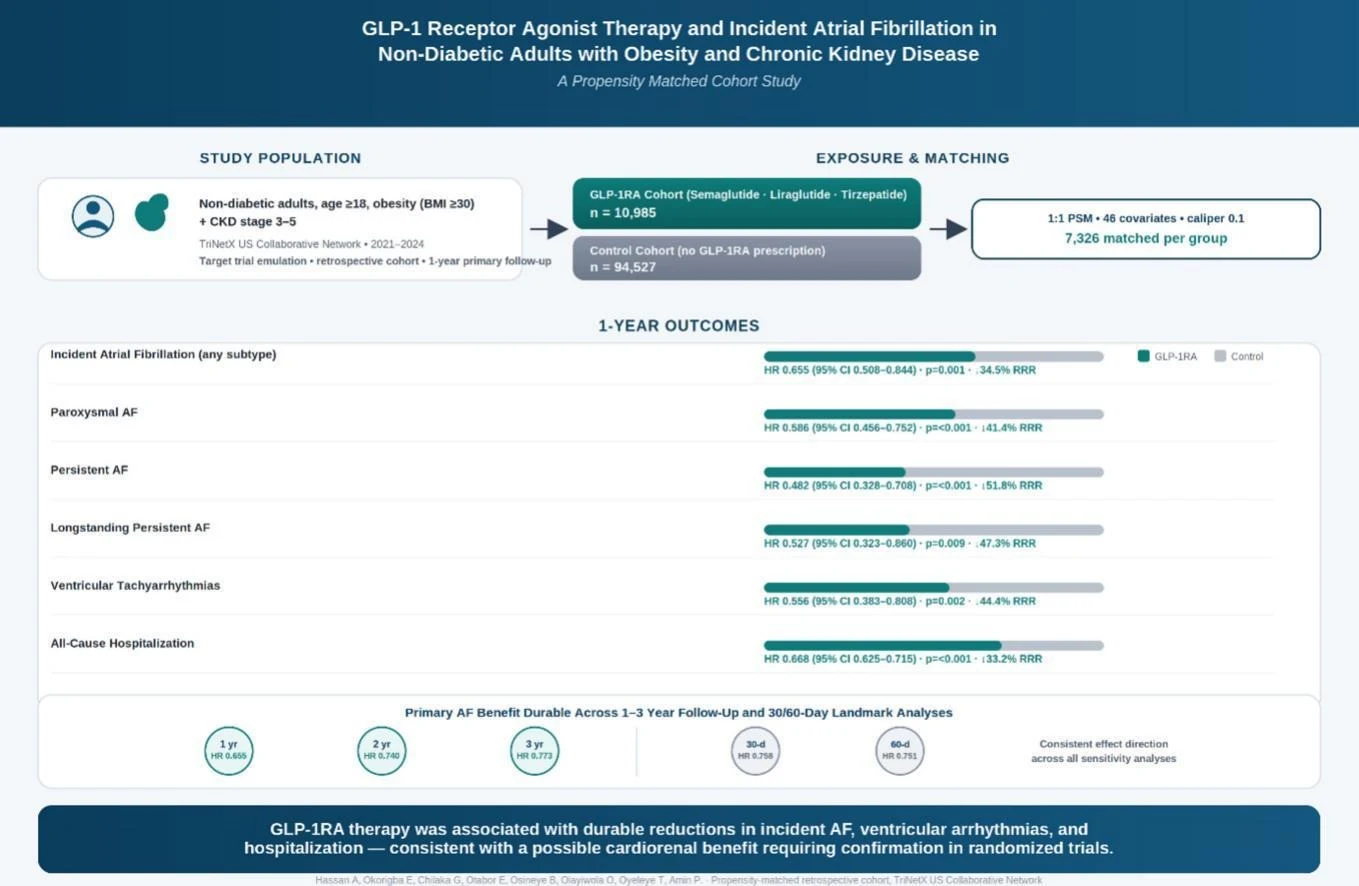
94,527 participants
Limit: The abstract did not report adverse events
Adults aged 18 or older with obesity and stage 3–5 chronic kidney disease, but without diabetes, were studied in a retrospective observational cohort. Researchers used records from 66 US healthcare organizations. They matched 7,326 people taking semaglutide, liraglutide or tirzepatide with 7,326 nonusers based on recorded characteristics.
At one year, drug use was associated with fewer new cases of atrial fibrillation, a type of irregular heartbeat. The researchers reported a 34.5% lower relative risk. Drug users also had fewer fast heart rhythms arising in the heart’s lower chambers and fewer hospitalizations for any cause. These associations persisted in analyses extending follow-up to two and three years.
Why it matters
Preventing heart rhythm disorders is relevant to maintaining heart health as people age. The authors called for randomized trials to test the possible benefit in this population.
Caveats
This observational study could not establish causation; matching cannot rule out unmeasured differences between groups. The findings concern adults without diabetes who had obesity and stage 3–5 chronic kidney disease, and the abstract did not report adverse events.
The paper
Hassan A, Okorigba E, Grace C et al.
International Journal of Cardiology, Oct 17, 2026


