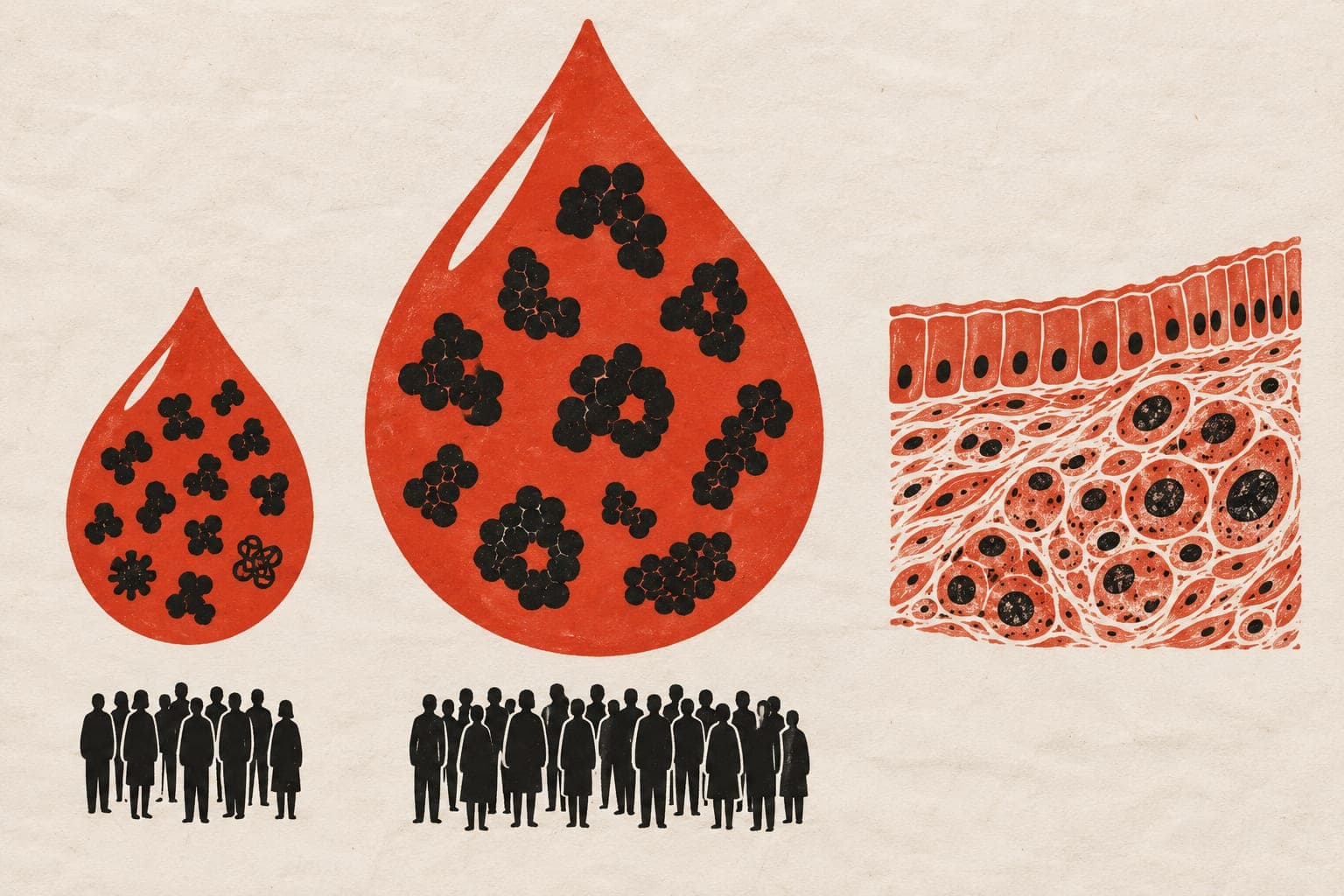
Blood proteins linked to future prostate cancer risk
An observational study linked 12 blood proteins to prostate cancer diagnosed more than 15 years after blood collection.
1,573 participants, case-control study
Limit: Not all protein associations were replicated in another cohort
Edited by Boris Djordjevic · AgingResearch.News
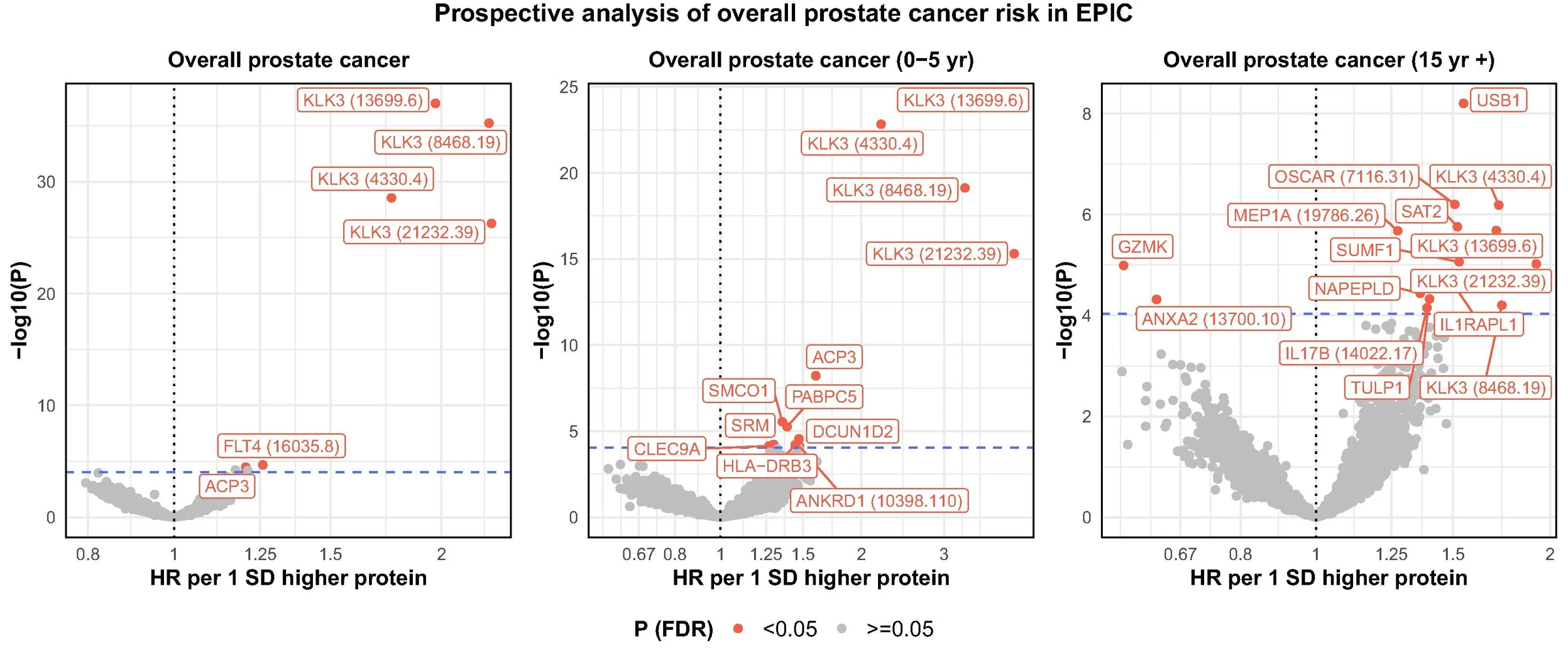
Researchers analyzed blood samples from 982 people who later developed prostate cancer and a study subgroup of 1,573 participants in the European Prospective Investigation into Cancer and Nutrition. This observational case-cohort study measured more than 6,000 proteins and examined associations with later diagnoses.
Three proteins were associated with overall prostate cancer risk, and seven with aggressive disease. Twelve were associated with diagnoses more than 15 years after blood collection. Four proteins showed consistent associations in a second observational study, Atherosclerosis Risk in Communities. Blood proteins produced by genes known to contribute to prostate cancer were also associated with future aggressive disease. The authors described the proteins as candidate risk factors that need further validation and investigation of their biological roles.
Why it matters
Studying blood proteins long before diagnosis may help researchers investigate how prostate cancer develops, including possible roles for immune activity and blood vessel formation.
Caveats
The observational associations do not establish that these proteins cause prostate cancer. Not all findings were replicated in another cohort, and the cohorts differed in which disease outcomes were available.
The paper
Circulating Immune and Cancer Driver Gene Biomarkers Precede Prostate Cancer Diagnosis by over 10 yr
University of Oxford
European Urology, Oct 22, 2026, Open access