Older and younger adults chose slower speeds on treadmills
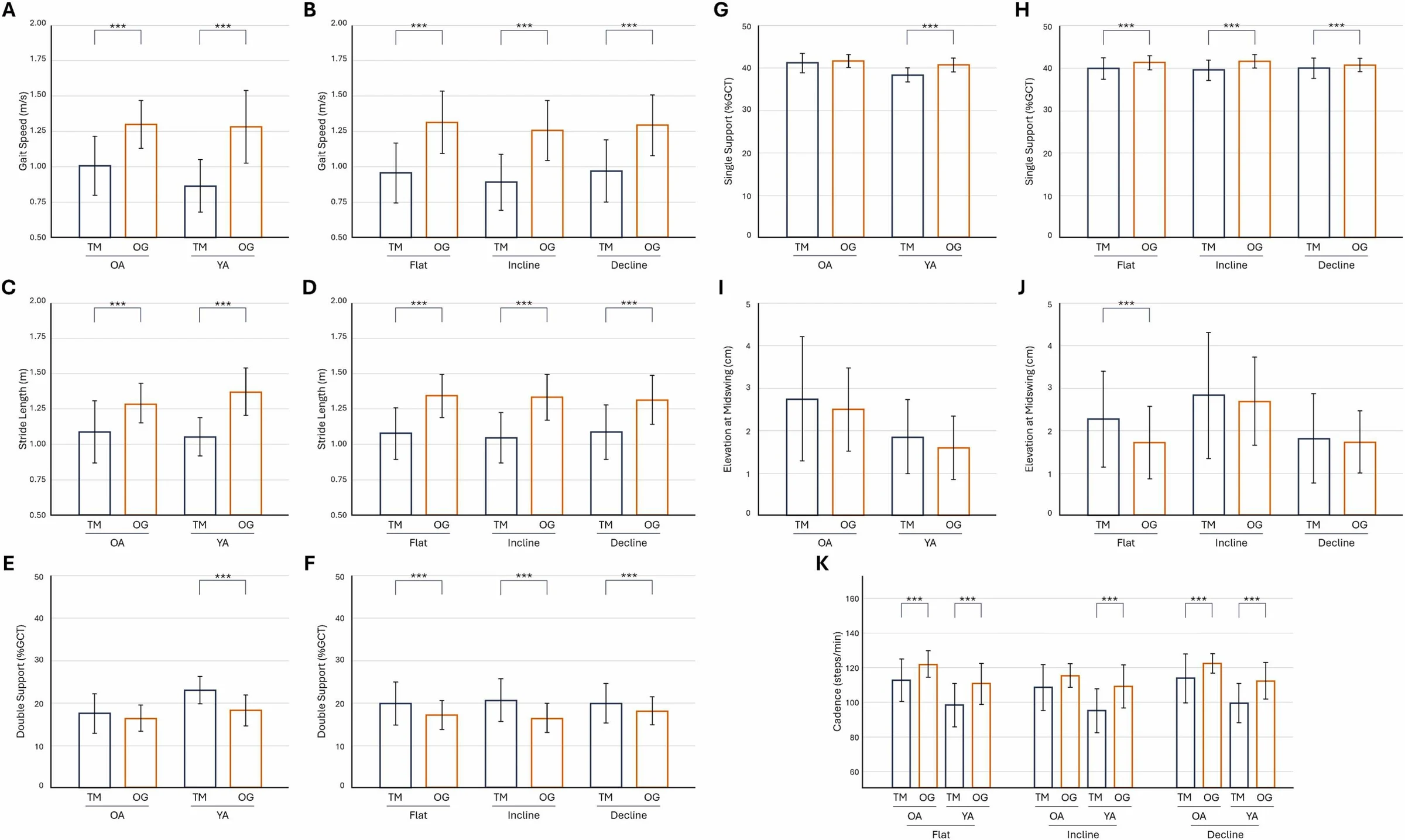
Participants chose treadmill speeds 0.35 meters per second slower than overground speeds across flat, uphill and downhill walking.
26 participants
Limit: Only 26 older adults participated
Edited by Boris Djordjevic · AgingResearch.News
In a walking experiment, 26 older adults (average age 70; 22 women) and 24 younger adults (average age 26; seven women) completed matched treadmill and overground trials. None had previous treadmill experience. Both groups walked on flat, uphill and downhill terrain.
Both groups chose slower speeds on the treadmill. They took shorter strides and fewer steps per minute, with changes in how long one or both feet stayed on the ground. The younger adults showed larger speed reductions. Heart rate and reported effort were higher on the treadmill despite slower speeds, particularly in older adults walking uphill. The researchers concluded that treadmill measures of speed, walking patterns and physiological responses were not interchangeable with overground measurements in older adults across inclined terrain.
Why it matters
The work addresses a practical question in aging research: how to assess older adults’ mobility under walking conditions that include slopes.
Caveats
The comparison was limited to people with no previous treadmill experience. The older group included only 26 participants, 22 of them women, limiting how broadly the findings apply.