Statins linked to survival on dialysis after cardiovascular events
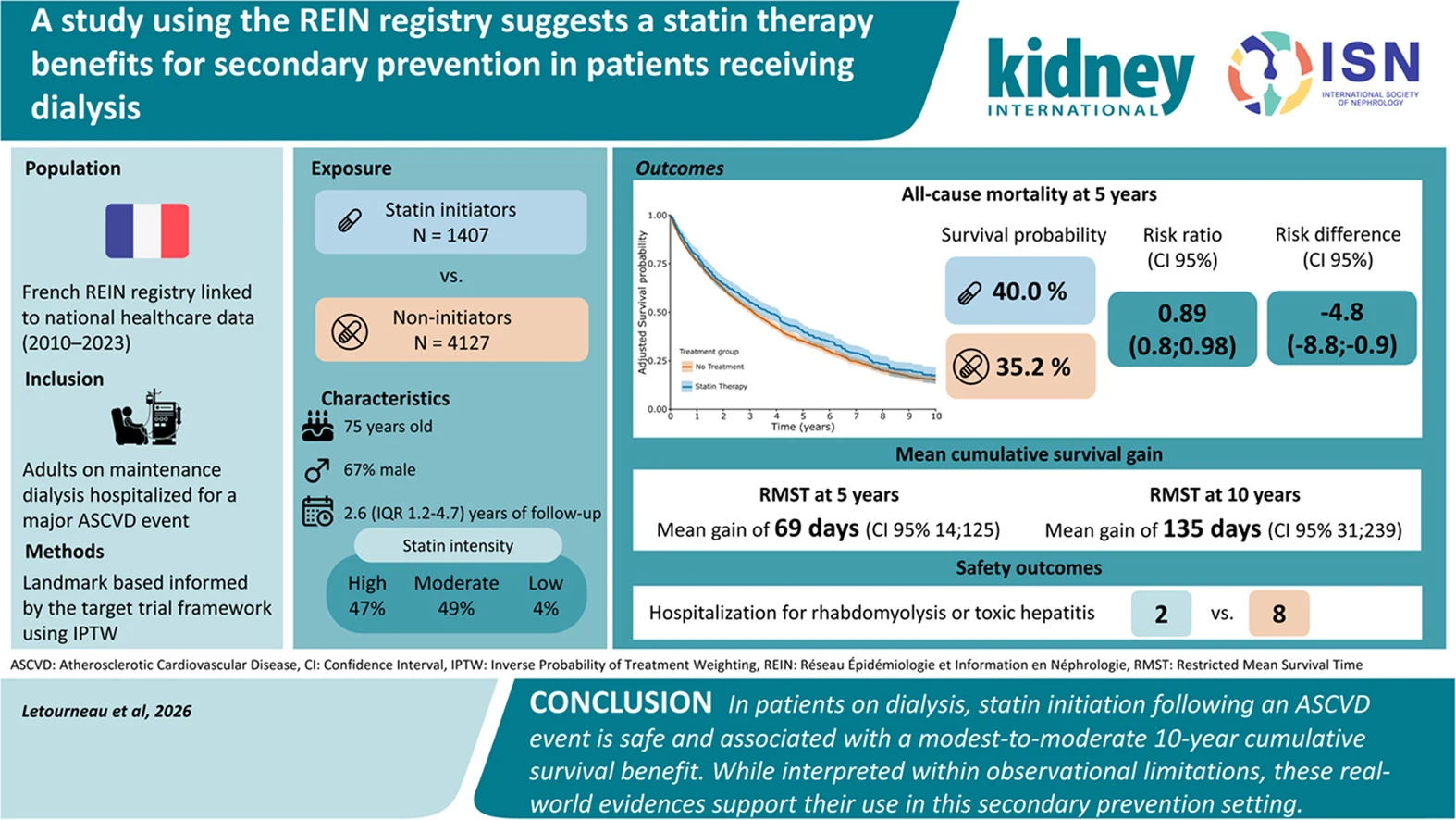
Starting statins after a cardiovascular event was linked to a 6.2-percentage-point lower risk of death at four years than not starting them.
Limit: Landmark analysis excludes patients dying before the landmark, leaving early deaths outside the survival comparison
Edited by Boris Djordjevic · AgingResearch.News
An observational study included 5,534 adults receiving dialysis for kidney failure who had experienced an atherosclerotic cardiovascular event, involving fatty buildup in arteries. Their median age was 75, and 67% were male. Researchers used French registry and healthcare records from 2010 to 2023. They compared people who started statins, cholesterol-lowering drugs, with those who did not, adjusting for differences between the groups.
Over ten years of follow-up, starting statins was associated with longer survival. The estimated mean survival advantage was 69 days at five years and 135 days at ten years. The groups did not differ in hospitalizations for severe muscle breakdown or toxic hepatitis, a form of liver inflammation.
Why it matters
The study addresses an unresolved question in later-life care: whether statins offer survival benefits after a cardiovascular event in an older population receiving dialysis.
Caveats
This observational comparison cannot establish that statins caused the survival difference, despite adjustment for baseline differences. The findings concern adults receiving dialysis after a cardiovascular event, not prevention before a first event.
- Statins
- Toxic hepatitis
- Atherosclerotic cardiovascular disease
- Chronic kidney disease stage G5D
- Rhabdomyolysis
- Humans
The paper
Centre Hospitalier Lyon-Sud
Kidney International, Oct 20, 2026