Air pollution linked to cognitive disorders in older Chinese adults
Higher fine-particle exposure was linked to greater cognitive disorder risk: a hazard ratio of 1.005 per 10 micrograms per cubic meter increase.
Limit: Excluding 4509 deceased participants and 503 lost to follow-up favored healthier survivors
In an observational study of older adults in China, researchers linked long-term outdoor air pollution exposure to a higher risk of cognitive disorders. They analyzed data from the Chinese Longitudinal Healthy Longevity Study, examining lifestyle and its changes over time alongside pollution exposure.
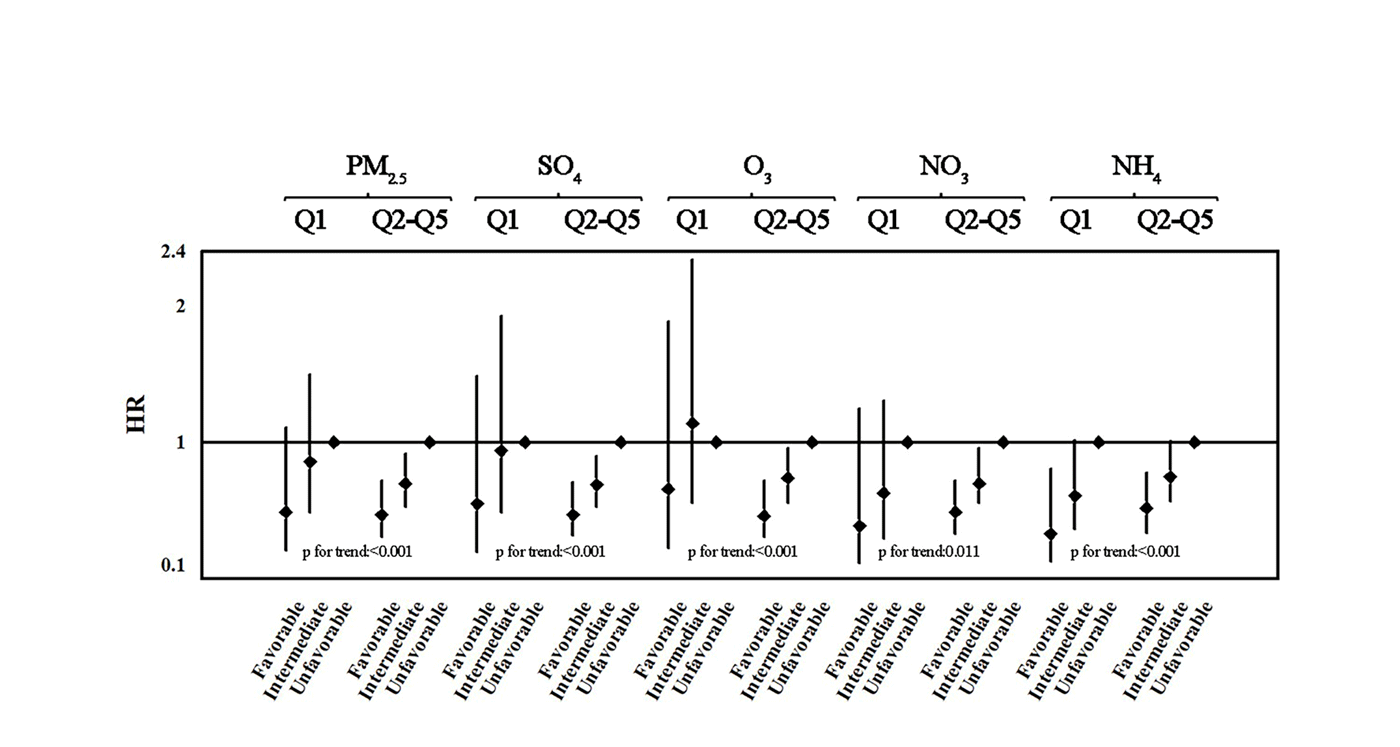
Higher exposure to several individual pollutants and to a pollution mixture was associated with higher risk. A hazard ratio compares the rate of developing a condition over time. Lifestyles classified as intermediate or favorable were associated with lower risk than those classified as unfavorable. The researchers estimated that lifestyle accounted for 8.4–9.4% of the association for individual pollutants and 9.1–9.5% for pollutant mixtures.
Why it matters
Cognitive disorders are a major concern in aging societies. The authors suggested that lifestyle interventions may help address some challenges of air pollution in these societies.
Caveats
This observational study cannot establish that pollution caused cognitive disorders or that changing lifestyle would reduce risk. The findings concerned older adults in China.
From the paper
- Participants
Ultimately, the final sample included data from 2269 participants (Figure S2 in the Online Supplementary Document).
- Result
Per 10 μg/m increase in exposure to particulate matter with diameters ≤2.5 μm (hazard ratio (HR) = 1.005; 95% confidence interval (CI) = 1.001–1.009), sulphates (HR = 1.030; 95% CI = 1.003–1.056), ozone (HR = 1.006; 95% CI = 1.001–1.011), nitrates (HR = 1.020; 95% CI = 1.003–1.037) …
Quoted word for word from the full text on jogh.org.
The paper
Shihezi University
Journal of Global Health, Oct 19, 2026

