Blood protein links to coronary heart disease differed by sex
Eight blood proteins were linked to later coronary heart disease in men, compared with 54 in women, in an observational study of 10,034 people.
Paper by Herold JM, Surapaneni A, Coresh J et al.
Limit: Effects of changing protein levels on coronary heart disease risk were not measured
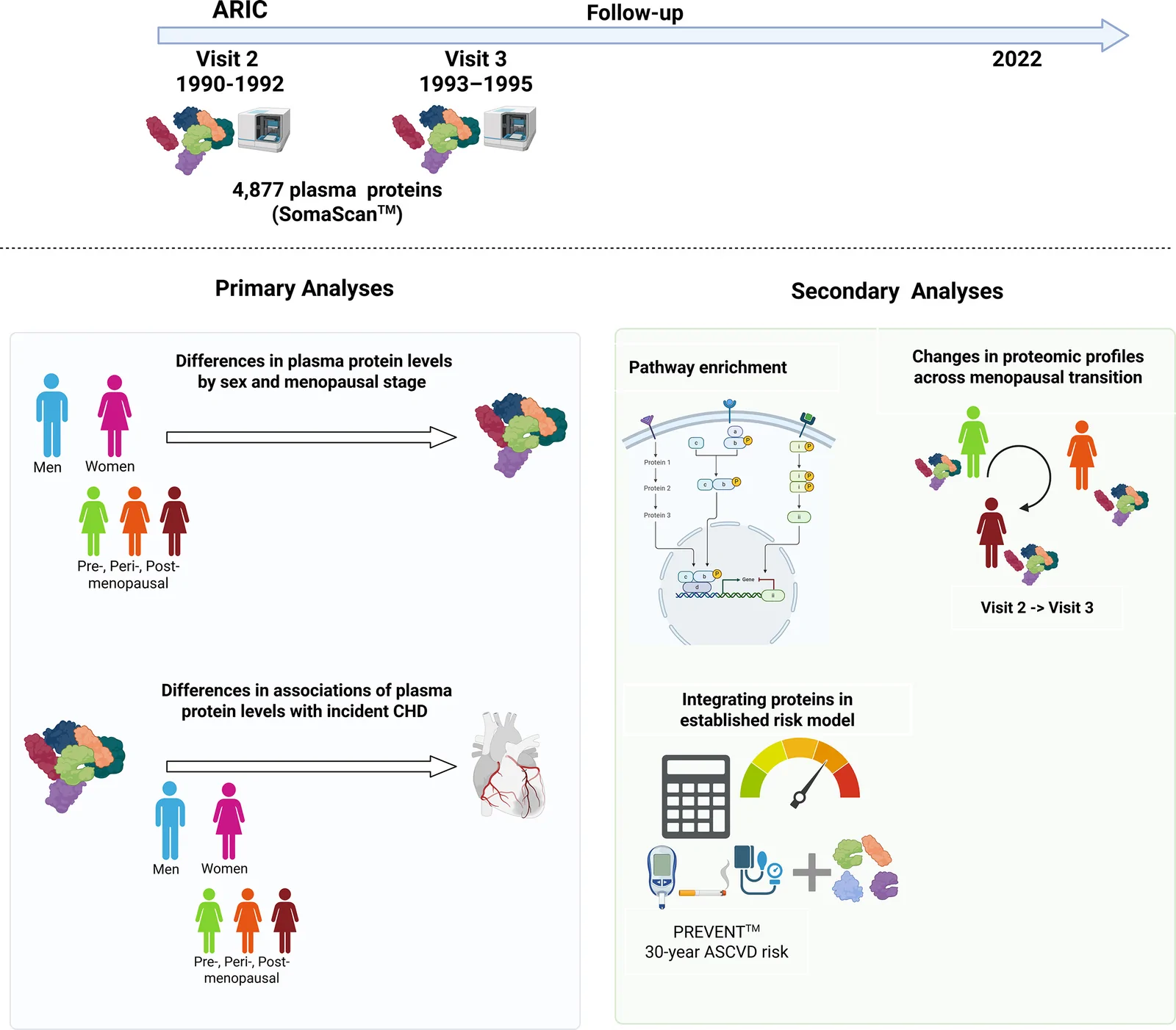
Researchers analyzed 4,877 blood proteins in 10,034 Atherosclerosis Risk in Communities participants in an observational study. They compared protein levels by sex and menopausal stage, then examined links to developing coronary heart disease, which affects the arteries supplying the heart.
Protein levels differed by sex and menopausal status, including during the transition to menopause. The proteins associated with later coronary heart disease also differed: eight in men and 54 in women. Among women transitioning through menopause, six proteins were associated with disease, compared with 17 among postmenopausal women. Adding sex-specific protein panels improved prediction beyond an established clinical model, with similar improvements across menopausal stages.
Why it matters
Menopause modifies women’s coronary heart disease risk. Understanding the biology behind that transition may help address risk differences that existing prediction tools do not fully capture.
Caveats
The observational design cannot show that the proteins caused coronary heart disease or that changing their levels would reduce risk.
The paper
Heterogeneity in proteomic risk factors for coronary heart disease by sex and menopause status
Herold JM, Surapaneni A, Coresh J et al.
American Journal of Preventive Cardiology, Jun 29, 2026, Open access