High-fiber diet altered gut microbiota, improved glycemic control, and reduced body weight in newly diagnosed type 2 diabetes and obesity
84 days, registered ChiCTR-INR-17011752
Abstract
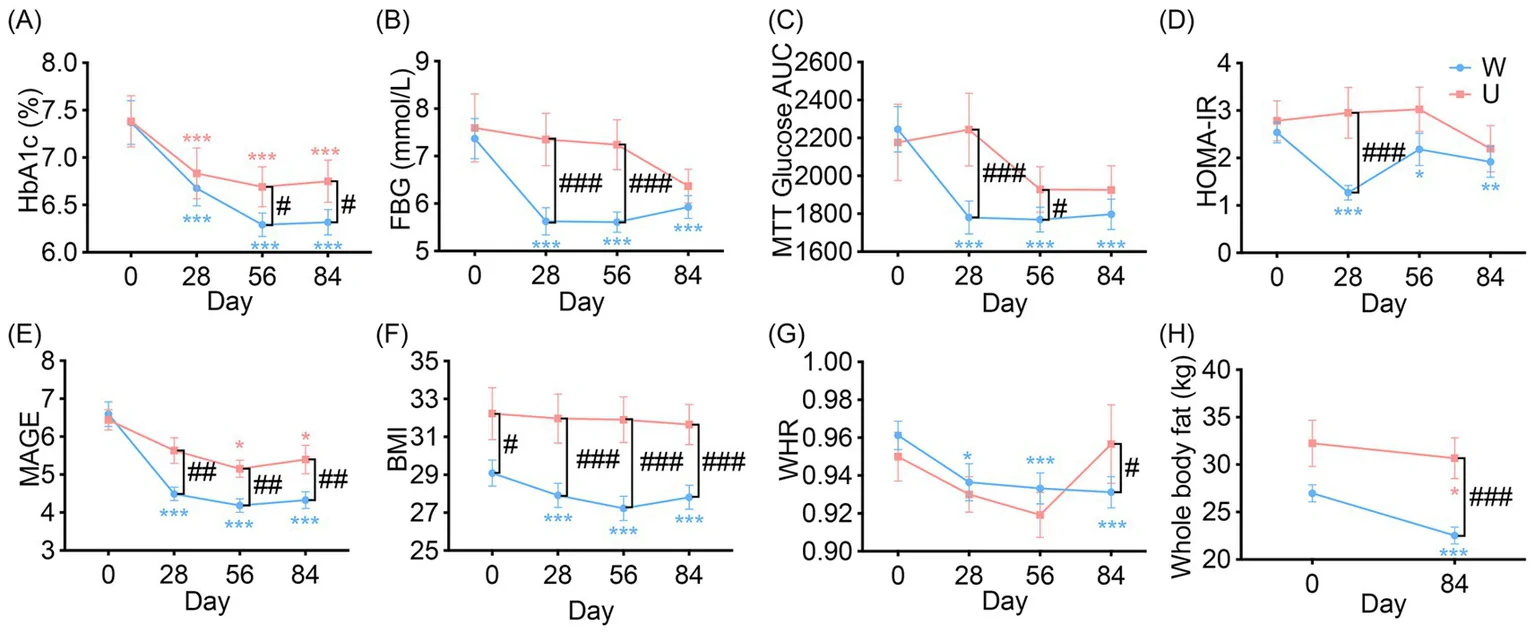
Type 2 diabetes and obesity commonly coexist, making glycemia and body weight both central treatment goals. Few trials have directly compared a high-fiber dietary intervention with metformin. The factors associated with individual responses to high-fiber diet also remain unclear. In this single-center, open-label, head-to-head clinical trial, 48 adults with newly diagnosed type 2 diabetes and overweight or obesity were randomized to a high-fiber dietary intervention without glucose-lowering medication (n = 36) or metformin (n = 12) monotherapy for 84 days; 46 completed the trial. Clinical outcomes and 184 fecal samples were assessed longitudinally using shotgun metagenomic and metabolite profiling. At Day 84, the high-fiber group had greater reductions in glycated hemoglobin and body mass index and lower glycemic variability than the metformin group. The diet altered gut microbiota by Day 28, enriching genomes from Bifidobacterium and Lactobacillus and depleting genomes from Bilophila wadsworthia, but metformin produced little detectable microbiota change. These changes included increased acetate-production functions and decreased hydrogen sulfide-production functions; fecal hydrogen sulfide was lower at Days 28 and 56, although short-chain fatty acid concentrations did not differ between groups at matched time points. Within the high-fiber group, participants with increased fecal acetate (25 of 34) had larger glycated hemoglobin reductions at Days 28 and 56, and baseline microbial features differed between acetate-response subgroups. These findings support high-fiber diet as a non-pharmacologic strategy for diabesity, with baseline microbial features as candidate markers of response. Clinical trial registration: ChiCTR-INR-17011752.
From the paper
- Participants
Two participants in the W group withdrew, leaving 46 participants (W group, n = 34; U group, n = 12) who completed the trial ( Supplementary Figure S1 ).
- Limitation
This was a single-center trial with modest and unequal group sizes, particularly in the metformin group.
Quoted word for word from the full text on frontiersin.org.
- High-fiber diet
- Microbiome composition
- Short-chain fatty acid metabolism
- Gut microbiota composition
- Type 2 diabetes
- Humans
The paper
Shanghai Jiao Tong University
Frontiers in Microbiology, Oct 2, 2026, Open access


