Model projects preventable deaths under limited US obesity care
For 107.6 million US adults with obesity, the simulation estimated 5.3 million preventable deaths over 10 years if treatment was forgone.
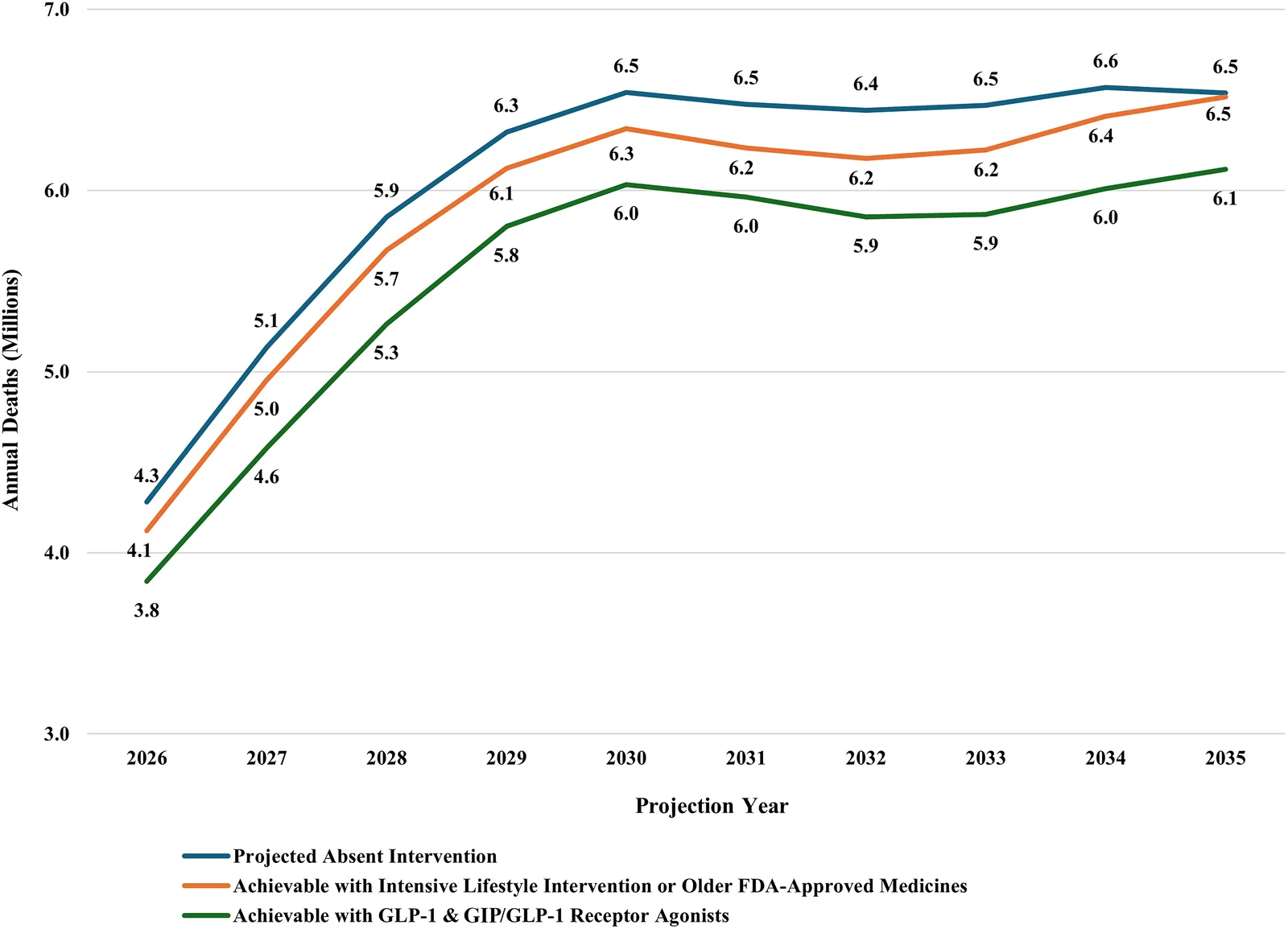
A computational model simulated 107.6 million US adults with obesity, including people with commercial insurance, Medicare, Medicaid or no insurance. It projected health and economic outcomes over 10 years under current limited treatment access and two expanded-access scenarios.
The model estimated that forgoing treatment would mean 5.3 million preventable deaths and $10.5–$13.3 trillion in foregone economic benefits. Those benefits included avoiding medical spending, productivity losses and diminished quality of life. Expanded access to intensive lifestyle management or earlier-generation medications was projected to prevent 3% of deaths and 17–23% of major complications. Expanded access to medicines that mimic the hormone glucagon-like peptide 1, or mimic both that hormone and glucose-dependent insulinotropic polypeptide, was projected to prevent 9% of deaths and 22–31% of complications.
Why it matters
Heart failure and stroke threaten health in later life. The analysis asked what is missed when obesity care is judged by treatment costs without counting the burden of untreated disease.
Caveats
These are model projections, not outcomes observed in a treatment trial. The abstract did not report uncertainty ranges or treatment harms.
- Intensive lifestyle management
- Intensive lifestyle management or earlier-generation medications
- GIPR
- GLP1R
- Obesity
- Humans
The paper
The Cost of Inaction in Treating Obesity in the U.S
GlobalData Plc; American Diabetes Association
Diabetes, Obesity, and Cardiometabolic CARE, Jun 7, 2026