Steatotic liver disease phenotypes and stroke risk in patients with atrial fibrillation: A nationwide population-based cohort study
Abstract
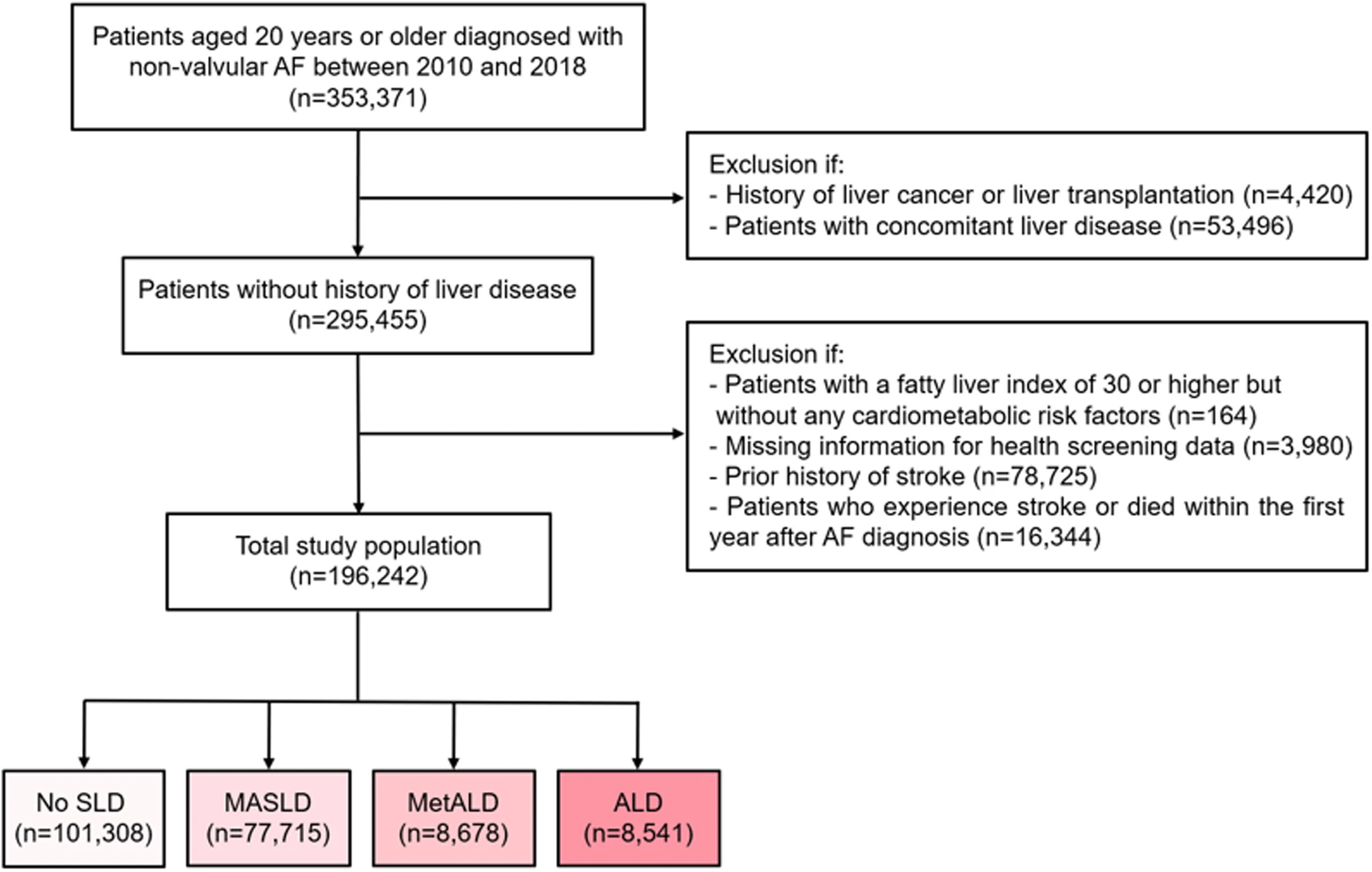
BACKGROUND: The updated nomenclature of steatotic liver disease (SLD) recognizes distinct phenotypes, including Metabolic dysfunction-associated steatotic liver disease (MASLD), MASLD with increased alcohol intake (MetALD), and alcohol-related liver disease (ALD). Although cardiovascular risk may differ across SLD phenotypes, their association with stroke risk in patients with atrial fibrillation (AF) remains unclear. OBJECTIVE: This study aimed to investigate the association between SLD phenotypes and ischemic stroke risk in AF patients. METHODS: AF patients diagnosed between 2010 and 2018 were identified from the Korean health insurance database. According to SLD phenotype, patients were categorized into No-SLD, MASLD, MetALD, and ALD. The primary outcome was ischemic stroke. Subgroup analyses were conducted by CHA₂DS₂-VA score. RESULTS: Among 196,242 patients (No-SLD: 101,308; MASLD: 77,715; MetALD: 8,678; ALD: 8,541), median follow-up was 5.9 years. Compared with No-SLD, MASLD was not associated with stroke risk (adjusted hazard ratio and 95% confidence interval; 1.00, 0.97-1.04), whereas MetALD and ALD were associated with higher risk (1.09, 1.00-1.18 and 1.16, 1.08-1.26, respectively). In exploratory subgroup analyses, the higher risk associated with alcohol-related phenotypes appeared more apparent at lower CHA₂DS₂-VA scores; however, the 6-year absolute risk differences were approximately 1% or less, and these findings are regarded as hypothesis-generating. CONCLUSION: In patients with AF, stroke risk was significantly higher in the alcohol-related SLD phenotypes, MetALD and ALD, whereas MASLD was not associated with stroke risk. These findings are consistent with the current recommendations for comprehensive risk-factor management in AF, with particular attention to alcohol intake in patients with alcohol-related SLD phenotypes.
The paper
Seoul National University College of Medicine
Heart Rhythm, 16 Oct 2026

