Point/Counterpoint on the Controversial 2025-2030 Dietary Guidelines for Americans
Abstract
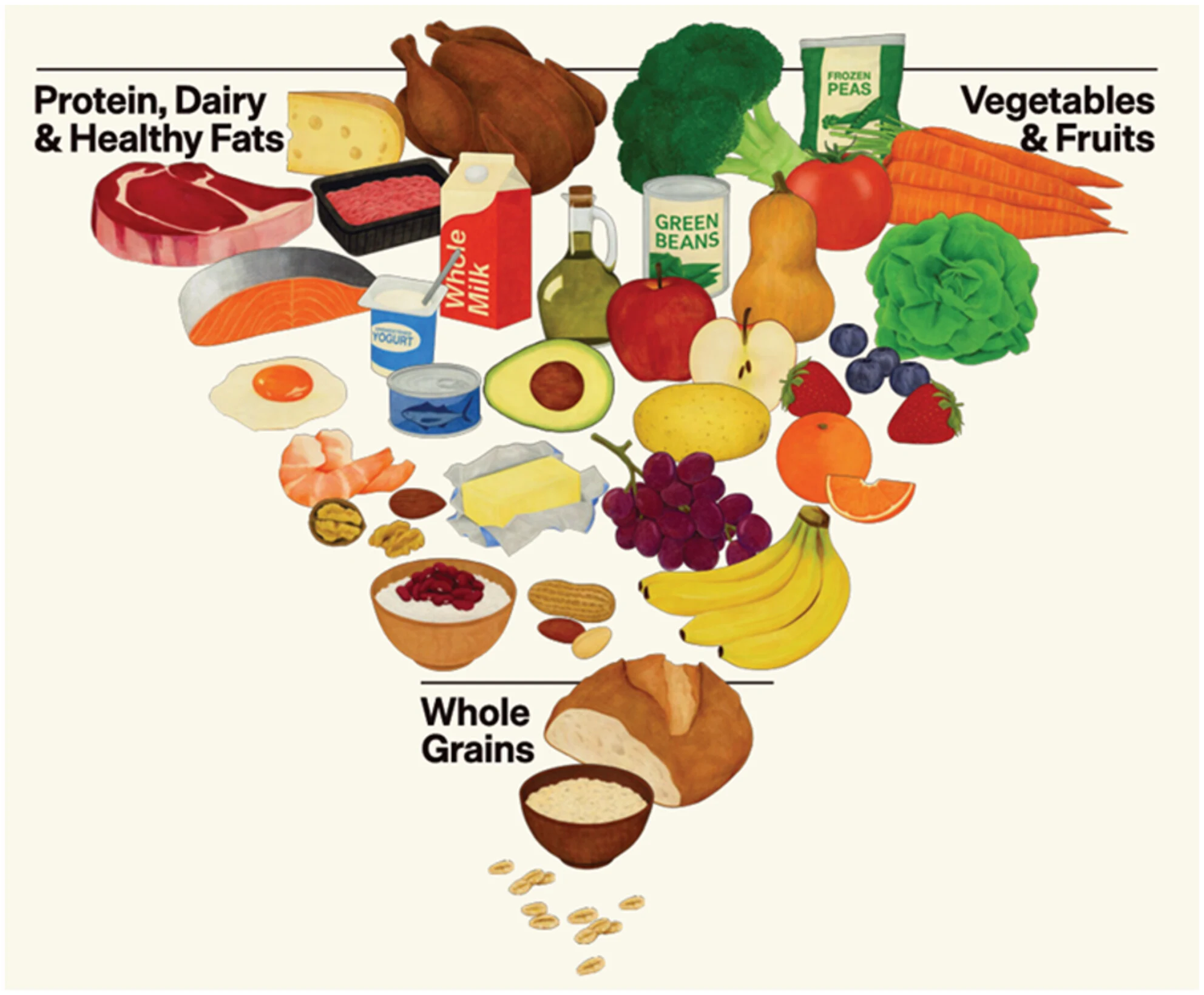
The 2025-2030 Dietary Guidelines for Americans (DGAs) issued nutrition recommendations, some of which have been praised by the nutrition community while others have been questioned based on the lack of supporting evidence. The recommendations about calorie control, emphasis on nutrient density, vegetables, fruits, and whole grains, and limiting added sugars, sodium, and alcohol are based on strong evidence and have been carried forward from previous DGAs. The recommendations to limit ultra-processed foods and added sugars both per meal and per product have been well-received. The controversial recommendations relate to the type of fat recommended (e.g., "healthy" fats that include butter and beef tallow) and the omission of guidance about seed oils high in unsaturated fatty acids, notably polyunsaturated fatty acids. The food-based guidance (consuming full-fat dairy products, butter and beef tallow, and animal products such as red meat) does not align with the long-standing recommendation to limit saturated fat to < 10% of calories. Concerns have also been expressed about the higher protein recommendation as well as the recommendation to consume 20 g (or more) with each meal. Moreover, there are questions about the placement of animal foods at the top and whole grains at the bottom of the new "food pyramid". Herein we summarize the evidence in support of, and in disagreement with, the controversial new DGAs. Global dietary recommendations both in support of and not in alignment with some of the DGAs are reviewed. Strategies for widespread adoption of the DGAs are mentioned.
- 2025-2030 dietary guidelines for americans
- Animal foods
- Beef tallow
- Butter
- Dietary protein
- Full-fat dairy products
The paper
The University of Texas at Austin; University of Southampton
Lipids, 16 Oct 2026