Estimates of coexisting conditions vary by health record source
Among adults with at least two recorded conditions, estimates were 92.3% using general practice records, 63.2% using hospital records and 100% using both.
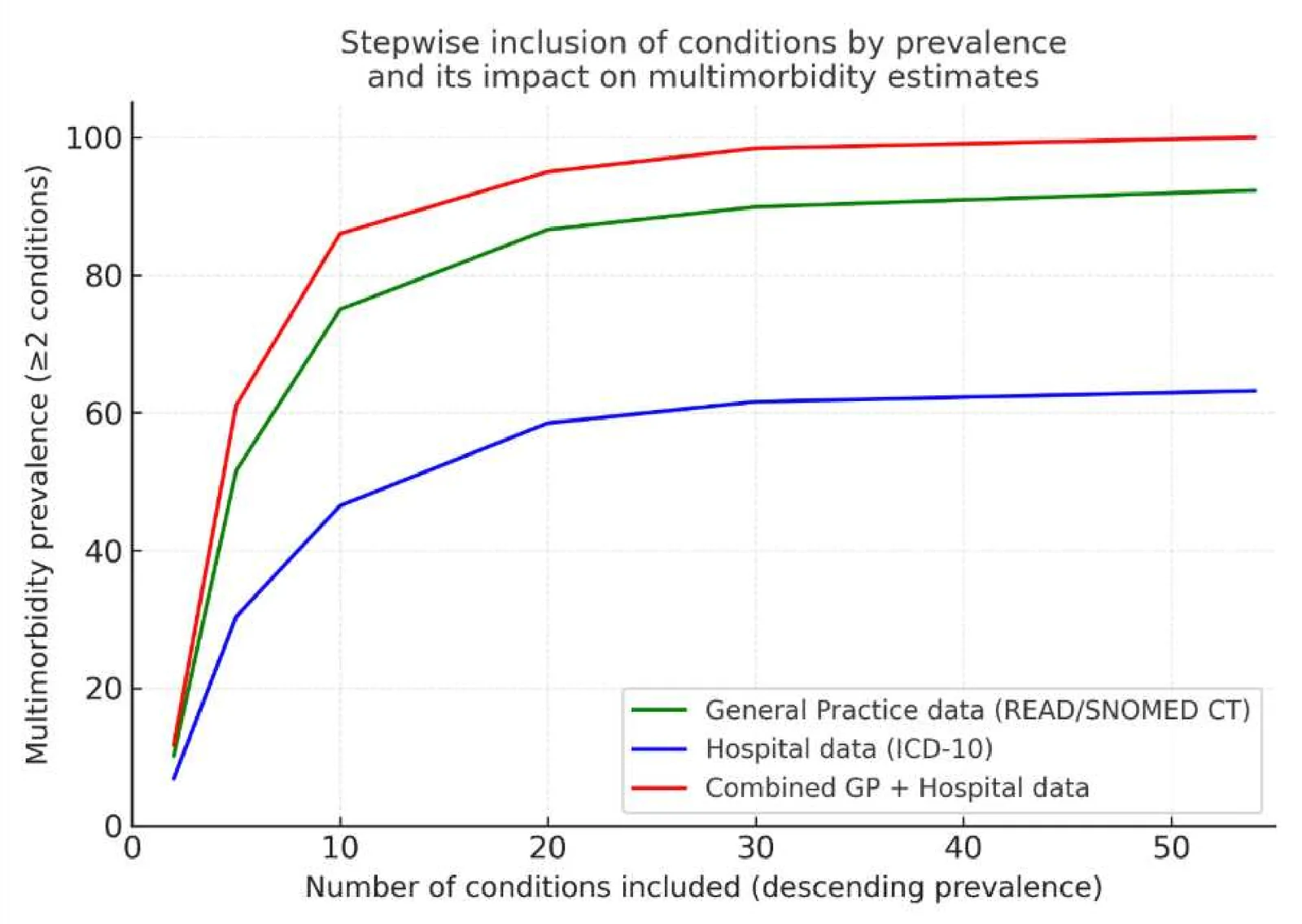
In a cross-sectional study, researchers analysed linked general practice and hospital records for 7.2 million adults in England who had at least two recorded health conditions. The records covered 1987 to 2020. They defined multimorbidity as having at least two conditions from a list of 54.
Estimates rose as researchers included more conditions and were consistently higher in general practice records than in hospital records. Differences between sources were greatest among younger adults and ethnic minority groups. Multimorbidity recorded only in general practice was associated with younger age, female sex and lower deprivation.
Why it matters
Research on health in later life needs consistent ways to measure coexisting conditions. The authors called for standardised condition lists and integrated records to support accurate measurement and fair representation.
Caveats
The sample included only adults with at least two recorded conditions, so these percentages do not describe prevalence among all adults in England.
The paper
University of Southampton
BMJ Public Health, 5 Jan 2026, Open access