A real-world multicenter study of statins in compensated advanced chronic liver disease on hepatic decompensation and mortality outcomes
Multicentre
Abstract
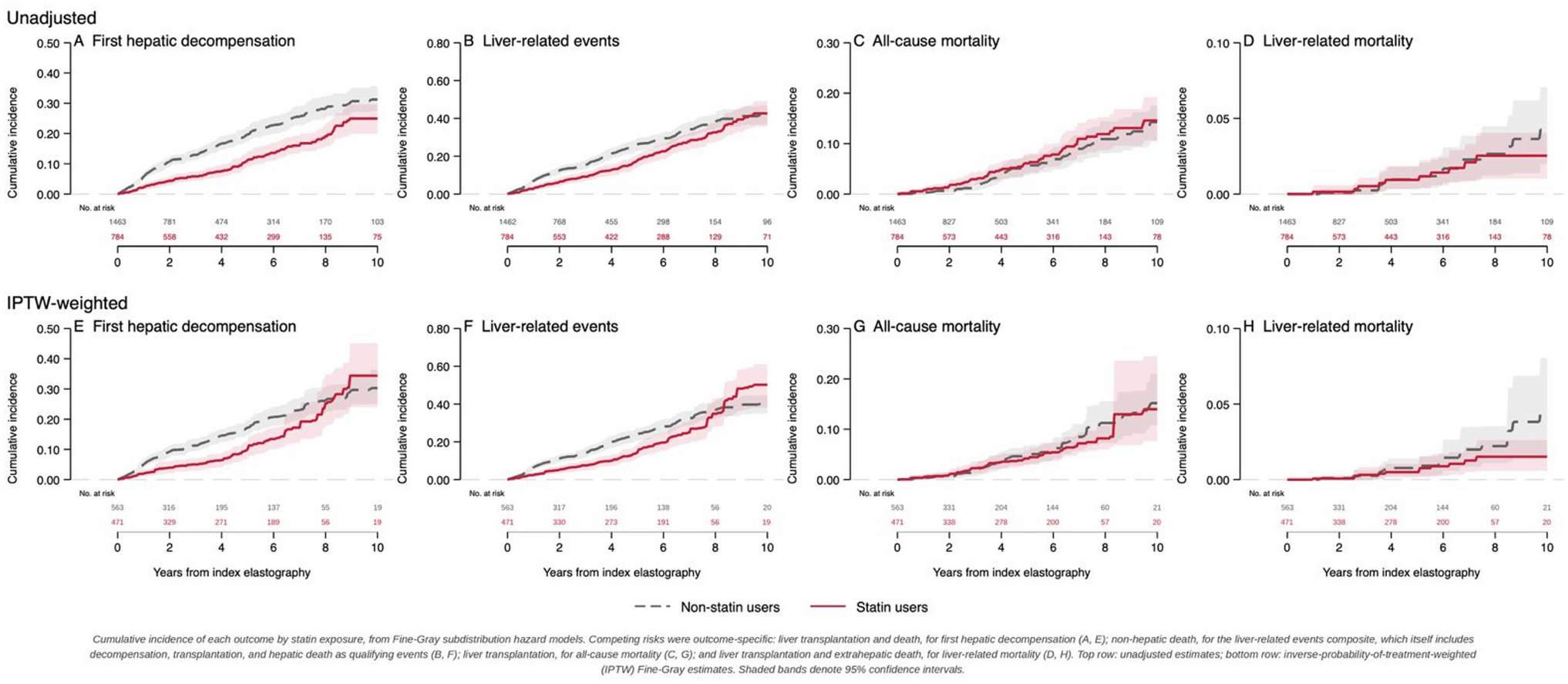
BACKGROUND AND AIMS: Statins exert pleiotropic effects, including antiinflammatory, endothelial, and antifibrotic actions, which may slow the progression of cirrhosis. However, their use in patients with compensated advanced chronic liver disease (cACLD) remains limited due to concerns regarding potential hepatotoxicity, and data specific to this population remains sparse. METHODS: We conducted a retrospective, multinational cohort study of adult cACLD (LSM >10 kPa) patients using data from the Cirrhosis Outcome and Research Endeavor (CORE) consortium, across 13 centers in 8 countries. Baseline statin use was the exposure of interest. Associations with first and second hepatic decompensation, composite liver-related events, and all-cause and cause-specific mortality were assessed using Fine-Gray competing-risks regression across two sequentially adjusted multivariable models and an inverse probability of treatment weighting (IPTW) analysis. RESULTS: Among 2267 patients, 786 (34.7%) were statin users. Statin use was independently associated with a lower risk of first decompensation (Model 1: sHR 0.64; Model 2: sHR 0.66; IPTW: sHR 0.56) and composite liver-related events (Model 1: sHR 0.61; Model 2: sHR 0.63; IPTW: sHR 0.50), with benefit most pronounced in the moderate-risk portal hypertension strata and MASLD subgroup. No association was observed with all-cause, liver-related, or cardiovascular mortality. Associations with second decompensation were inconsistent. CONCLUSION: In this large multinational cohort of cACLD patients, statin use was associated with reduced risk of hepatic decompensation and liver-related events, but not all-cause mortality. These findings support a potential benefit for statins in this population.