Adults 50-plus born later had higher capacity in 10 European countries
Later birth years were linked to higher capacity at entry than earlier birth years, with a model coefficient—a measure of association—of 0.797.
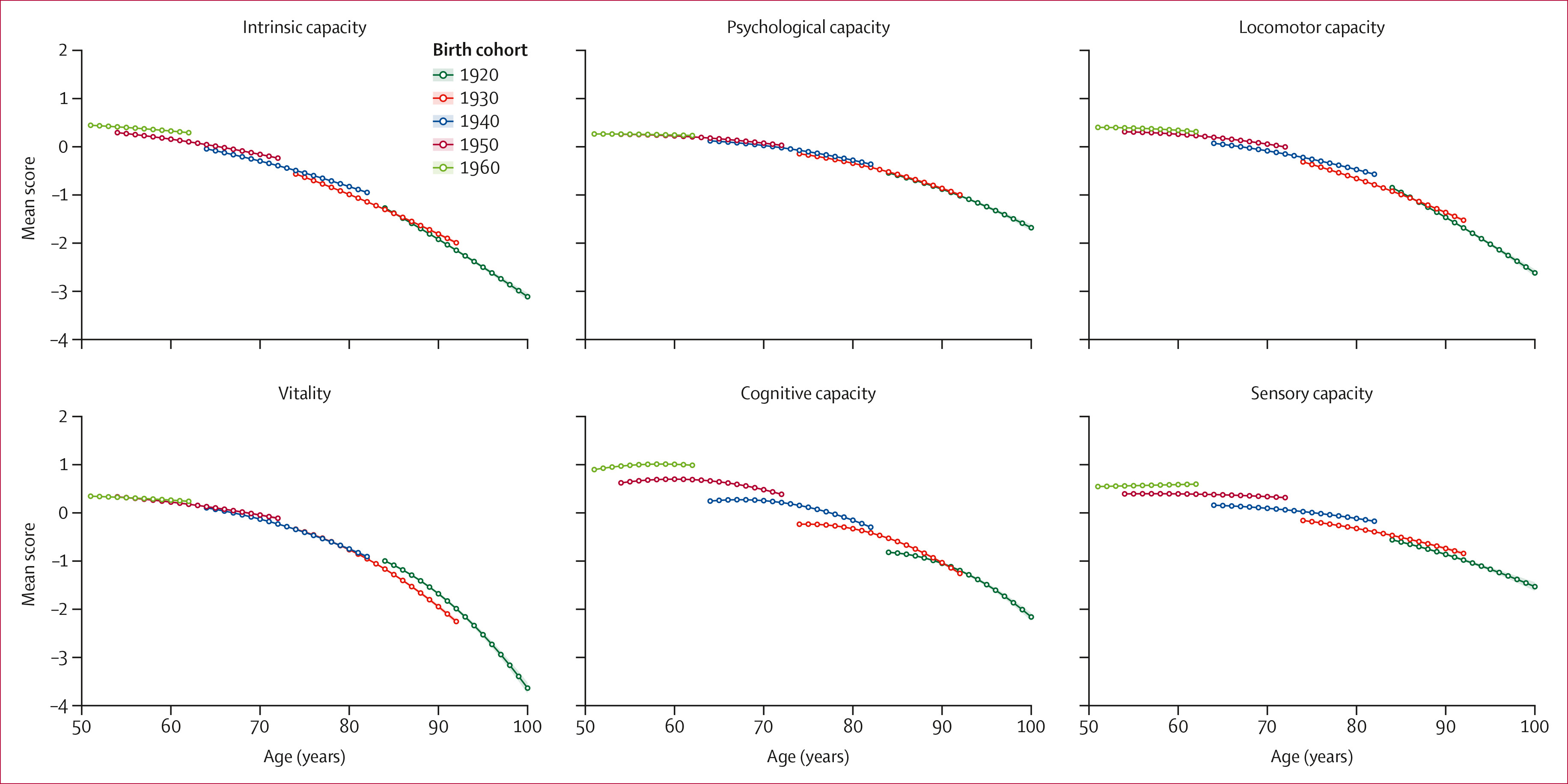
Researchers analysed survey data from 80,105 adults aged 50 years or older in ten European countries in a longitudinal observational study. The surveys covered 2004 to 2022. They combined measures of thinking, psychological wellbeing, senses, movement and vitality into “intrinsic capacity”, an overall measure of physical and mental abilities.
Later birth years were associated with higher capacity at the first interview and slower decline over follow-up. However, both advantages became smaller among more recently born participants. Women showed larger gains at entry than men, narrowing the gap between the sexes. Higher socioeconomic groups showed larger gains than the lowest group, widening those differences. Improvements also varied between countries.
Why it matters
Physical and mental capacity is central to healthy aging. These trends can inform planning and continued investment in health care for older adults.
Caveats
The observational study identified associations, not their causes. Comparisons between birth cohorts came from model-based predictions.
The paper
Cohort trends in intrinsic capacity in Europe: a population-based longitudinal study
Columbia University; School of Risk & Actuarial Studies and Centre for Population Ageing Research (CEPAR)
The Lancet Healthy Longevity, 10 Oct 2026