Multidimensional sleep characteristics and arterial stiffness in older adults
Abstract
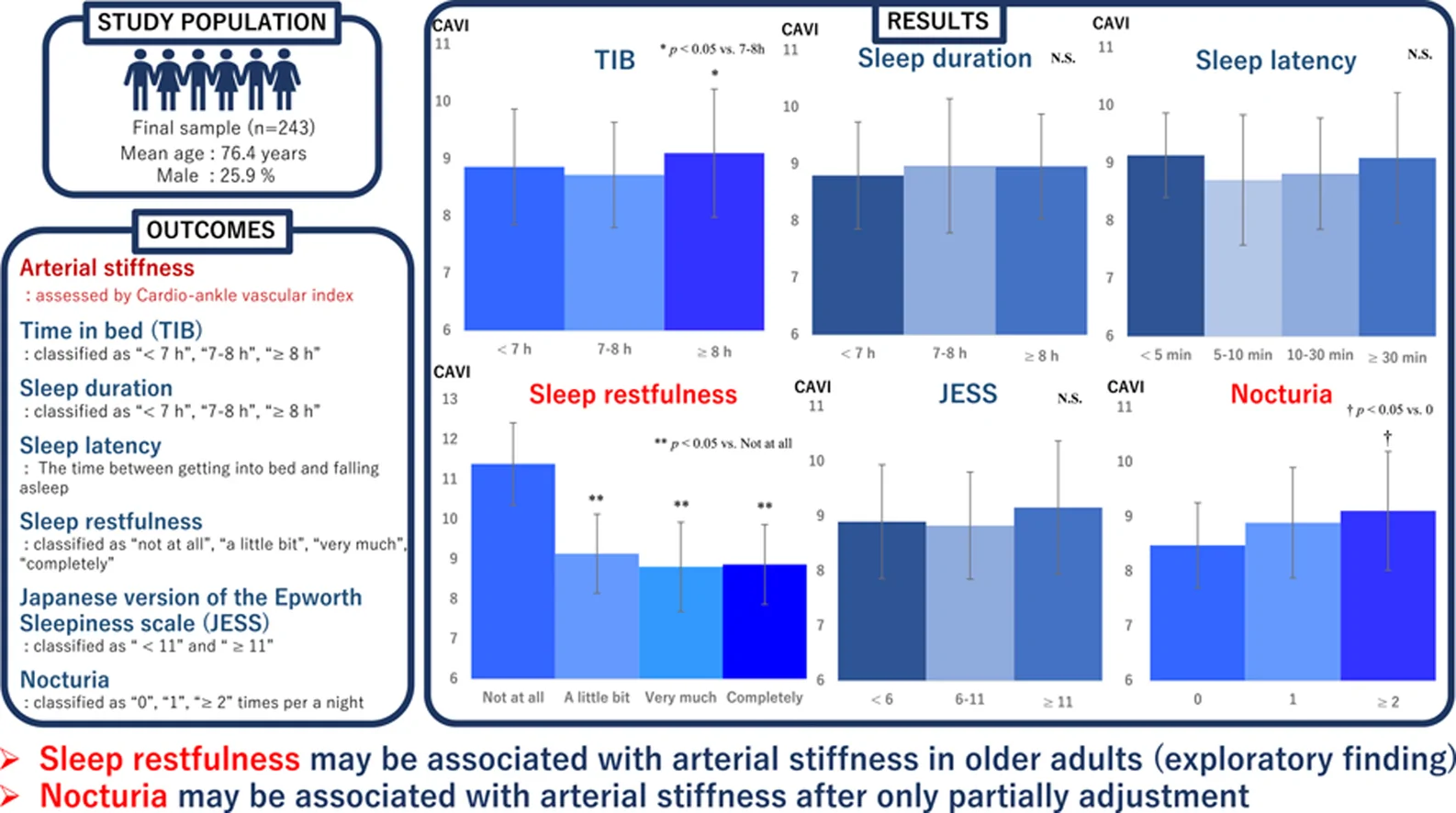
AIM: Sleep is a multidimensional behavior encompassing duration, quality, and behavioral patterns. The associations between sleep characteristics and arterial stiffness remain unclear. This study aimed to investigate the associations between multidimensional sleep characteristics and arterial stiffness in older adults. METHODS: This cross-sectional study included 243 community-dwelling adults aged ≥65 years. Arterial stiffness was assessed using the cardio-ankle vascular index (CAVI). Sleep parameters-including time in bed (TIB), sleep duration, sleep latency, sleep restfulness score (SRS), daytime sleepiness, and nocturia-were evaluated using standardized self-administered questionnaires. Multivariable linear regression analyses were performed to assess independent associations between sleep characteristics and CAVI after adjustment for potential confounders. RESULTS: The mean age was 76.4 years, and the mean CAVI was 8.90 ± 1.03. CAVI differed significantly across TIB, SRS, and nocturia categories, with higher values observed in participants with prolonged TIB (≥8 h), poorer sleep restfulness, and more frequent nocturia. In contrast, sleep duration, sleep latency, and daytime sleepiness were not associated with CAVI. Poorer sleep restfulness was associated with higher arterial stiffness, although this finding was sensitive to participants with very poor sleep restfulness. Nocturia was positively associated with CAVI in unadjusted and partially adjusted analyses, but the association was attenuated after full adjustment. CONCLUSIONS: In older adults, poorer sleep restfulness and nocturia were associated with arterial stiffness, although these associations warrant cautious interpretation as an exploratory finding. CAVI also differed according to TIB category. These findings may provide additional information regarding vascular health.
The paper
Fukushima Medical University
Sleep Medicine, 1 Oct 2026