Multimorbidity profiles and global quality of life: a population-based latent class and structural equation modeling study
Abstract
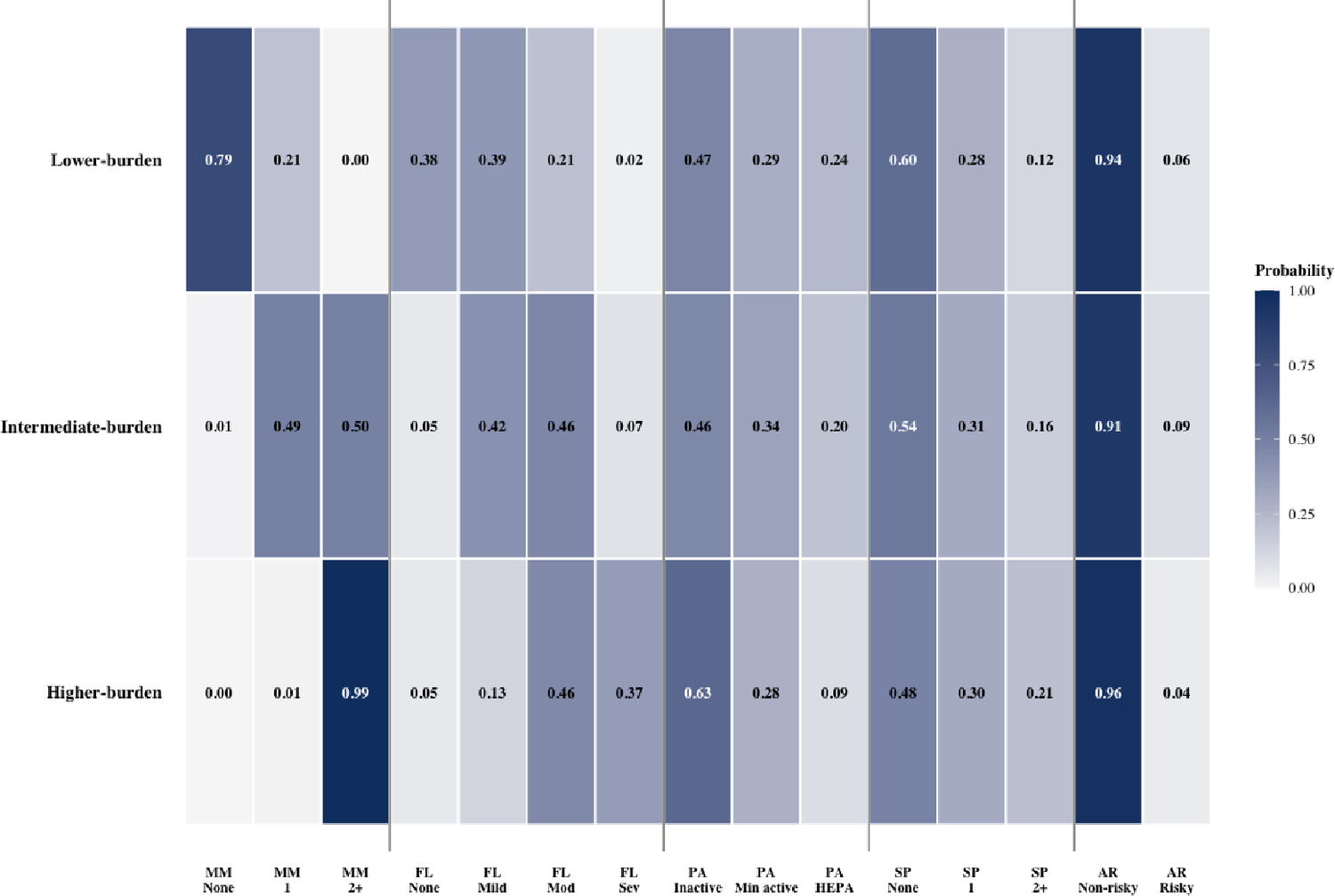
PURPOSE: To examine whether clustered configurations of multimorbidity, functional limitation, physical activity, formal social participation, and alcohol risk are associated with global quality of life (QoL), and to evaluate the hierarchical structure of the World Health Organization Quality of Life-BREF (WHOQOL-BREF) using data from anationally representative Chilean survey. METHODS: Cross-sectional data were drawn from the 2023-2024 Chilean National Survey on Quality of Life and Health. Latent class analysis identified health-functional profiles using five categorical indicators (n = 16,469). Confirmatory factor analysis evaluated correlated four-factor and hierarchical second-order representations of the WHOQOL-BREF (n = 13,451). Structural equation modeling examined associations between profile membership, sociodemographic characteristics, and global QoL (n = 13,016). Analyses incorporated calibrated sampling weights, with design-basedinference accounting for the stratified and clustered survey design. RESULTS: A three-class solution comprising lower-burden, intermediate-burden, and higher-burden profiles was retained. Profiles were most clearly differentiated by multimorbidity and functional limitation, whereas physical activity, social participation, and alcohol risk showed weaker or nonmonotonic differentiation. The hierarchical WHOQOL-BREF model showed comparable approximate fit to the correlated four-factor model, with strong secondorder loadings across all four QoL domains. Relative to the lower-burden profile, global QoL was lower in theintermediate-burden profile (β = -.132, p < .001) and substantially lower in the higher-burden profile (β = -.341, p < .001). Posterior pseudo-class sensitivity analyses preserved the direction and ordering of these associations. Educational attainment (β = .142, p < .001) and household income (β = .139, p < .001) were positively associated with global QoL. CONCLUSION: Global QoL was associated with graded health-functional burden and socioeconomic position. Combining person-centered health profiles with a hierarchical representation of QoL may provide a useful framework for characterizing population heterogeneity in health, functioning, and subjective quality of life.
The paper
Departamento de Psicología; Departamento de Salud Pública
Quality of Life Research, 10 Oct 2026