Impact of diabetes mellitus on mortality in patients with giant cell arteritis
5 years
Abstract
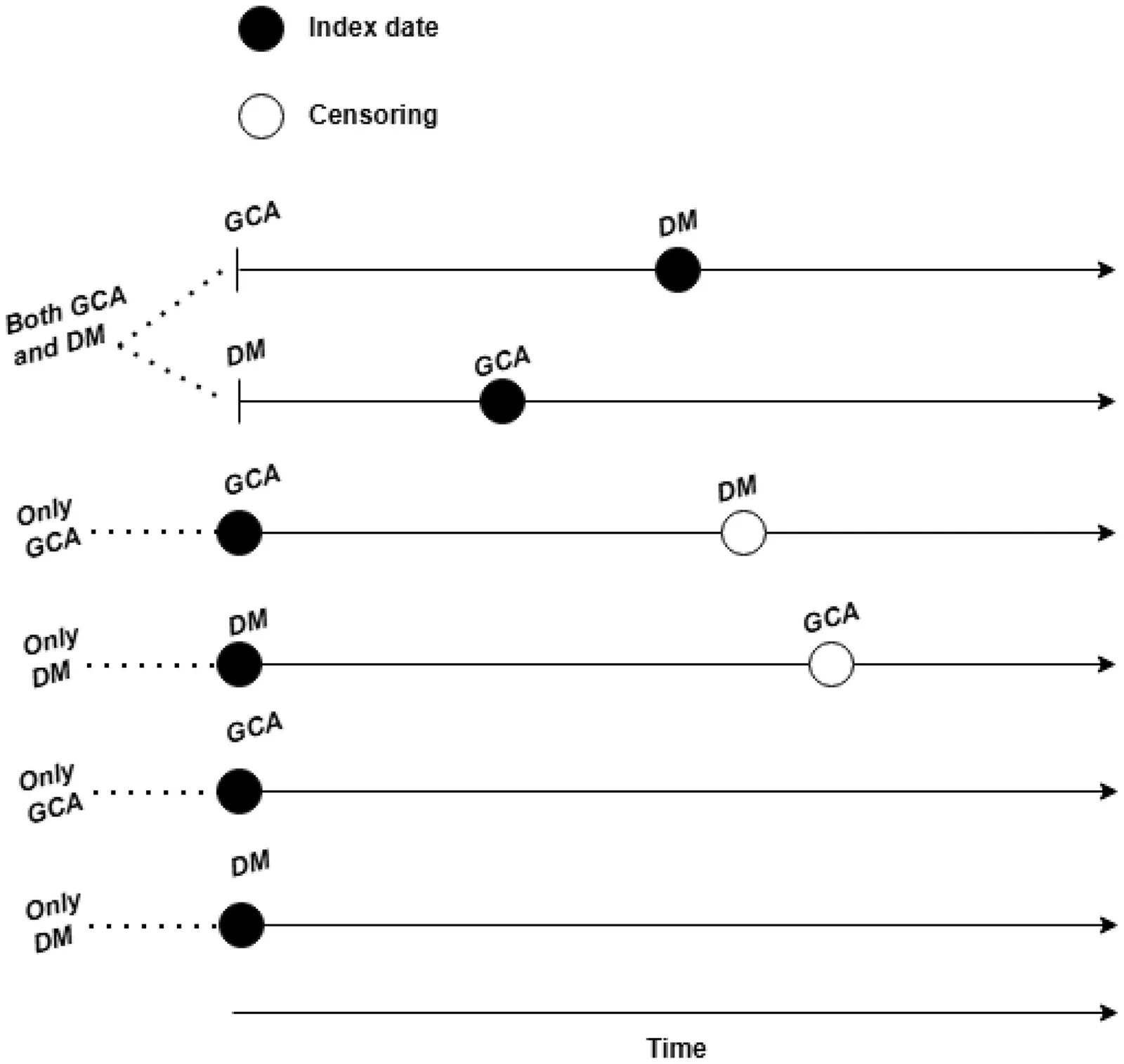
OBJECTIVES: This study aimed to investigate the impact of diabetes mellitus (DM) on the risk of mortality in patients with giant cell arteritis (GCA). METHODS: This Danish nationwide cohort study included patients diagnosed with both GCA and DM, who were matched 1:3 with patients with only GCA or DM, on sex and year of birth. The Pseudo-observation method and Cox regression were used to evaluate the cumulative incidence proportion (CIP), risk difference (RD), and relative risk of mortality after 6 months and 5 years. Also, time-dependent hazard ratios (HR) were made to assess the impact of predefined HbA1c categories on the risk of mortality. RESULTS: Among 3674 cases, the CIP of mortality was 8.1% (7.1-9.1) at 6 months and 34.6% (32.7-36.4) at 5 years. Compared with patients with GCA only (n = 10,311), the RD was 5.5% (4.5-6.5) at 6 months and 15.1% (13.3-17.0) at 5 years. Compared with patients with DM only (n = 11,020), the RD was 4.9% (3.9-5.9) and 6.5% (4.7-8.3). The adjusted HR for mortality was significantly higher in patients with elevated HbA1c, especially after 5 years of follow-up. CONCLUSIONS: Having both GCA and DM was associated with a higher mortality risk compared with either condition alone, especially in the initial phase after diagnosis. High HbA1c increased the risk of 5-year mortality in both patients with GCA and DM and GCA alone, suggesting glycaemic control could be relevant in this population.
The paper
Aalborg University Hospital
EULAR Rheumatology Open, 28 May 2026