Effects of Evogliptin and Dapagliflozin on Bone and Glucose Metabolism in Postmenopausal Women with Type 2 Diabetes: A Multicenter Randomized Exploratory Clinical Trial
48 weeks, multicentre, registered NCT04706637
Abstract
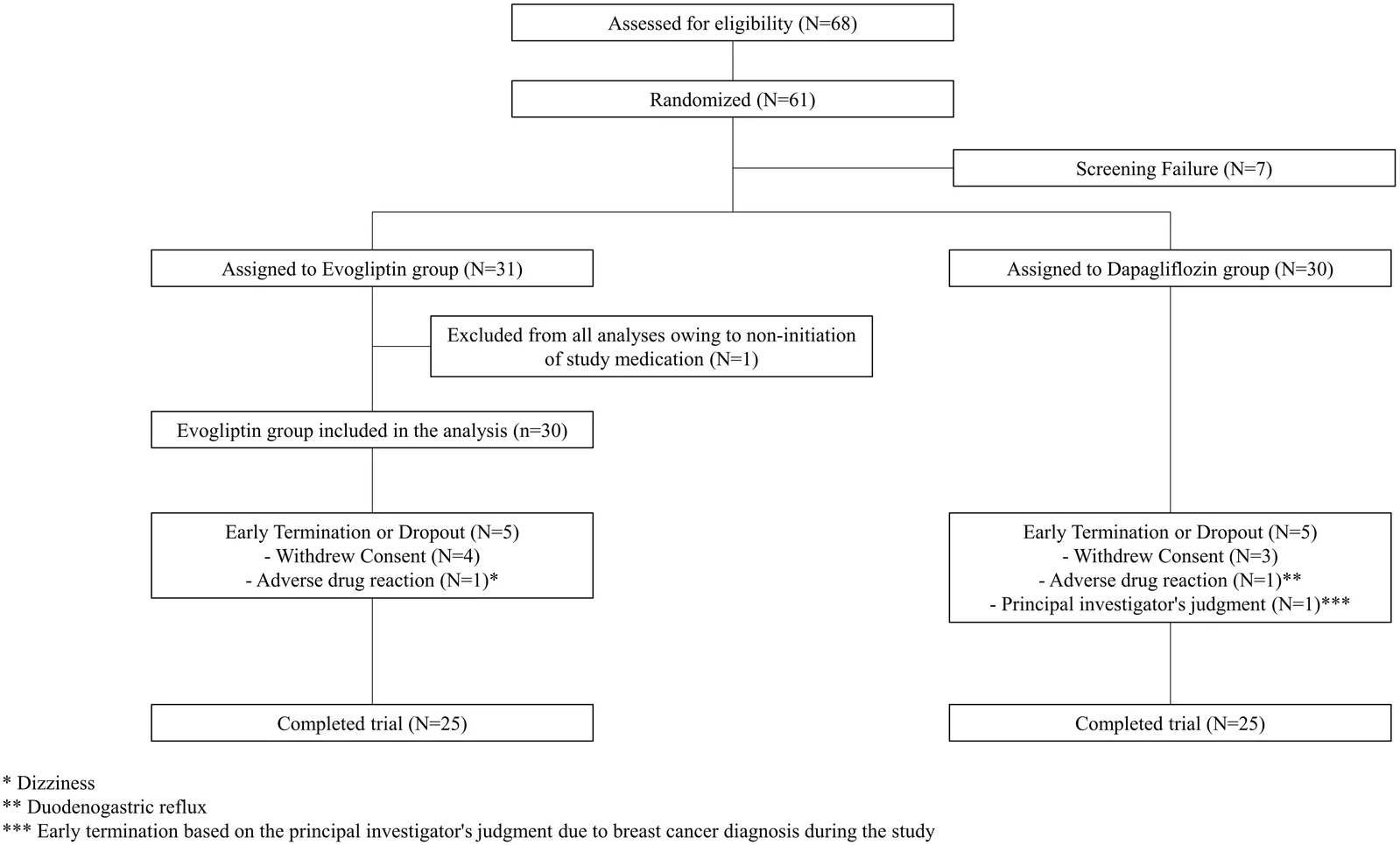
BACKGROUND: Postmenopausal women with type 2 diabetes mellitus (T2DM) are at increased risk of fragility fractures, emphasizing the importance of selecting antidiabetic agents that support glycemic control and bone health. Most dipeptidyl peptidase-4 inhibitors have shown neutral or favorable effects on bone metabolism; however, data specifically on evogliptin remain limited. This study evaluated the effects of evogliptin and dapagliflozin on bone metabolism and glycemic parameters in postmenopausal women with T2DM. METHODS: This multicenter, randomized clinical trial enrolled postmenopausal women with T2DM assigned to receive evogliptin or dapagliflozin for 48 weeks. The primary outcome was change in bone mineral density (BMD). Glycemic indices were the secondary endpoints. RESULTS: Sixty participants were included in the final analysis, with 30 in each group. After 48 weeks, the change in BMD at the L1-L4 spine and total hip did not differ significantly between groups. Femoral neck BMD decreased significantly in the dapagliflozin group compared with the evogliptin group, although the absolute between-group difference was small (0.00 ± 0.02 vs -0.02 ± 0.04 g/cm², p = 0.0402). After adjustment for baseline femoral neck BMD and 25OHD, the between-group difference was attenuated (p = 0.0763). The body mass index (BMI) decreased more in the dapagliflozin group than in the evogliptin group. In analyses of factors associated with femoral neck BMD change, no statistically significant predictors were identified, although decreasing BMI showed a trend toward association. Glycemic indices did not differ significantly between the groups. CONCLUSION: In postmenopausal women with T2DM, BMD remained stable with evogliptin, whereas dapagliflozin was associated with a small reduction in femoral neck BMD, although this finding was weakened after adjustment. These findings provide preliminary evidence regarding the skeletal effects of evogliptin and dapagliflozin and warrant confirmation in larger studies. CLINICAL TRIAL REGISTRATION: ClinicalTrials.gov (NCT04706637).
From the paper
- Participants
Sixty-eight participants underwent screening, of whom seven were excluded, leaving 61 participants enrolled in the study (enrollment period: September 2021 – May 2024).
- Follow-up
Participant enrollment was conducted from September 2021 through May 2024, and each participant was followed for 48 weeks.
- Result
After adjustment for baseline femoral neck BMD and baseline 25OHD in the supportive ANCOVA, the between-group difference remained in favor of evogliptin, although it did not reach statistical significance (adjusted difference, 0.0188 g/cm; 95% CI, −0.0021 to 0.0396; p = 0.0763).
Quoted word for word from the full text on dovepress.com.
The paper
Kyung Hee University Hospital at Gangdong
Diabetes, Metabolic Syndrome and Obesity, 5 Oct 2026