Trends and projected burden of ischemic heart disease mortality with co-documented diabetes mellitus and dyslipidemia among U.S. adults, 1999-2024: a CDC WONDER analysis
Abstract
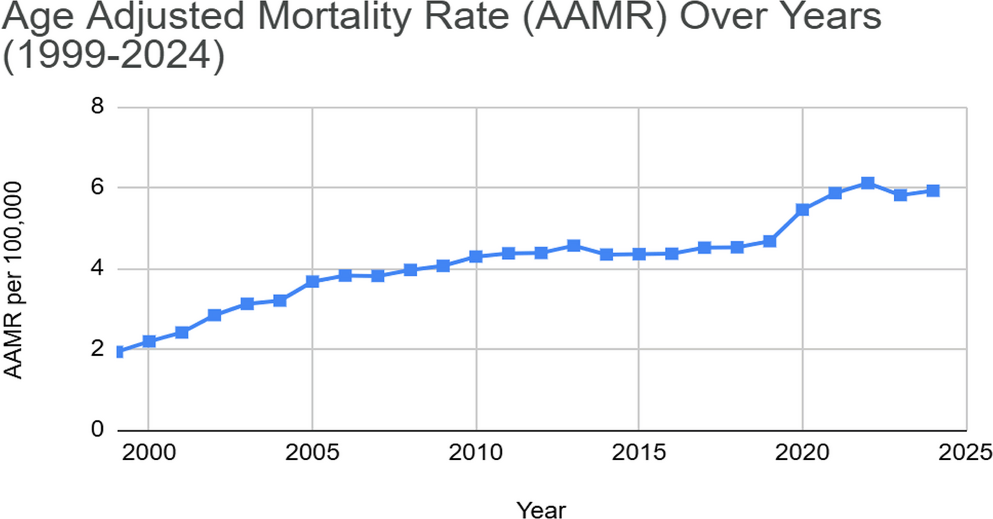
PURPOSE: To analyze long-term mortality trends among U.S. adults aged ≥ 45 years with death certificates listing ischemic heart disease as the underlying cause of death and diabetes mellitus and dyslipidemia as concurrent multiple causes of death from 1999 to 2024, to evaluate disparities by sex, age, race/ethnicity, urbanization, and geographic region, and to forecast overall and sex-specific mortality through 2035. METHODS: A retrospective analysis was conducted using CDC WONDER Multiple Cause of Death data for 1999-2024, identifying U.S. decedents aged ≥ 45 years with ischemic heart disease (ICD-10 I20-I25) as the underlying cause of death and diabetes mellitus (ICD-10 E10-E14) and dyslipidemia (ICD-10 E78) concurrently recorded as multiple causes of death. Mortality was expressed per 100,000 population. Age-adjusted mortality rates (AAMRs), annual percent change (APC), and average annual percent change (AAPC) were estimated using Joinpoint regression (p < 0.05); future mortality through 2035 was projected using ARIMA modeling. RESULTS: The overall AAMR rose from 1.93 in 1999 to a peak of 6.11 in 2022, stabilizing at 5.92 by 2024 (AAPC 4.44%). Mortality was consistently higher among men than women, with men showing a steeper average increase. Adults ≥ 85 years carried the highest mortality burden, while the youngest stratum (45-54 years) showed a sustained significant rise. NH Black adults experienced the fastest average annual growth among racial/ethnic groups. Non-metropolitan populations had persistently higher AAMRs than metropolitan populations, and the South recorded the highest regional average annual increase. Substantial state-level variation was observed, with AAMRs nearly four-fold higher in the highest-burden states than the lowest. Projections indicate continued increases overall, as well as for both males and females, through 2035. CONCLUSION: Between 1999 and 2024, population-level IHD mortality rates corresponding to death certificates with concurrent documentation of diabetes mellitus and dyslipidemia rose sharply before stabilizing in recent years, with men, NH Black adults, non-metropolitan residents, Southern states, and the oldest and youngest adults bearing a disproportionate share of this burden. These disparities highlight the need for consistent, guideline-concordant lipid management and expanded access to cardioprotective diabetes therapies, alongside sustained surveillance of this death-certificate phenotype. SUPPLEMENTARY INFORMATION: The online version contains supplementary material available at https://doi.org/10.1007/s40200-026-02083-3.
The paper
Ameer-ud-Din Medical College; Shaikh Khalifa Bin Zayed Al-Nahyan Medical College
Journal of Diabetes and Metabolic Disorders, 8 Oct 2026