Higher brain care score is linked to younger retinal age
In 28,657 adults, higher brain care scores were linked to thicker retinal layers, and each five-unit increase was tied to a smaller retinal age gap.
GeroScience
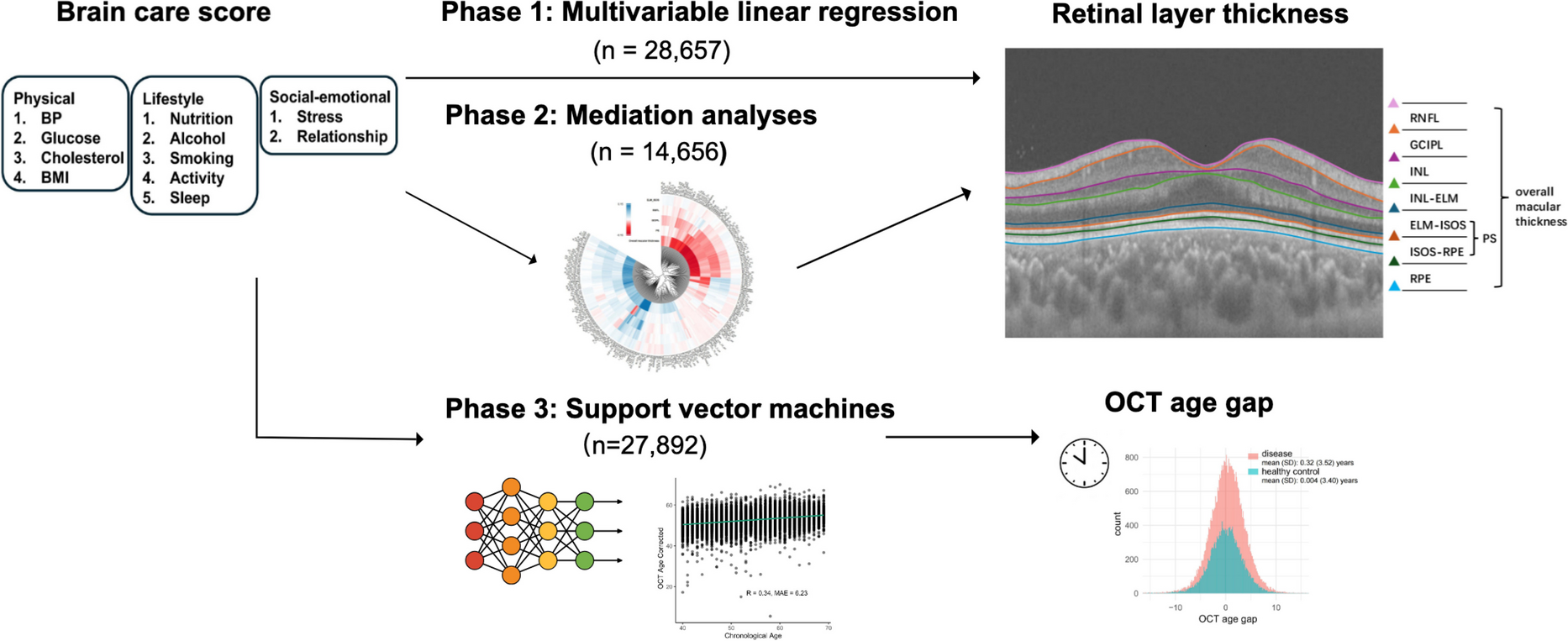
In an observational study of 28,657 UK Biobank participants, researchers examined whether a brain care score tracks retinal health and retinal biological age. The 19-point score combines physical, lifestyle, and social-emotional domains, with higher scores reflecting better brain care. Eye structures were scanned using optical coherence tomography, an imaging method that captures cross-sectional pictures of retinal layers. Retinal aging was evaluated using a machine-learning model that calculated the gap between predicted retinal age and chronological age. In addition, 14,656 participants had metabolomic data. Higher scores were associated with thicker neuroretinal layers, thicker photoreceptor layers, and greater overall macular thickness. Each 5-unit increase in the score was linked to a reduced retinal age gap. Analyses also identified candidate metabolic patterns involving lipids, unsaturated fatty acids, and branched-chain amino acids.
Why it matters
Because the retina is an extension of the central nervous system, structural measures of retinal health may help researchers track biological aging in neural tissue. The results help clarify how a composite brain care score and related metabolic pathways relate to structural signs of aging in the eye.
Caveats
The study was observational and analysed retinal scans from a single baseline visit, so it cannot show that a higher brain care score causes these structural differences. Retinal biological age was also an estimate derived from a computer model rather than a direct measure of cellular aging.
- Machine learning
- Amino acid metabolism
- Lipid and ceramide metabolism
- Brain care score
- Macular thickness
- Humans
The paper
Brain care score and retinal health: structural and metabolic insights from the UK Biobank
Show 7 more authors
Mary Ho, Ka Wai Kam, Bo Gong, Alvin L Young, Chi Pui Pang, Clement C Tham, Jason C Yam,The Chinese University of Hong Kong
GeroScience · 9 Oct 2026