Model predicts acute ischemic stroke risk in type 2 diabetes
The model achieved an area under the curve of 0.939 in an external test group of 86 patients, outperforming models using single data types.
Independent replication, multicentre
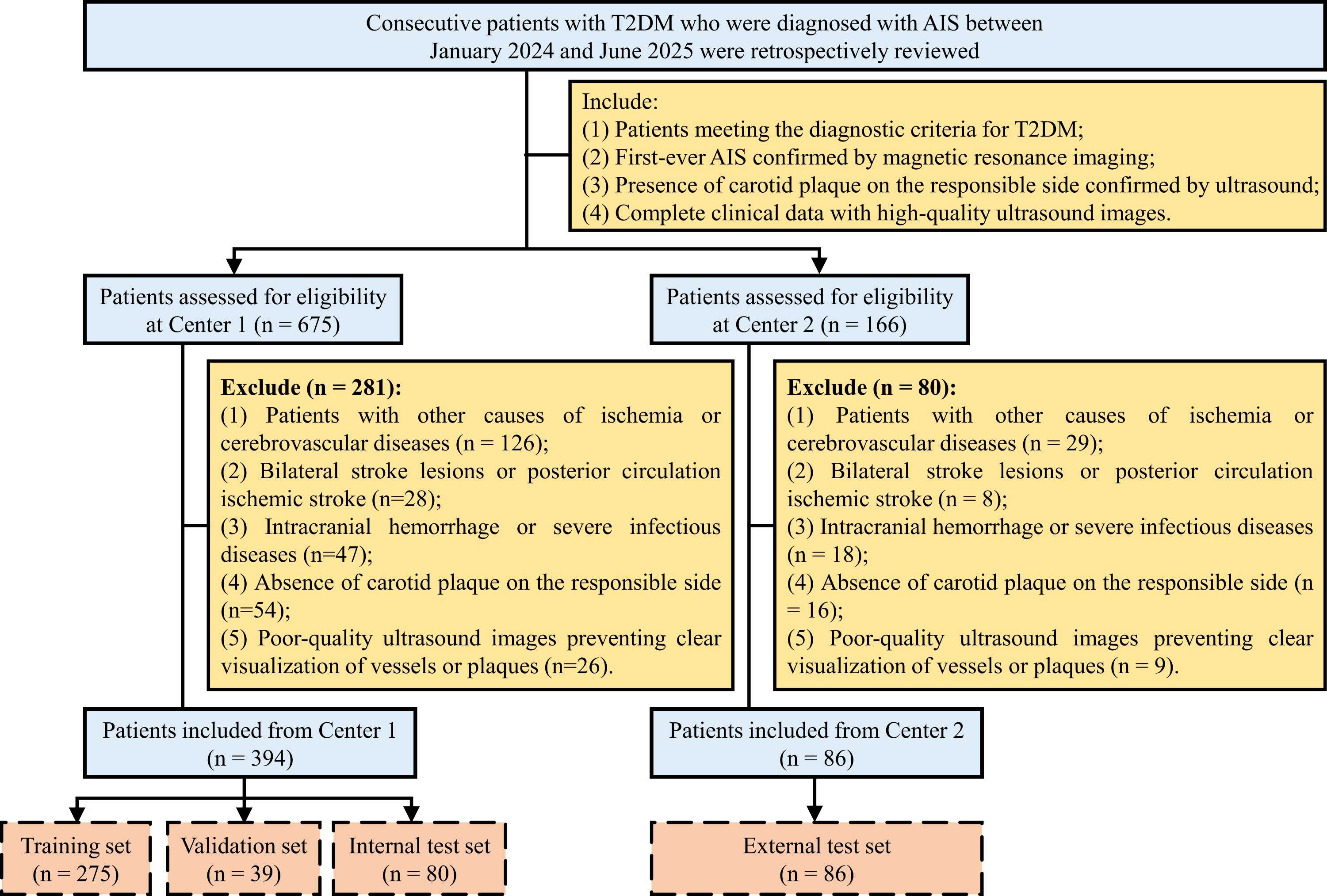
In this multicentre retrospective observational study, researchers studied 480 patients with type 2 diabetes who underwent carotid ultrasound, scans of the neck arteries. They built an artificial intelligence model combining analyses of artery deposits and surrounding vessels with clinical information and numerical imaging features. They used 394 patients from one centre for development and 86 from another for independent testing.
The model assessed risk of acute ischemic stroke, caused by blocked blood flow to the brain. It achieved an area under the curve, a measure of how well a model distinguishes between groups, of 0.952 in the internal group and 0.939 in external testing. It outperformed models using only one type of data. Assistance from the model also improved diagnostic correctness among both senior and junior readers.
Why it matters
Patients with type 2 diabetes are at high risk of acute ischemic stroke. The study addressed how to identify that risk more accurately, a question relevant to health in later life.
Caveats
The study was retrospective rather than prospective. The independent external testing group was relatively small, including only 86 patients.
- Ai-assisted carotid ultrasound interpretation
- Deep learning
- Acute ischemic stroke
- Type 2 diabetes
- Multimodal carotid ultrasound model
- Humans
The paper
Central Hospital of Haining; Zhejiang Cancer Hospital
Academic Radiology, 9 Oct 2026