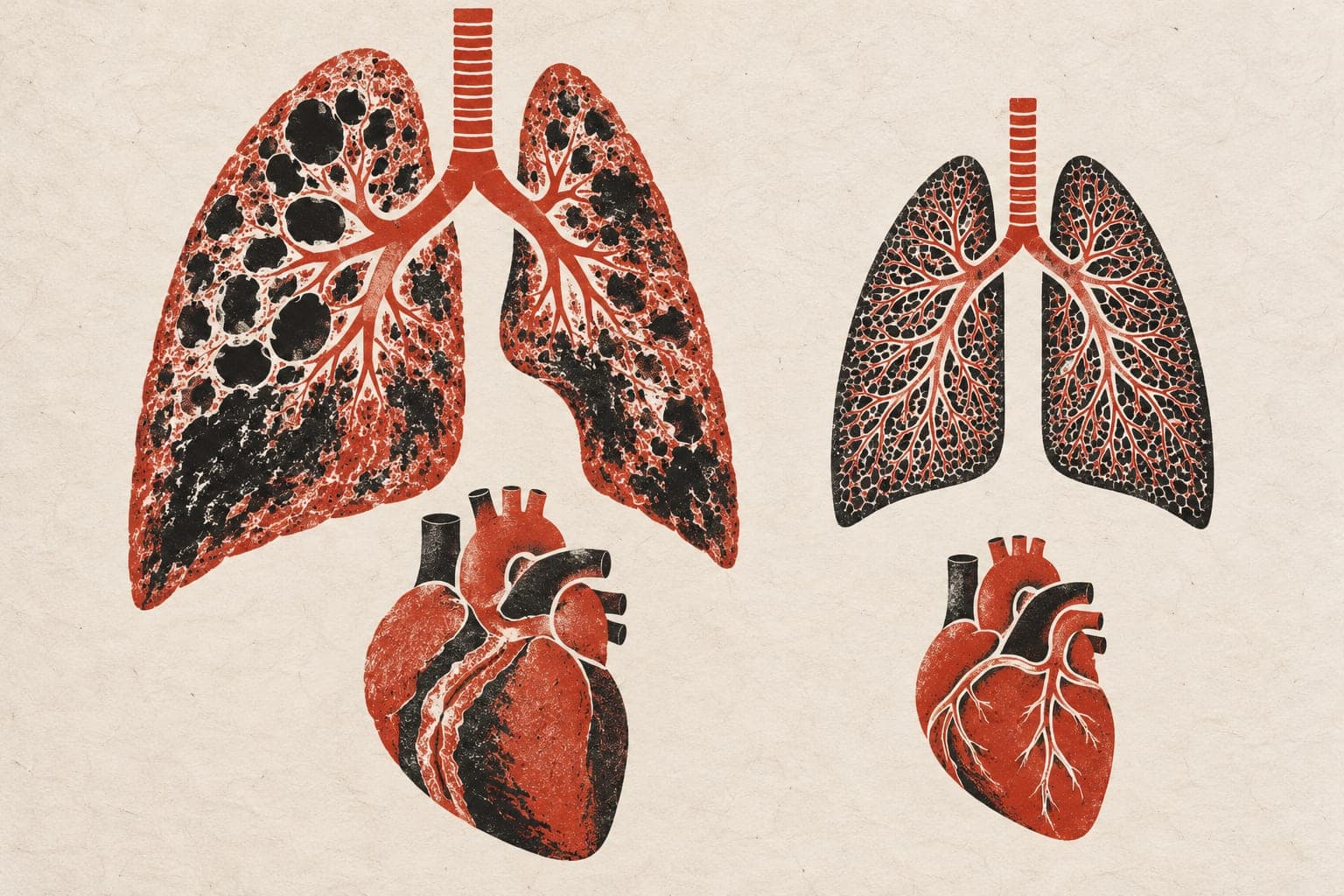
E-cigarette use is linked to faster biological aging
Current e-cigarette users had a biological age acceleration 1.20 years higher than people who had never used them.
Environmental Epidemiology
In a cross-sectional study of 8,595 adults aged 20 to 79 in the United States, researchers examined whether electronic cigarette use was linked to faster biological aging. They measured biological aging using PhenoAge, an epigenetic biomarker compared against chronological age. Participants were categorised as current, former, or never users of e-cigarettes. After adjusting for combustible cigarette use, secondhand smoke, alcohol use, and demographic factors, current e-cigarette users had 1.20 years higher biological age acceleration than never users. People who currently smoked combustible cigarettes had 1.50 years higher biological age acceleration than those who had never smoked at least 100 cigarettes in their lifetime.
Why it matters
Smoking combustible cigarettes accelerates biological aging and contributes to later cardiovascular decline, but the aging-related effects of vaping remain largely unknown. The findings address how alternative tobacco products relate to markers of biological aging.
Caveats
Because the study was cross-sectional, it cannot show whether e-cigarette use causes accelerated aging. Longitudinal studies are needed to clarify the underlying mechanisms.
The paper
Biological aging acceleration associated with electronic cigarette use in the United States
Boston University School of Public Health · Johns Hopkins Bloomberg School of Public Health
Environmental Epidemiology · 6 Oct 2026